
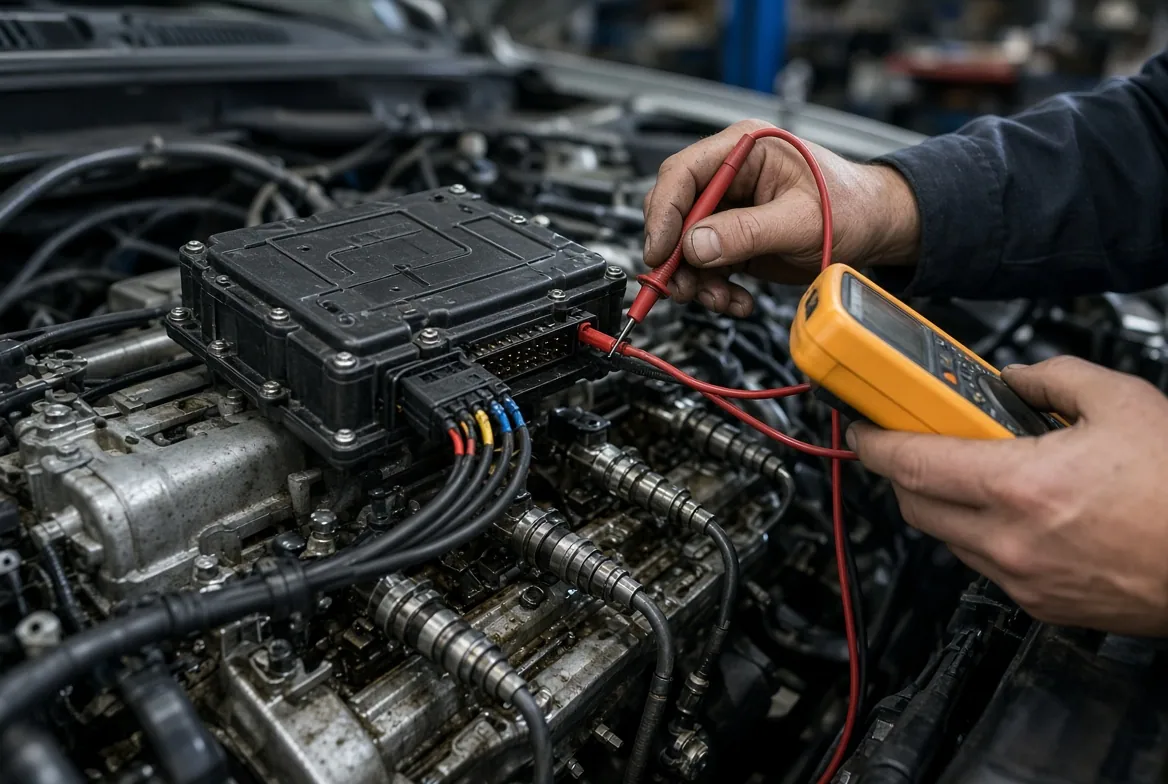
Many “bad injectors” on the Ford 6.0 Power Stroke, used in 2003–2007 Super Duty trucks and in E-Series vans through 2010, aren’t failed injectors at all. The engine’s split-shot HEUI injectors depend on three things working together: clean, healthy engine oil to fire them, adequate voltage from the fuel injection control module (FICM), and steady fuel supply. Problems in any one produce rough running, smoke, misfires and hard starts. Sort out those three before deciding the injectors themselves are worn out.
The same basic engine was sold as the Navistar VT365 in some International medium-duty trucks, so much of this applies there as well.
Stiction: when the spool valve sticks
Each 6.0 injector uses a spool valve, moved by an open coil and a close coil, to control high-pressure oil. Deposits from engine oil can build up on the spool and make it slow to move or stick. That’s stiction.
Typical signs:
- Rough, smoky running on cold starts that improves as the engine warms
- Misfire or stumble until oil warms up
- Hard starting in cold weather
- Symptoms that get worse with long oil change intervals or poor oil
Stiction relates to oil condition, oil specification and change intervals. Some injectors with stiction respond to improved oil practices; others are worn or sticking badly enough that they need service. Testing tells you which.
FICM voltage
The FICM boosts system voltage to about 48 volts to fire the injectors. When its output drops, the coils respond late. According to a widely cited guide to the system, voltage at the injectors should be at least 45 to 48 volts with the key on, while cranking and while running, and below about 30 volts the engine may not start at all (Drivingline: 6.0L Power Stroke FICM problems).
Signs of low FICM voltage include hard starting (often the first symptom), misfires, rough running and excessive smoke. Weak batteries and charging problems are a leading cause of FICM failure, so test both. Check FICM output with a scan tool before replacing any injector.
The high-pressure oil side
To start and run, the 6.0 must build injection control pressure (ICP) using its high-pressure oil pump, regulated by the injection pressure regulator (IPR). A leak in the high-pressure oil system, at injector O-rings, standpipes, dummy plugs or, on later engines, the snap-to-connect fitting at the high-pressure oil pump, can prevent starting, especially when the engine is hot and the oil is thin. Low ICP during cranking with a high IPR command points to a leak or a weak pump. See HEUI injectors explained.
The fuel side
Low fuel supply pressure starves the injectors and can damage them. A restricted filter, a failing fuel pump or a fuel pressure regulator problem can all reduce supply. Fuel pressure should be checked, with the engine under load if possible, as part of any injector diagnosis on a 6.0.
When it really is the injectors
After oil, FICM voltage and fuel pressure are confirmed good, these point to the injectors themselves:
- A consistent misfire on one cylinder in a contribution test
- An injector circuit code that follows the injector, not the wiring
- High-pressure oil leakage traced to a specific injector’s O-rings
- Fuel in the engine oil from failed injector seals
- A failed buzz test or electrical test on one injector
A sensible diagnostic order
- Read codes, including FICM-related codes such as P0611 and any injector circuit codes.
- Check battery condition and charging voltage.
- Check FICM output voltage key-on, cranking and running.
- Check ICP and IPR during cranking and at idle.
- Check fuel pressure.
- Check oil condition and change history.
- Run a contribution test and buzz test to isolate any single injector.
Protect the injectors you have
- Use the correct oil specification and keep change intervals reasonable.
- Keep batteries strong and the charging system healthy.
- Keep fuel filters fresh and supply pressure in specification.
- Address any oil-side leak promptly.
Manufacturer reference: Ford/Motorcraft: technical resources For procedures and specifications, use the current manufacturer information for your engine and model year.
Have your 6.0 injectors tested
Send Diesel Control Technicians the part numbers from your 6.0 injectors to confirm testing, repair or exchange options. Before sending them, record FICM voltage, ICP readings and fuel pressure; that evidence helps sort injector faults from system faults. If the on-engine results identify injectors for removal, ask DCT which part numbers can be tested and keep them labeled by cylinder. Local shops can also request an on-vehicle appointment in Kansas.
QUESTIONS ABOUT YOUR DIESEL COMPONENT?
Questions about 6.0 Power Stroke Injector Problems?
Send us the injector number, engine model and relevant test results. We’ll help you explore the service options for your exact component.