
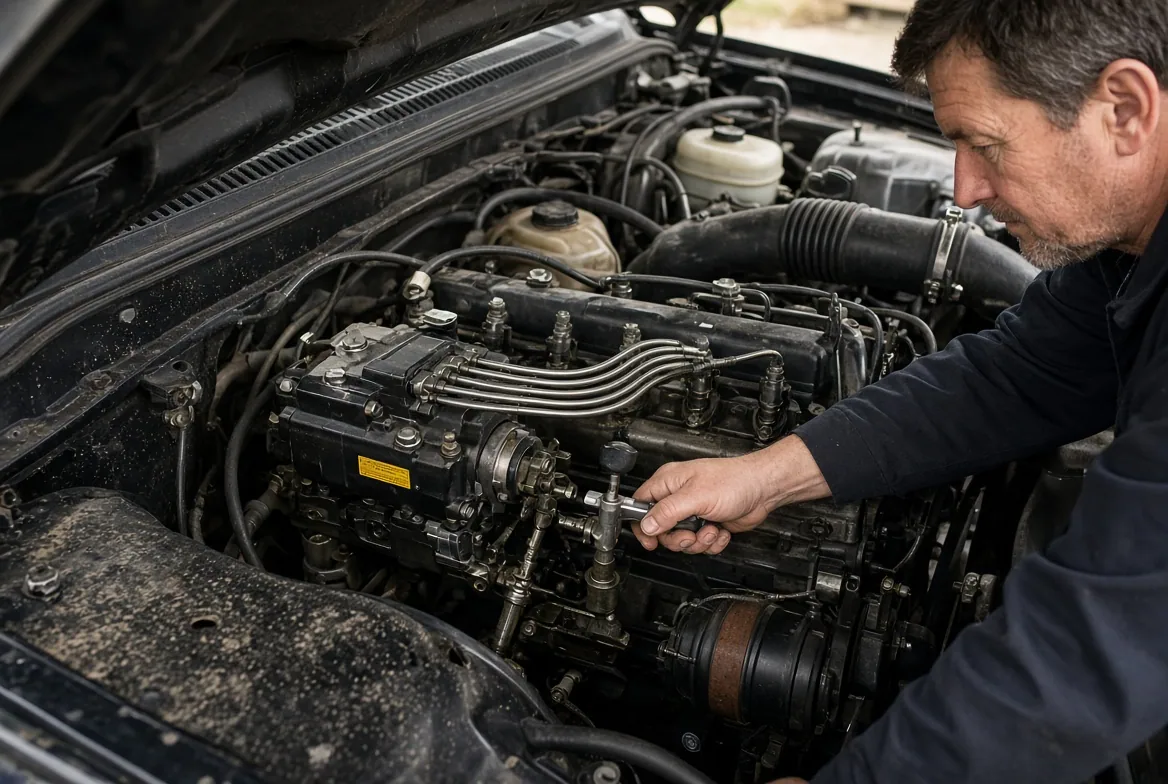
The Bosch P7100 on 1994–1998 Dodge Ram trucks with the 5.9 12-valve Cummins is a mechanical inline pump with one pumping element per cylinder, a mechanical governor and a boost-sensitive fuel control. It’s one of the most durable injection pumps ever put in a pickup, and it’s fully rebuildable. When one needs attention, it’s usually for leaks, a failed shutoff solenoid, a worn or misadjusted fuel control, or wear after a very long service life.
It’s also one of the most modified pumps in the diesel world, which matters when it comes time to rebuild one.
How the P7100 works
Six plungers, driven by a camshaft inside the pump, each feed one cylinder through its own delivery valve and steel line. A control rack rotates all six plungers to change fuel delivery, positioned by the governor and limited by the fuel plate and the boost-dependent fuel control, often called the AFC. The pump is lubricated by engine oil.
Where a P7100 usually needs help
Fuel shutoff solenoid failure. The solenoid that lets the engine run and shuts it off is a well-known failure point. A failed solenoid can cause a no-start or, in some failure modes, a failure to shut off.
Leaks. Seals at the delivery valve holders, throttle shaft and other points can seep with age. External leaks also invite air into the fuel system.
Fuel control and AFC problems. A torn diaphragm in the boost-dependent fuel control, or a misadjusted one, causes smoke, low power or poor throttle response.
Governor problems. Worn governor parts cause surging, poor idle control or failure to reach rated speed.
Rising engine oil level. Because the pump is lubricated by engine oil, fuel leaking internally into the pump’s camshaft area returns to the crankcase. A rising oil level with a diesel smell on a 12-valve should prompt a look at the pump. See diesel fuel in engine oil.
Wear. After very long service, worn plungers and barrels reduce delivery and balance between cylinders, causing hard starting, smoke and power loss.
The modification question
Many P7100 pumps have had their fuel plate swapped, governor springs changed, fuel control adjusted or timing advanced. That affects diagnosis: a pump that smokes heavily may be doing exactly what someone set it to do. It also affects a rebuild. Before work begins, decide whether the pump should be calibrated to the factory specification for its part number or to something else, and understand that changes to fuel delivery and timing affect exhaust temperature, smoke, engine stress and emissions compliance.
What a proper rebuild involves
A P7100 rebuild should include complete teardown and cleaning, inspection of the camshaft, tappets, plungers, barrels, delivery valves and governor, replacement of all seals and any worn parts, and calibration on a test stand. Calibration checks delivery and balance for each of the six elements, governor behavior and the boost-dependent fuel control. See injection pump calibration for what that involves.
Installation and timing
The P7100 must be timed correctly to the engine when it’s installed. Incorrect timing affects power, smoke, noise and exhaust temperature, and excessive advance increases cylinder pressure. Follow the engine maker’s timing procedure. See diesel injection pump timing.
Before you pull it
- Confirm the problem: check the shutoff solenoid, fuel supply and lift pump before condemning the pump.
- Photograph the pump tag and any modifications.
- Note the timing reference before removal.
- Cap every fitting as soon as lines come off.
Our checklist for what to do before removing an injection pump covers the details.
Manufacturer reference: Cummins: engine-specific technical information For procedures and specifications, use the current manufacturer information for your engine and model year.
Send your P7100 to DCT
Diesel Control Technicians tests, repairs, rebuilds and calibrates mechanical injection pumps. Send us a photo of your P7100’s tag and tell us about any modifications and the symptoms, and we’ll confirm the service options and how to ship it, or you can request approved component receiving at the designated location.
Where 12-Valve Cummins P7100 Pump Rebuild leads next: Confirm the actual pump or component family before replacing parts. Record the engine application, existing tests and symptoms, then review the testing process or request a component review. DCT confirms service eligibility and receiving instructions individually.
QUESTIONS ABOUT YOUR DIESEL COMPONENT?
Questions about 12-Valve Cummins P7100 Pump Rebuild?
Send us the pump number, engine information and symptoms. We’ll help you understand the next steps for your exact component.