
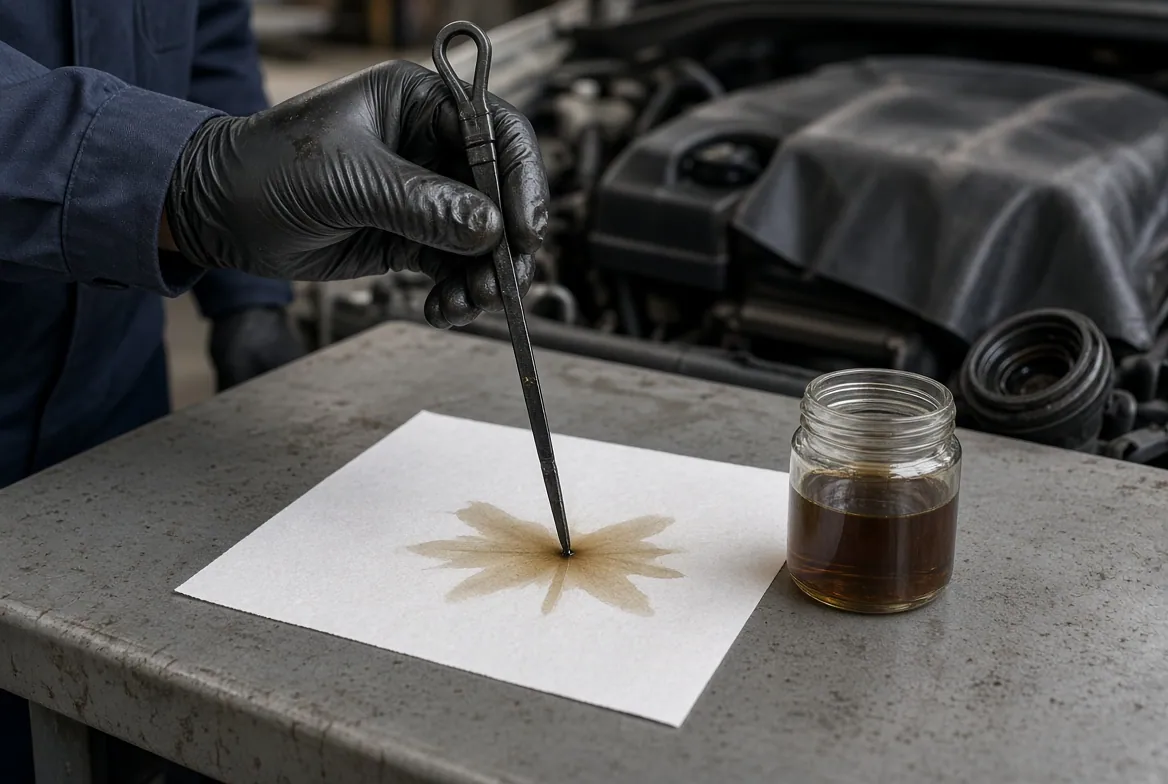
Fuel reaches diesel engine oil by one of a handful of routes: an injector or injector seal leaking inside the engine where the injectors sit under the valve cover, an injector dribbling into the cylinder so fuel washes past the rings, fuel from exhaust-filter regeneration that ends up on the cylinder walls, an injection pump lubricated by engine oil that leaks fuel internally, or, on some older engines, an engine-driven lift pump leaking into the crankcase. Which route is likely depends heavily on the engine.
Whatever the route, fuel thins the oil and reduces its ability to protect bearings, cams and turbochargers. A rising oil level is not something to monitor and live with.
Signs of fuel in the oil
- Oil level rising between changes
- Oil that looks thin and feels watery
- A diesel smell from the dipstick or oil fill
- An oil analysis report showing fuel dilution
- Low oil pressure warnings, especially when hot
Oil analysis is the most reliable way to confirm and measure fuel dilution, and it can also show coolant or wear metals.
Route 1: injectors and seals under the valve cover
On some engines, the injectors, their fuel passages or return circuits sit inside the valve cover. A leaking injector body, a failed O-ring or a leaking return connection drains fuel straight into the crankcase.
- Duramax LB7 (2001–2004): injectors are located under the valve covers, and injector leakage into the oil is a well-known LB7 problem. See Duramax LB7 injector problems.
- HEUI engines, including the 7.3 and 6.0 Power Stroke: fuel is supplied to injectors through passages in the cylinder head, and O-rings on each injector separate fuel, oil and, in some designs, coolant. Failed injector O-rings can allow fuel into the oil.
Route 2: dribbling injectors
An injector that leaks or dribbles into the cylinder puts in fuel that doesn’t burn completely. Some of it washes down the cylinder wall into the crankcase. Expect smoke, a rough idle and possibly a cylinder showing up strong in balance data.
Route 3: regeneration fuel dilution
Many diesels with particulate filters regenerate by adding fuel late in the combustion cycle so it reaches the exhaust and burns in the aftertreatment system. Some of that late-injected fuel can wet the cylinder walls and find its way into the oil. The 2008–2010 Ford 6.4 Power Stroke is a well-known example. Frequent short trips that interrupt regenerations can make dilution worse. This isn’t an injector failure, but it can be mistaken for one, and it calls for attention to oil change intervals and driving patterns.
Route 4: oil-lubricated injection pumps
Many inline pumps, and some others, are lubricated by engine oil. Fuel leaking past worn pumping elements or seals into the pump’s camshaft area returns to the engine sump with the oil. The oil level rises with no external sign. If your engine has an inline pump and none of the other routes fit, the pump deserves a test.
Route 5: mechanical lift pumps
Some older engines use a camshaft-driven mechanical lift pump. A ruptured diaphragm or failed seal can leak fuel into the crankcase. It’s a simple, often overlooked check.
A quick guide by engine type
| Engine type | Most likely routes to check first |
|---|---|
| LB7 Duramax | Injectors under the valve covers |
| HEUI engines (7.3, 6.0, DT466E, Cat C7) | Injector O-rings and seals, dribbling injectors |
| DPF-equipped common rail | Regeneration dilution, dribbling injectors |
| Engines with inline pumps | Pump internal leakage, injectors |
| Older engines with mechanical lift pumps | Lift pump, injectors |
Next steps
- Confirm it. An oil sample analysis removes guesswork.
- Avoid running the engine on diluted oil once it’s confirmed. Fix the cause, then change the oil and filter. If the vehicle has to be driven in the meantime, change the oil first and watch the level closely.
- Find the route with the checks above, starting with the most likely for your engine.
- Test the suspect component. Injectors and pumps can be bench tested to confirm internal leakage.
Manufacturer reference: Bosch Mobility: common-rail system overview For procedures and specifications, use the current manufacturer information for your engine and model year.
Have the suspect component tested
Diesel Control Technicians tests, repairs and rebuilds injectors and injection pumps. If your oil analysis or dipstick says fuel is getting in, ask DCT to review the identified suspect injectors or pump and approve any receiving before shipment, or schedule an on-vehicle diagnosis by appointment before the oil does more damage.
Record evidence before blaming an injector
Fuel dilution has multiple possible sources. Share the engine type, oil-level change, observed symptoms and any testing with DCT if fuel-injection component evaluation becomes appropriate.
QUESTIONS ABOUT YOUR DIESEL COMPONENT?
Questions about diesel Fuel in Engine Oil?
Tell us about the engine, symptoms and checks you’ve already completed. Our specialists can help you decide what to do next.