
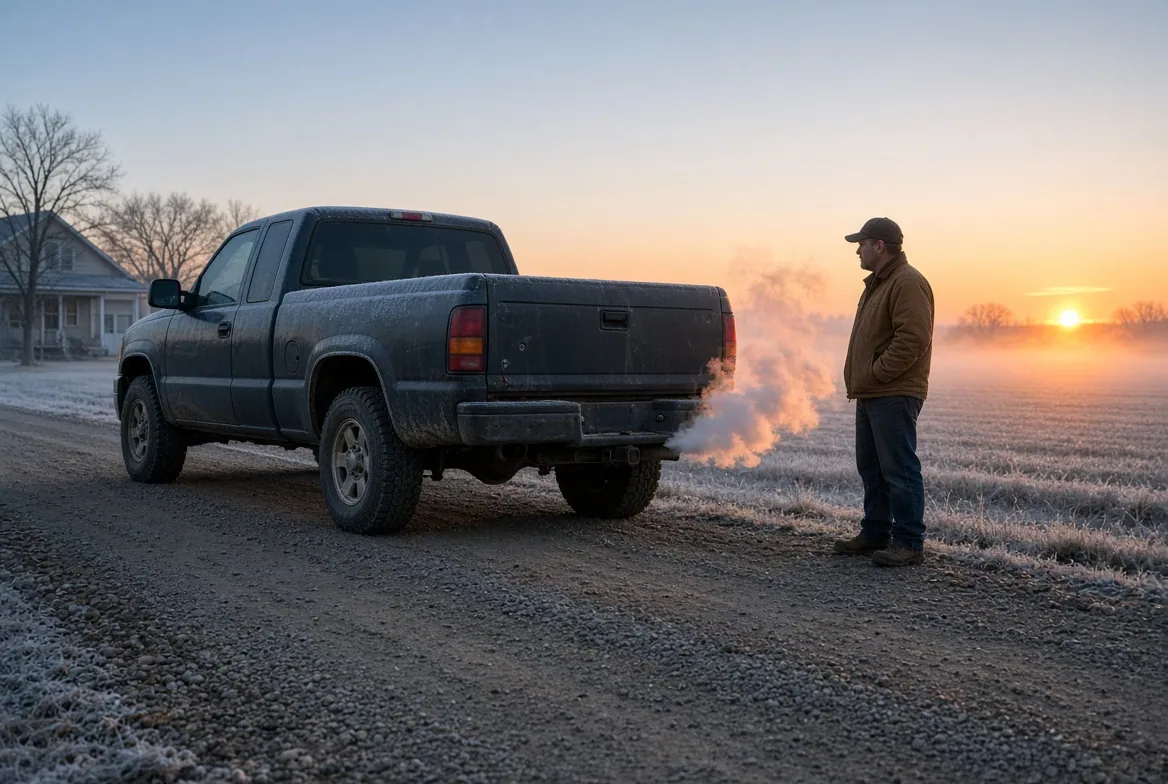
White smoke from a diesel at startup is almost always one of three things: water vapor that disappears within a minute or two, unburned fuel from cylinders that aren’t firing completely while cold, or coolant getting into a cylinder. Smell and timing separate them. Vapor is odorless and brief. Unburned fuel stings your eyes, smells like raw diesel and fades as the engine warms. Coolant smells sweet, often persists, and comes with a falling coolant level.
The second category is where fuel injection lives, but it has several possible causes. Here’s how to sort them.
Three questions that narrow it down
1. What does it smell like?
Sharp and raw, like diesel, means fuel isn’t burning. Sweet means coolant. No smell, especially on a cold, humid morning, usually means condensation.
2. How long does it last?
Vapor: under a couple of minutes. Fuel-related white smoke: until the engine warms, sometimes longer. Coolant: often continuous, sometimes worse after the engine has sat.
3. When does it happen?
Only below freezing? Every start? Only after sitting overnight? Only after a recent repair? Each pattern points somewhere different.
Causes of fuel-related white smoke
A cold diesel needs heat to ignite fuel. If combustion is incomplete, fuel exits as a white or gray vapor. Any of these can be responsible:
Weak cold-start aids. Glow plugs or an intake grid heater that aren’t working, or are working on fewer cylinders than they should, leave cylinders too cold to light reliably. This is one of the most common causes of cold-start white smoke and one of the quickest to fix. Check it before suspecting injectors.
Low compression on one or more cylinders. Compression creates the heat that ignites diesel. A worn or leaking cylinder may not get hot enough on a cold start.
Retarded injection timing. On mechanical pumps, a sticking advance mechanism or incorrect static timing delays injection, and cold starts suffer most. On electronically controlled pumps such as the VP44, timing faults usually set codes. See diesel injection pump timing.
Dribbling or poorly atomizing injectors. An injector that drips or sprays coarse droplets puts fuel into the cylinder in a form that won’t burn well when cold. Expect white smoke at startup that may turn gray under light load.
Slow or sticking injectors. On HEUI engines, cold, thick oil can make injectors respond sluggishly at startup. The Ford 6.0 Power Stroke, whose injectors are fired by engine oil, is well known for rough, smoky cold starts when injectors begin to stick. See 6.0 Power Stroke injector problems.
Fuel quality. Low-cetane fuel ignites less readily. Some customers notice a difference between fuel suppliers in winter.
Causes of coolant-related white smoke
Coolant in the cylinder isn’t a fuel-injection problem, but it’s worth ruling out early because it can cause serious engine damage. Typical paths include a failed head gasket, a cracked head, a leaking EGR cooler on engines that have one, and, on some engines, a leaking injector sleeve or cup that lets coolant reach the cylinder. Watch for a dropping coolant level, bubbles in the overflow bottle and a sweet smell. Our article on diesel injector cup and sleeve leaks covers that particular path.
Quick sorting guide
| What you notice | Most likely cause | First check |
|---|---|---|
| Brief, odorless, humid morning | Condensation | None needed |
| Raw-fuel smell, clears as engine warms, worse in cold | Cold-start aids or compression | Glow plugs or grid heater |
| Raw-fuel smell, one cylinder rough | Injector or compression on that cylinder | Cylinder contribution test |
| Raw-fuel smell and clatter, worse cold | Injection timing | Timing check |
| Sweet smell, coolant dropping | Coolant leak into cylinder | Cooling system pressure test |
| Started after an injector or pump repair | Installation issue | Timing, coding, seals |
When to stop driving
Light, fuel-related white smoke that clears as the engine warms isn’t an emergency, though it’s worth diagnosing. Heavy, continuous white smoke, a sweet smell, a falling coolant level or a misfire that won’t clear means stop and investigate. Coolant in a cylinder can damage the engine, and an injector that’s badly over-fueling can wash oil from the cylinder wall.
Manufacturer reference: Bosch Mobility: common-rail system overview For procedures and specifications, use the current manufacturer information for your engine and model year.
Get the injectors or pump checked
If the cold-start aids and compression check out and the smoke points to injection, Diesel Control Technicians can help. Customers near central Kansas can schedule an on-vehicle check by appointment. If you’re farther away and the injectors or pump are already out, mail the accepted units to DCT using written receiving instructions for supported testing.
Where Diesel White Smoke on Startup leads next: Confirm the actual pump or component family before replacing parts. Record the engine application, existing tests and symptoms, then review the testing process or request a component review. DCT confirms service eligibility and receiving instructions individually.
QUESTIONS ABOUT YOUR DIESEL COMPONENT?
Questions about diesel White Smoke on Startup?
Tell us about the engine, symptoms and checks you’ve already completed. Our specialists can help you decide what to do next.