
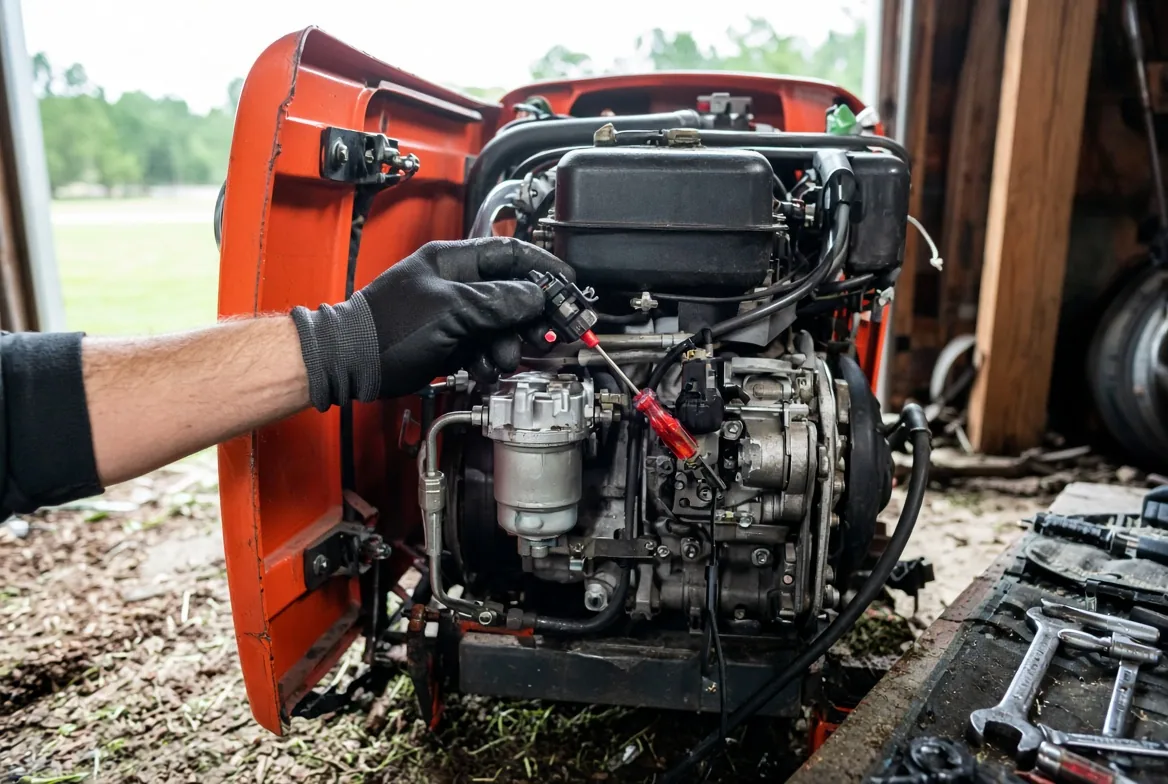
Kubota diesels power compact tractors, zero-turn mowers, utility vehicles, compact track loaders, mini excavators, generators and equipment from many other manufacturers. On these small engines, a true injection pump failure is less common than the problems that look like one: a failed fuel shutoff solenoid, air in the fuel, water or old fuel, clogged filters, and carbon-fouled nozzles. Check those first. When the pump really is the problem, it’s usually wear, governor trouble or damage from contaminated fuel.
What’s on your Kubota
Many older and smaller Kubota engines use a compact mechanical injection pump with one element per cylinder, mechanical nozzles and glow plugs, often with indirect injection. Many newer and larger Kubota engines built to later emissions standards use electronically controlled common-rail injection. Check the engine model and serial number on the engine plate, and the pump’s own label, before ordering parts.
The common culprits
Fuel shutoff solenoid
Most Kubota engines use an electric solenoid to allow fuel delivery when the key is on and stop it when the key is off. A failed solenoid, or a wiring or relay fault feeding it, causes a no-start that looks exactly like a dead pump. Listen for the solenoid when the key is turned, and check that it’s getting power. It’s one of the most frequent “injection pump” problems on Kubota-powered equipment, and one of the simplest to fix.
Air in the fuel
Small fuel systems with electric lift pumps, sediment bowls and multiple hose connections are prone to air leaks. Air causes hard starting, stalling and loss of power. Running a tank dry also introduces air that must be bled out. See air in the diesel fuel system.
Water and stale fuel
Compact equipment often sits for long stretches, sometimes outdoors. Condensation, water from cans and old fuel lead to corrosion, varnish and microbial growth. Rusted or stuck pump parts and seized nozzles can follow.
Clogged filters
Small filters and sediment bowls plug quickly with dirty fuel. A restricted filter causes power loss under load and stalling.
Carbon-fouled nozzles
On indirect-injection engines that idle a lot or run at light load, such as mowers and generators, nozzles can carbon up and spray poorly, causing smoke, rough running and hard starting. Pop testing and servicing the nozzles often helps. See diesel injector pop test.
When it really is the pump
- Hard starting and low power that persist after supply, air and nozzles have been checked
- Governor problems: hunting, poor speed control or failure to reach rated speed
- Leaks from the pump body or fittings
- Damage from water or debris, often discovered after a contamination event
Removal and timing
On many small Kubota engines, the injection pump’s timing is set with shims between the pump and the engine. If you remove the pump, keep the shims together and note their thickness, and follow the engine maker’s procedure for reinstalling and timing it. See diesel injection pump timing.
Prevention for compact equipment
- Use fresh fuel and avoid storing machines with old fuel in the tank.
- Keep containers clean and dry, and fill from clean sources.
- Replace filters on schedule and check sediment bowls.
- Don’t run the tank dry.
Kubota symptoms and first checks
| Symptom | First checks |
|---|---|
| Cranks, won’t start | Shutoff solenoid and its power, fuel supply, air |
| Starts, then dies | Air in the fuel, clogged filter, solenoid |
| Hard starting in cold weather | Glow plugs, battery, fuel quality |
| White smoke and rough running | Glow plugs, nozzles, timing |
| Power loss under load | Filter, fuel supply, air filter |
| Hunting at steady speed | Air in the fuel, governor |
Many Kubota-powered machines are built by other manufacturers, so the engine plate, not the machine’s brand, tells you what’s under the hood.
Manufacturer reference: Kubota: service and support For procedures and specifications, use the current manufacturer information for your engine and model year.
Get your Kubota pump or nozzles serviced
For a small Kubota diesel, record the engine model, pump label and exact symptoms before deciding whether to remove the injection equipment. DCT can discuss supported pump and injector evaluation and select the receiving location for an approved shipment or component drop-off.
Where Kubota Injection Pump Problems on Small Diesel Engines leads next: Confirm the actual pump or component family before replacing parts. Record the engine application, existing tests and symptoms, then review the testing process or request a component review. DCT confirms service eligibility and receiving instructions individually.
QUESTIONS ABOUT YOUR DIESEL COMPONENT?
Questions about kubota Injection Pump Problems on Small Diesel Engines?
Send us the pump number, engine information and symptoms. We’ll help you understand the next steps for your exact component.