
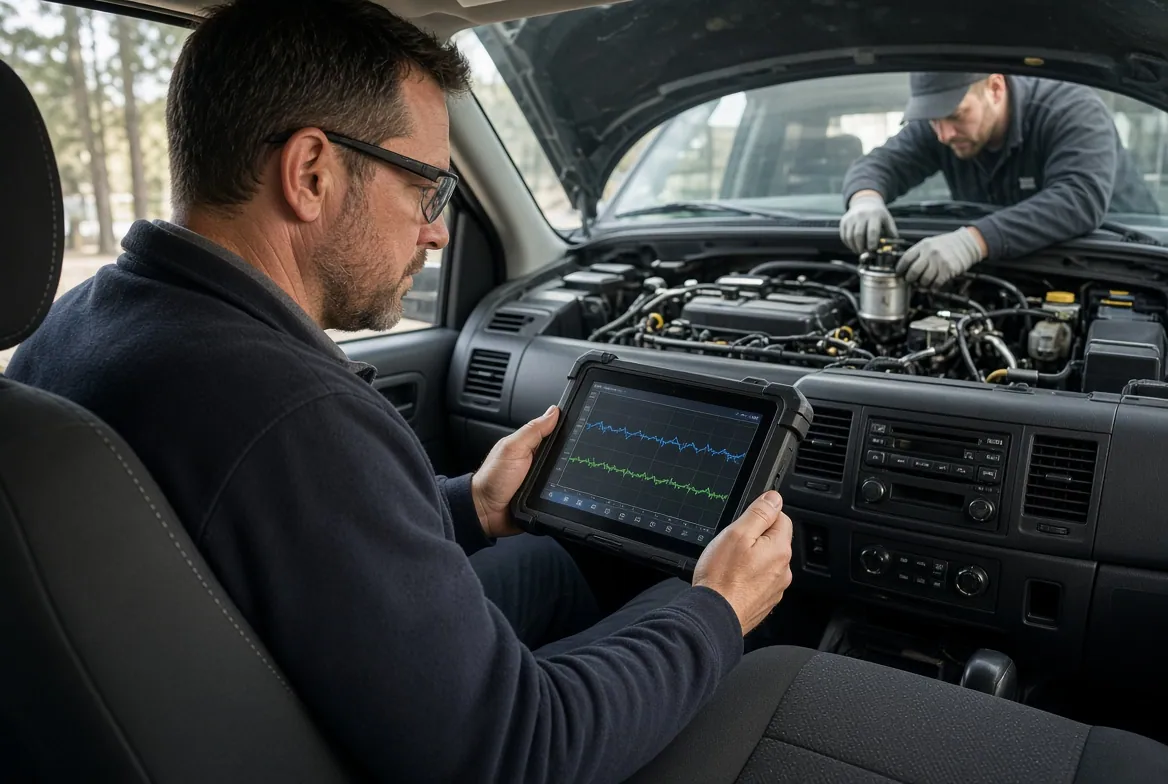
P0087 means Fuel Rail/System Pressure – Too Low. The engine computer wanted a certain rail pressure, measured less than that through the rail pressure sensor, and the gap lasted long enough to set a code. It tells you the system can’t keep up. It doesn’t tell you why.
On a common-rail diesel, the possible reasons fall into four groups: not enough fuel reaching the high-pressure pump, a pump that can’t build pressure, fuel leaking out of the high-pressure side faster than the pump can replace it, or a sensor or circuit giving a false reading. Work through them in roughly that order, simplest checks first.
Read the clues before turning a wrench
When and how the code sets narrows things quickly. Look at freeze-frame data and, if you can, log desired versus actual rail pressure while reproducing the problem.
| When P0087 shows up | Likely direction |
|---|---|
| Under heavy load or high rpm | Supply restriction, weak lift pump, pump capacity |
| At idle, especially when hot | Injector return leakage, relief valve |
| During cranking (long crank or no start) | Supply, air, pump wear, major leakage |
| Right after a fill-up or filter change | Air in the system, contaminated or wrong fuel |
| With metal in the fuel filter | Pump failure; stop and inspect |
| Intermittently in cold weather | Gelling or waxing in filters and lines |
1. The supply side
The high-pressure pump can only compress what it receives.
- Fuel filter: replace it if it’s due or questionable, and inspect what comes out for water, wax or glitter.
- Lift or transfer pump: measure supply pressure at the specified test point. A weak pump often shows up as P0087 under load.
- Suction-side air leaks: a clear test line at the pump inlet will show bubbles. See air in the diesel fuel system.
- Tank pickup and lines: collapsed hoses, a cracked pickup or debris at the screen can restrict flow.
- Fuel itself: water, gel or wrong fuel.
2. The high-pressure pump and its metering valve
If supply is good, look at the pump’s control. Compare the metering valve’s command with actual pressure. A valve commanded wide open while pressure stays low suggests the pump can’t deliver, fuel is escaping somewhere, or the valve is sticking mechanically despite a correct command. A valve that isn’t being commanded correctly, or a circuit fault, points to control. Our guide to the fuel pressure regulator vs metering valve explains the differences between systems.
Pump wear is real, but don’t condemn the pump until leakage has been checked.
3. Leakage from the high-pressure side
This is the step most often skipped, and the one that most often saves a pump.
- Injector return flow. Excess internal leakage can contribute to low rail pressure on applicable common-rail designs. An engine-approved injector return-flow test, where supported, helps identify abnormal leakage but does not by itself prove the root cause.
- Pressure relief or limiter valve. A valve that leaks or opens early lets rail pressure escape. On some engines its drain can be checked for flow.
- Internal connections. On 5.9 and 6.7 Cummins common-rail engines, each injector is fed through a high-pressure connector tube in the head. A connector that wasn’t replaced or torqued correctly during injector work can leak internally.
- External leaks. Shut down and use manufacturer-approved inspection and depressurization procedures; never search a running high-pressure circuit with hands or cardboard. Fuel can penetrate skin. If the engine also sets P0093, see P0093: large fuel system leak.
4. Sensor and circuit
A rail pressure sensor that reads low will set P0087 on a healthy system. Check the sensor’s reading with the engine off (it should drop to near zero once pressure bleeds off) and compare it with expected values. Inspect wiring and connectors. Sensor faults usually come with related sensor-circuit codes, but not always.
Engine-specific notes
- CP4-equipped trucks (LML Duramax, 6.7 Power Stroke, 2019–2020 Ram 6.7): P0087 plus metal in the filter is a stop-now situation. Read Bosch CP4 pump failure before deciding anything.
- 6.7 Cummins: injector return and the rail relief valve are common directions to check, along with the lift pump.
- L5P Duramax: check the HP4’s suction control valve and the supply before blaming the pump.
P0087 is a pressure condition, not a pump verdict
Preserve the engine model, codes and freeze-frame data, cranking or load condition, low-pressure supply measurements and supported rail-control results. If fuel debris is confirmed, stop routine pressure testing and follow the maker’s contamination plan. P0087 should not trigger an automatic pump or full injector-set purchase.
What not to do
- Don’t replace the high-pressure pump without checking supply and injector leakage.
- Don’t replace injectors without measuring their return flow, or testing them.
- Don’t keep driving if you’ve found metal in the fuel.
Manufacturer reference: Bosch Mobility: common-rail system overview For procedures and specifications, use the current manufacturer information for your engine and model year.
Need help pinning it down?
For on-vehicle symptoms, ask DCT about appropriate diagnostic appointments at its Hutchinson location. Eligible pumps and injectors may instead be considered for bench evaluation through the nationwide mail-in process. If supply and return-flow checks are complete, share those readings with your inquiry first; DCT confirms eligibility and gives receiving instructions before an approved component is shipped. They help us confirm whether the component on the bench is the one that caused the code.
Where P0087 on a Diesel leads next: Confirm the actual pump or component family before replacing parts. Record the engine application, existing tests and symptoms, then review the testing process or request a component review. DCT confirms service eligibility and receiving instructions individually.
When a fuel-pressure fault warrants component evaluation
Once supply, control, sensor and leakage checks narrow the possibilities, share the pump number and actual test evidence with DCT. P0087 by itself does not confirm pump failure.
QUESTIONS ABOUT YOUR DIESEL COMPONENT?
Questions about p0087 on a Diesel?
Tell us about the engine, symptoms and checks you’ve already completed. Our specialists can help you decide what to do next.