
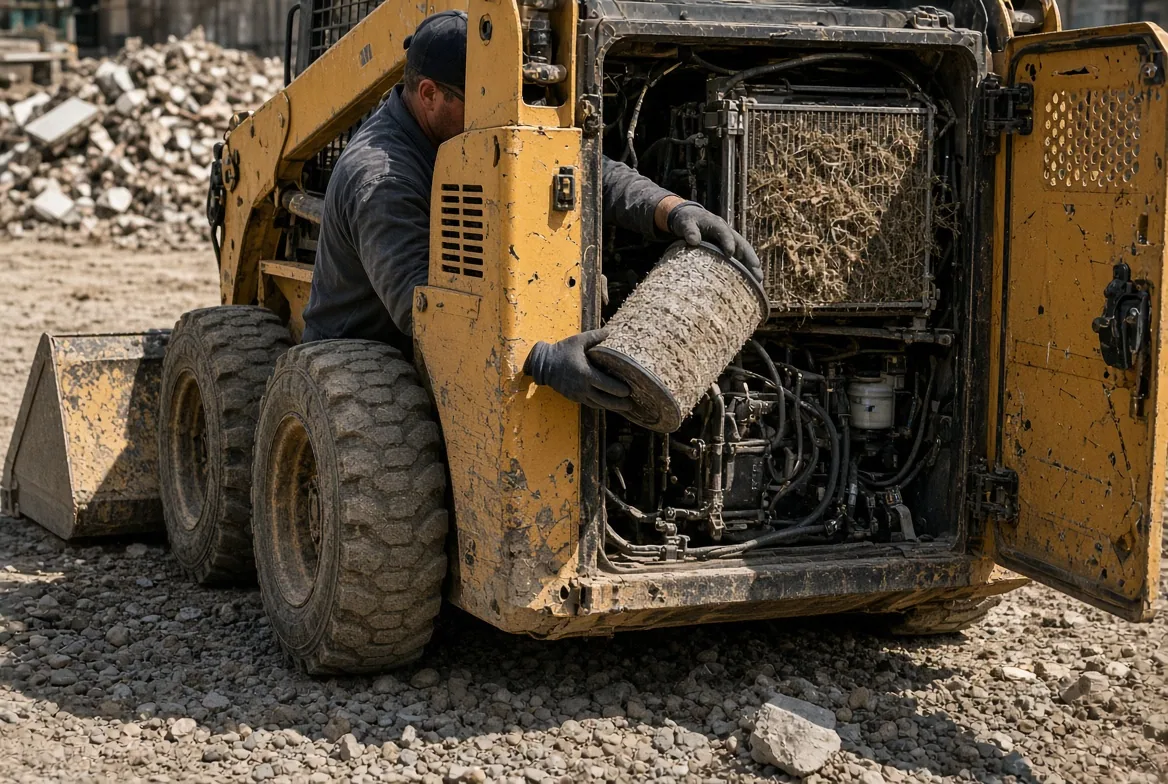
A skid steer or compact track loader should dig into a pile, not stall against it. When one bogs down pushing or climbing, the usual suspects are restricted fuel, a plugged air filter, overheating from a clogged cooler, an engine derate, or the hydrostatic drive and hydraulic system pulling more power than the engine can give. Compact loaders work in some of the dirtiest conditions of any machine, so the simple causes are common. Check them before suspecting the injection system.
Why compact loaders are different
Skid steers and compact track loaders pack a diesel engine, hydrostatic drive pumps, an auxiliary hydraulic system and a cooling package into a very small space. The engine is often working near its limit, and many machines use anti-stall features that reduce hydraulic or drive demand when engine speed drops. A machine that feels weak may be doing exactly what it’s designed to do: protecting an engine that’s struggling.
The five usual causes
1. Fuel restriction or contamination
Small fuel tanks get filled from cans, service trucks and site tanks, often by different people. Water, dirt and the occasional wrong fluid end up in them. A plugged filter or water in the separator causes power loss under load, especially as the machine works harder.
2. Air filter
Dust is constant on compact equipment. A plugged air filter steals power and can cause black smoke. Check the restriction indicator and filter regularly.
3. Cooling
Rear-mounted coolers on compact loaders clog with dust, chaff and debris. Rising temperatures trigger derates or reduce performance. Cleaning the cooling package is one of the most effective fixes for a “weak” machine.
4. Derates and codes
Modern machines reduce power for high temperatures, sensor faults, aftertreatment issues and fuel system faults. Check the display for warnings and codes.
5. Hydrostatic drive and hydraulics
Worn drive pumps or motors, low hydraulic oil, leaking relief valves or attachment problems make the machine feel weak. If engine speed holds under load but the machine still won’t push, the hydraulic side is more likely.
When it is the injection system
- Low rail pressure on common-rail engines
- Worn injectors causing power loss, smoke and rough running
- Worn mechanical pumps on older machines
- A failing fuel shutoff solenoid, which usually causes stalling or a no-start, though a solenoid that doesn’t fully retract can also limit power
- Air in the fuel from loose fittings or filter housings
Many compact loaders use Kubota, Deere, Cat, Perkins or other small diesels, so the injection system depends on the engine. See Kubota injection pump problems for one common family.
A quick checklist
- Read codes on the display.
- Check the air filter and the cooling package.
- Drain the water separator and check the fuel filters.
- Check for air in the fuel.
- Watch engine speed under load.
- On common-rail engines, check rail pressure under load if you have the tools.
For rental fleets and contractors
Machines with many operators and unknown fueling history have more fuel contamination and more surprise failures. Tracking fueling sources, filter changes and fuel-related failures by machine helps spot patterns. See fleet fuel injection downtime.
Fueling habits behind most compact loader fuel problems
- Filling from cans that have carried water, dirt or another fluid
- Fueling on the ground in dust and wind, with the fill cap off
- Running the tank nearly dry, which pulls sediment and air
- Skipping water separator drains between rentals or jobs
- Using filters that fit but don’t meet the engine maker’s specification
None of these feels serious in the moment. Together, they account for a large share of the fuel problems compact loaders develop. A clean, dedicated fuel container and a habit of wiping the fill neck before opening it go a long way.
Manufacturer reference: Kubota: service and support For procedures and specifications, use the current manufacturer information for your engine and model year.
Get the fuel system tested
If the basic checks are clear and the engine still lacks power, Diesel Control Technicians can test the injection pump and injectors. Contact us to schedule an appointment, and we’ll confirm which location suits the machine, or send the accepted components to DCT using written receiving instructions.
Where Skid Steer Loses Power leads next: Confirm the actual pump or component family before replacing parts. Record the engine application, existing tests and symptoms, then review the testing process or request a component review. DCT confirms service eligibility and receiving instructions individually.
QUESTIONS ABOUT YOUR DIESEL COMPONENT?
Skid Steer Loses Power: Fuel, Air, Heat or Hydraulics?
A skid steer losing power may have fuel, airflow, heat or hydraulic causes. Compare the symptom patterns and available evidence before assigning the fault to an injection component. Include the exact component number, equipment application, symptoms and checks already completed.