
WHEN THIS SERVICE MAY BE CONSIDERED
Fuel contamination and incorrect part matching can create expensive repeat failures. Safe diagnosis separates engine-level symptoms from component-level test evidence.
THE IMPORTANCE OF THE EXACT COMPONENT
Procedures vary across manufacturers, designs, generations and component conditions. DCT first needs to confirm identification, service eligibility, relevant equipment and any exclusions. A requested test or repair should never be interpreted as a guaranteed outcome.
DETAILS TO SEND
Injector or pump numbers, engine model, rail-system details, symptoms and known contamination history.
Why common-rail diagnosis must consider the complete fuel path
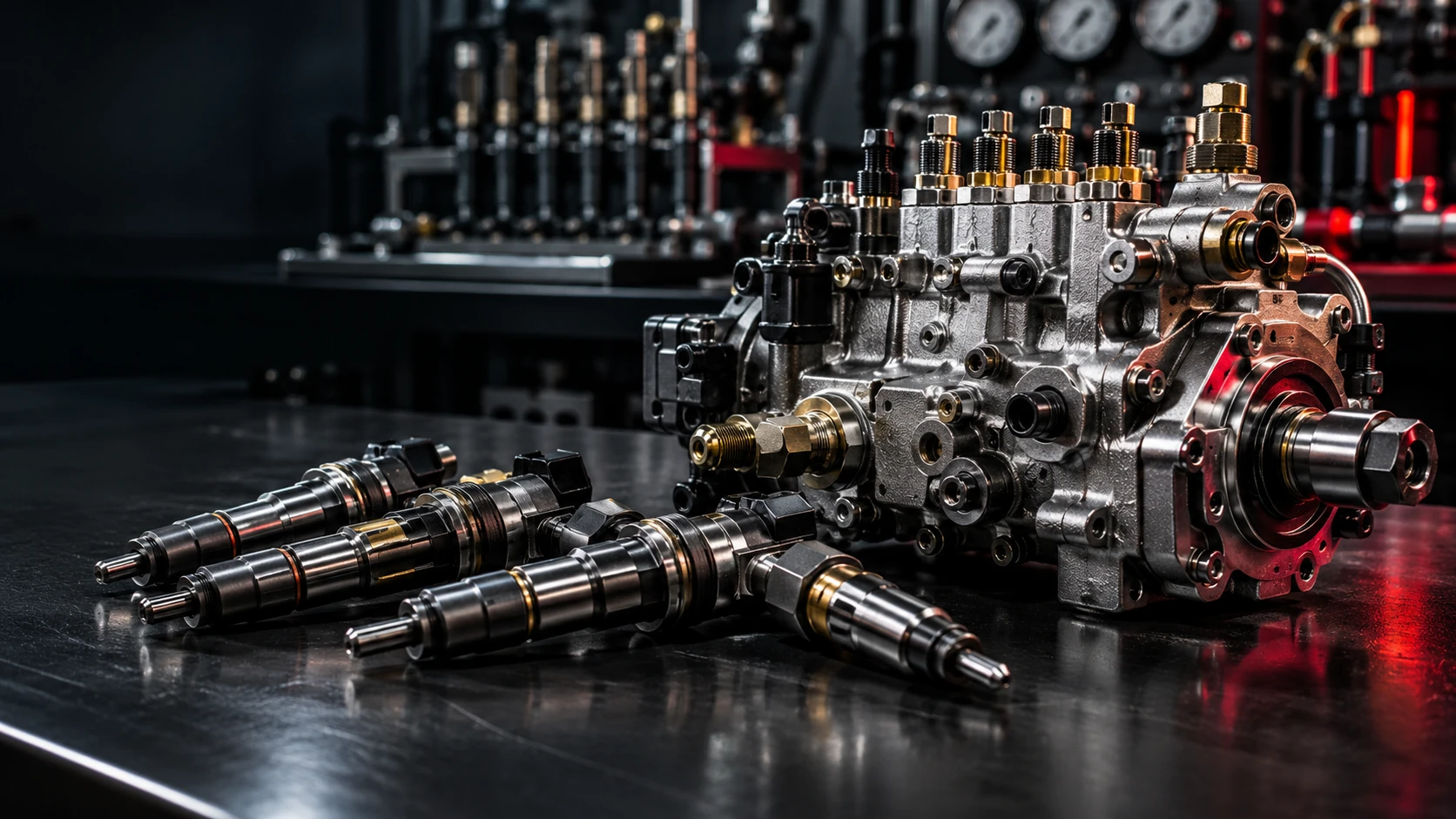
Common-rail systems use a high-pressure supply pump to charge a shared rail while electronically commanded injectors deliver fuel. A rail-pressure concern may involve upstream fuel supply, a metering valve, a pressure-control element, sensor feedback, an injector return-flow issue or the pump. The architecture and the particular component number determine which conclusions a measurement can support.
Compare commanded and observed conditions
When available from qualified diagnostic work, report the exact engine and injection-system generation, trouble codes, commanded versus observed rail pressure and the operating conditions under which readings were captured. Also document filter and fuel quality history, recent replacements, and any contamination findings. A pressure code is evidence for a diagnostic pathway, not an automatic order to rebuild a high-pressure pump.
High-pressure safety and service scope
Common-rail pressure can penetrate skin and cause severe injury. Do not loosen fuel lines or attempt spray checks on an operating engine. Proper inspection and controlled component tests require the applicable procedures and trained personnel. See the common-rail pump guide, P0087 diagnostic resource, and CP3 versus CP4 explanation before discussing a supported component evaluation.
WHAT HAPPENS NEXT?
Provide exact numbers, a clear label photo and the equipment context.
DCT reviews the specific work requested and suitable service delivery path.
Any inspection/testing charges, constraints and required approvals are discussed.
Review confirmed findings, appropriate repair or replacement choices and documentation.
TELL US WHAT YOU NEED.
Our team will help confirm what service is available, explain the next steps and review details before any work begins.