FUEL SYSTEM GUIDE
Mechanical Diesel Injection Pumps
Inline and rotary/distributor pumps, governors and mechanical metering.
FUEL INJECTION / COMPONENT SYSTEMS
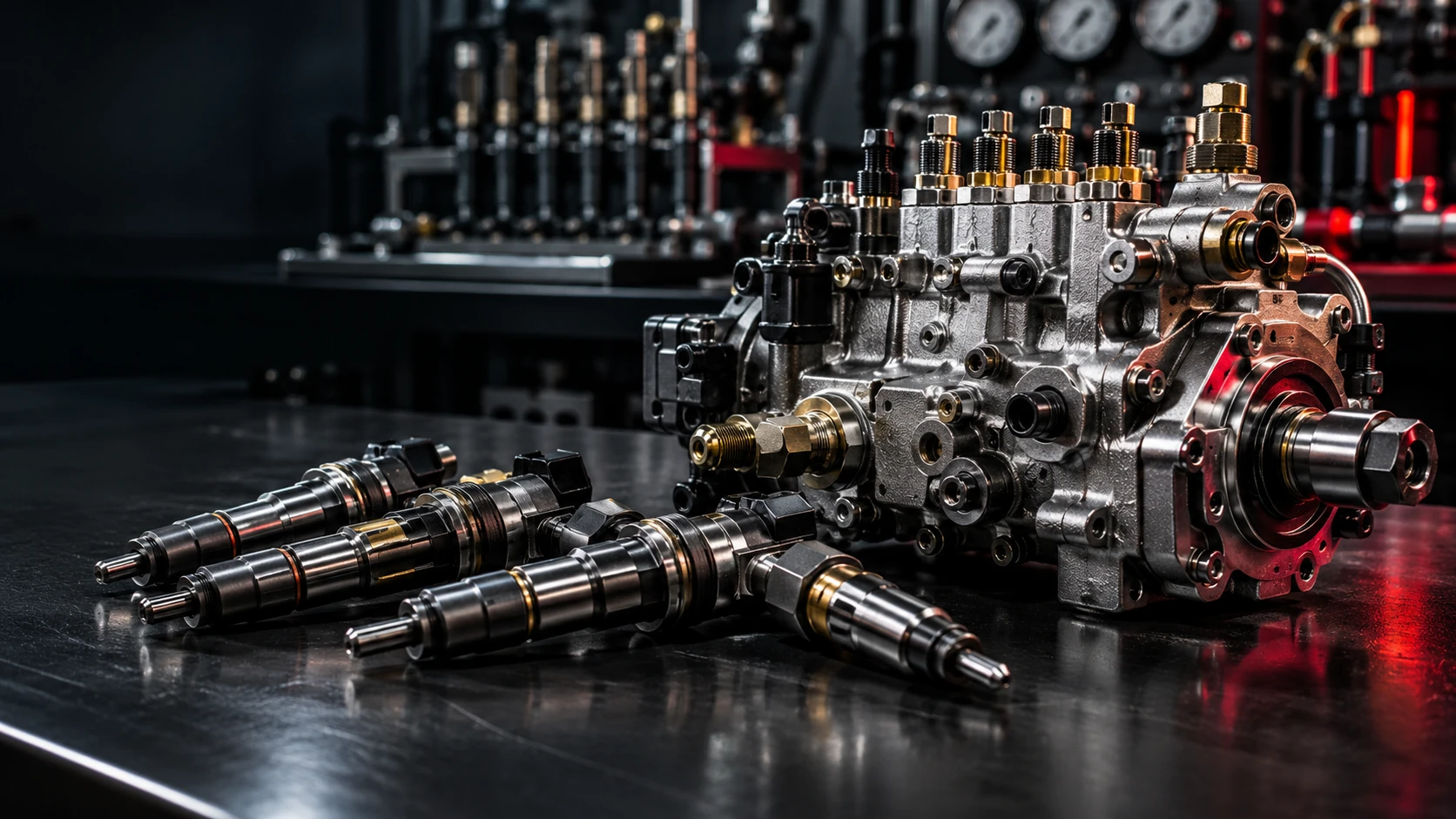
Learn how the major mechanical, electronic, unit-injection and common-rail families differ before choosing the right testing or repair inquiry.
KNOW YOUR SYSTEM
A Bosch inline pump, a HEUI injector and a common-rail pressure pump all help deliver diesel fuel, but they use different operating principles. A meaningful service inquiry starts with the system architecture, engine application and precise part number.
Browse the nine component families below. Each guide identifies relevant technologies, components and questions to discuss with DCT before shipping or committing to work.
NINE COMPONENT FAMILIES
These are technical reference paths. The exact services and test methods are confirmed only after a component-specific review.
FUEL SYSTEM GUIDE
Inline and rotary/distributor pumps, governors and mechanical metering.
FUEL SYSTEM GUIDE
Distributor and inline systems with electronic metering, timing and control.
FUEL SYSTEM GUIDE
High-pressure supply pumps, metering valves and contamination assessment.
FUEL SYSTEM GUIDE
Conventional nozzles, opening-pressure testing, spray pattern and leakage.
FUEL SYSTEM GUIDE
EUI, EUP, UPS, UIS and mechanical unit-injector system identification.
FUEL SYSTEM GUIDE
Hydraulically actuated electronic unit injectors and high-pressure oil controls.
FUEL SYSTEM GUIDE
Solenoid and piezo injectors, return-flow checks and coding considerations.
FUEL SYSTEM GUIDE
Lift and feed pumps, priming, regulators, filtration and return circuits.
FUEL SYSTEM GUIDE
Pump internals, injector nozzles, control valves, seals and fitment checks.
Evaluation is not the same as authorization for a rebuild. A controlled process identifies the component and the available test, explains findings and proposed options, and obtains separate customer approval for repair or replacement. When the supported procedure requires it, calibration or a verification test can help show what changed; a bench result does not certify the entire engine or vehicle.
View the six connected service stages or begin an eligibility-reviewed mail-in request. No component should be shipped until DCT confirms where and how to send it.
Not reliably. Equipment and engine models can have multiple fuel-system variations. The complete component part number is the strongest starting point.
No. Low fuel supply, wiring, engine mechanical condition, contamination and other issues can overlap with pump and injector symptoms.
No universal coverage is claimed. DCT reviews the specific part family, equipment and available procedures before accepting an evaluation.
This technical guide describes possible component families, not a guarantee that every model can be tested, rebuilt, sourced or accepted. Work depends on actual parts, test equipment, procedures and staff review. Manufacturer references do not imply factory authorization.
Tell us the component, equipment, symptoms and part numbers you have. We’ll help determine the appropriate next step before you ship or travel.