SPECIALIZED DIESELFUEL INJECTION SERVICES
Hutchinson, KS(620) 665-6700
Great Bend, KS(620) 792-4333


Diesel injection components and specialist workshop equipment

FUEL INJECTION / AN EXPLAINED SYSTEM

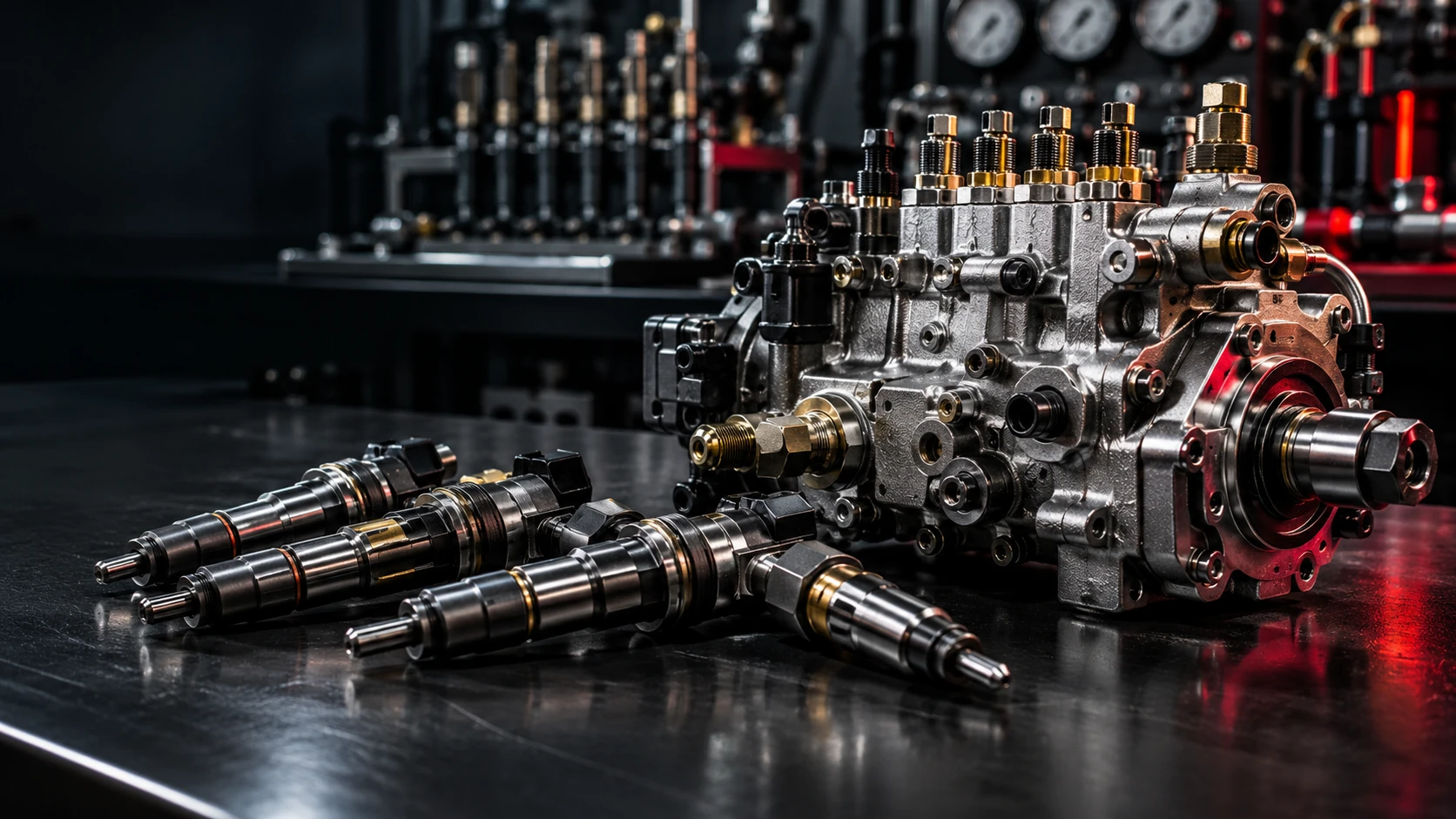
Electronically Controlled Diesel Injection Pumps

Distributor and inline systems with electronic metering, timing and control.

A CLOSER LOOK AT THE TECHNOLOGY

THE PART ONLY MAKES SENSE IN ITS SYSTEM.

Electronically controlled injection pumps combine mechanical fuel delivery with electrical inputs, control solenoids, actuators and engine-management strategies. A fault code can point toward a circuit without proving that the complete pump has failed.

The pump must deliver fuel mechanically while responding correctly to commands. A no-start, poor response or intermittent fault may involve low-pressure supply, wiring, sensors, control hardware, mechanical wear or an engine-side condition.

That distinction matters when a component is suspected of failing. The exact assembly number, its engine application and the symptoms around it are more useful than a broad system name alone. DCT can review those details to discuss which supported service questions are worth asking next.

THE STORY INSIDE THE SYSTEM

THREE DETAILS THAT CHANGE THE ANSWER.

These component families help reveal why a model-specific service plan matters. They are identification references, not a promise that every item is accepted for repair.

01 / THE DETAILS

Distributor pump examples

Use the full unit number and controller configuration to narrow the technical question.

Relevant examples and component names include Bosch VP30 and VP44; Stanadyne DS4; Electronically controlled DENSO and ZEXEL units; Electronic Delphi / Lucas distributor systems. The exact model and application determine what these names mean for a particular service request.

02 / THE DETAILS

Electronic inline architectures

Electronic control can also be applied to otherwise mechanical-looking inline assemblies.

Relevant examples and component names include Electronic fuel-metering and delivery controls; Electronic governor systems; Injection timing-control mechanisms; Pump-mounted sensors and position/speed feedback. The exact model and application determine what these names mean for a particular service request.

03 / THE DETAILS

Control hardware

Service decisions depend on the specific failure and availability of parts or procedures.

Relevant examples and component names include Fuel-control solenoids and timing valves; Metering actuators and electronic governors; Pump position and speed sensors; Connectors and related control components. The exact model and application determine what these names mean for a particular service request.

THE DECISION THAT COUNTS

GOOD TESTING ANSWERS A SPECIFIC QUESTION.

Before a component is disassembled or shipped, the evidence and the supported test method need to match the equipment. That helps distinguish a useful evaluation from an expensive assumption.

Share the engine configuration, the original part number and what changed when the problem appeared. Previous diagnostic measurements can be valuable, but they need context: a reading without its test condition can tell the wrong story.

What a technical evaluation may examine
  1. Record the exact pump part number, engine-control application and reported fault codes.
  2. Separate electrical power, grounding, wiring and fuel-supply checks from the pump-level question.
  3. For supported units, review feasible electronic and mechanical tests rather than assuming a code proves a failed pump.
  4. Discuss any control-component, calibration, repair or replacement limitations before authorizing work.

Make the first inquiry a stronger one.

Tell DCT what component you have and what has already been learned. For some models, the correct answer is a targeted test; for others it may be repair, rebuilding, exchange, replacement—or no service until more information is available.

Useful identification and diagnostic details to include
  • Pump identification label and any controller/actuator numbers
  • Vehicle or equipment model, engine data and emissions generation
  • Fault codes plus tests already performed
  • Whether the concern is intermittent, heat-related, or present during crank

Questions about Electronically Controlled Diesel Injection Pumps

Does a VP44 code mean I need a complete pump?

A code is diagnostic evidence, not a complete failure analysis. Appropriate upstream electrical and fuel-supply checks may still be necessary.

Can every electronic pump be rebuilt?

No. Technical data, components, electronics, equipment and service permissions differ by family and part number.

Will the pump need on-engine programming?

Some electronic systems have installation or control-module requirements. DCT must confirm which steps are in scope; component bench work is not equivalent to all vehicle programming.

Confirm the exact unit before service

This technical guide describes possible component families, not a guarantee that every model can be tested, rebuilt, sourced or accepted. Work depends on actual parts, test equipment, procedures and staff review. Manufacturer references do not imply factory authorization.

THE RIGHT ANSWER STARTS
WITH THE RIGHT QUESTIONS.

Tell us the component, equipment, symptoms and part numbers you have. We’ll help determine the appropriate next step before you ship or travel.

Start a fuel-injection inquiry