SPECIALIZED DIESELFUEL INJECTION SERVICES
Hutchinson, KS(620) 665-6700
Great Bend, KS(620) 792-4333


Diesel injection components and specialist workshop equipment

FUEL INJECTION / AN EXPLAINED SYSTEM

Mechanical Diesel Injection Pumps

Inline and rotary/distributor pumps, governors and mechanical metering.

A CLOSER LOOK AT THE TECHNOLOGY

THE PART ONLY MAKES SENSE IN ITS SYSTEM.

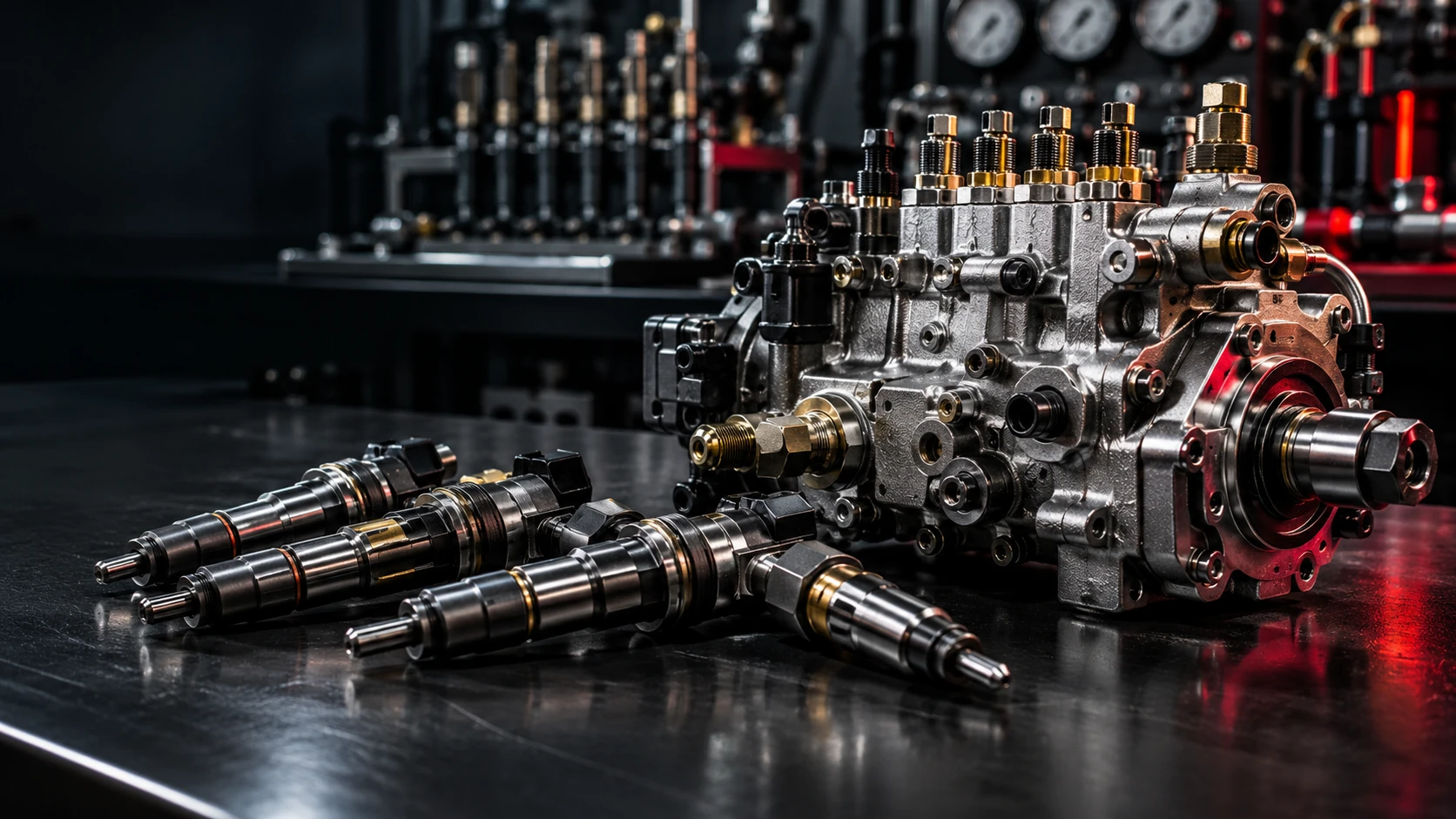
Mechanical injection pumps use precisely controlled moving parts to meter and time fuel without relying on a modern common-rail architecture. Their service requirements vary considerably by pump family, governor and engine application.

An inline pump has an individual pumping element for each cylinder. A rotary or distributor pump meters and distributes fuel through a different internal arrangement. The same complaint can originate in the supply circuit, timing, governor, injectors or the engine rather than in the pump itself.

That distinction matters when a component is suspected of failing. The exact assembly number, its engine application and the symptoms around it are more useful than a broad system name alone. DCT can review those details to discuss which supported service questions are worth asking next.

THE STORY INSIDE THE SYSTEM

THREE DETAILS THAT CHANGE THE ANSWER.

These component families help reveal why a model-specific service plan matters. They are identification references, not a promise that every item is accepted for repair.

01 / THE DETAILS

Inline pump families

Pump identification starts with the complete tag, not simply the brand.

Relevant examples and component names include Bosch A, MW, P, P3000 and P7100 series; ZEXEL / Diesel Kiki inline units; AMBAC / American Bosch inline pumps; Simms / Minimec, Motorpal and DENSO inline families; Delphi / CAV mechanical inline variants. The exact model and application determine what these names mean for a particular service request.

02 / THE DETAILS

Rotary and distributor families

The hydraulic head, rotor, transfer section and advance mechanism are model-specific.

Relevant examples and component names include Stanadyne DB2, DB4 and Roosa Master units; Bosch VE rotary pumps; Delphi / Lucas / CAV DPA and DPS families; DENSO and ZEXEL distributor-type pumps. The exact model and application determine what these names mean for a particular service request.

03 / THE DETAILS

Governors, timing and internals

A usable service decision considers the whole assembly.

Relevant examples and component names include Mechanical governor and speed-control assemblies; Delivery valves, plungers and barrels; Hydraulic head and rotor assemblies; Transfer pumps, fuel metering and advance mechanisms. The exact model and application determine what these names mean for a particular service request.

THE DECISION THAT COUNTS

GOOD TESTING ANSWERS A SPECIFIC QUESTION.

Before a component is disassembled or shipped, the evidence and the supported test method need to match the equipment. That helps distinguish a useful evaluation from an expensive assumption.

Share the engine configuration, the original part number and what changed when the problem appeared. Previous diagnostic measurements can be valuable, but they need context: a reading without its test condition can tell the wrong story.

What a technical evaluation may examine
  1. Confirm model number, drive arrangement, engine family and any governor or timing configuration.
  2. Review signs of wear, leakage, contamination or previous adjustment before deciding what to measure.
  3. Where an applicable procedure and bench are available, discuss metered delivery, timing/advance behavior, governor operation and leakage.
  4. Explain whether testing, repair, rebuilding, calibration or replacement is appropriate; no repair begins without authorization.

Make the first inquiry a stronger one.

Tell DCT what component you have and what has already been learned. For some models, the correct answer is a targeted test; for others it may be repair, rebuilding, exchange, replacement—or no service until more information is available.

Useful identification and diagnostic details to include
  • Complete pump plate and stamped numbers, including suffixes
  • Engine manufacturer, engine model and serial number when available
  • Description of starting, idle, load or smoke symptoms
  • Any prior fuel-supply and injector test findings

Questions about Mechanical Diesel Injection Pumps

Can an older mechanical injection pump still be evaluated?

Many legacy pump families have established service concepts, but test equipment, calibration information and replacement-parts availability must be confirmed for the exact unit.

Is a Bosch P7100 the same as a Bosch VE?

No. The P7100 is an inline pump family, while the VE is a rotary/distributor design. Identification determines the suitable test and service plan.

Does changing a governor setting resolve poor performance?

Not necessarily. Incorrect supply pressure, wear, injector issues or engine condition can cause similar symptoms. Unverified adjustment may introduce further problems.

Confirm the exact unit before service

This technical guide describes possible component families, not a guarantee that every model can be tested, rebuilt, sourced or accepted. Work depends on actual parts, test equipment, procedures and staff review. Manufacturer references do not imply factory authorization.

THE RIGHT ANSWER STARTS
WITH THE RIGHT QUESTIONS.

Tell us the component, equipment, symptoms and part numbers you have. We’ll help determine the appropriate next step before you ship or travel.

Start a fuel-injection inquiry