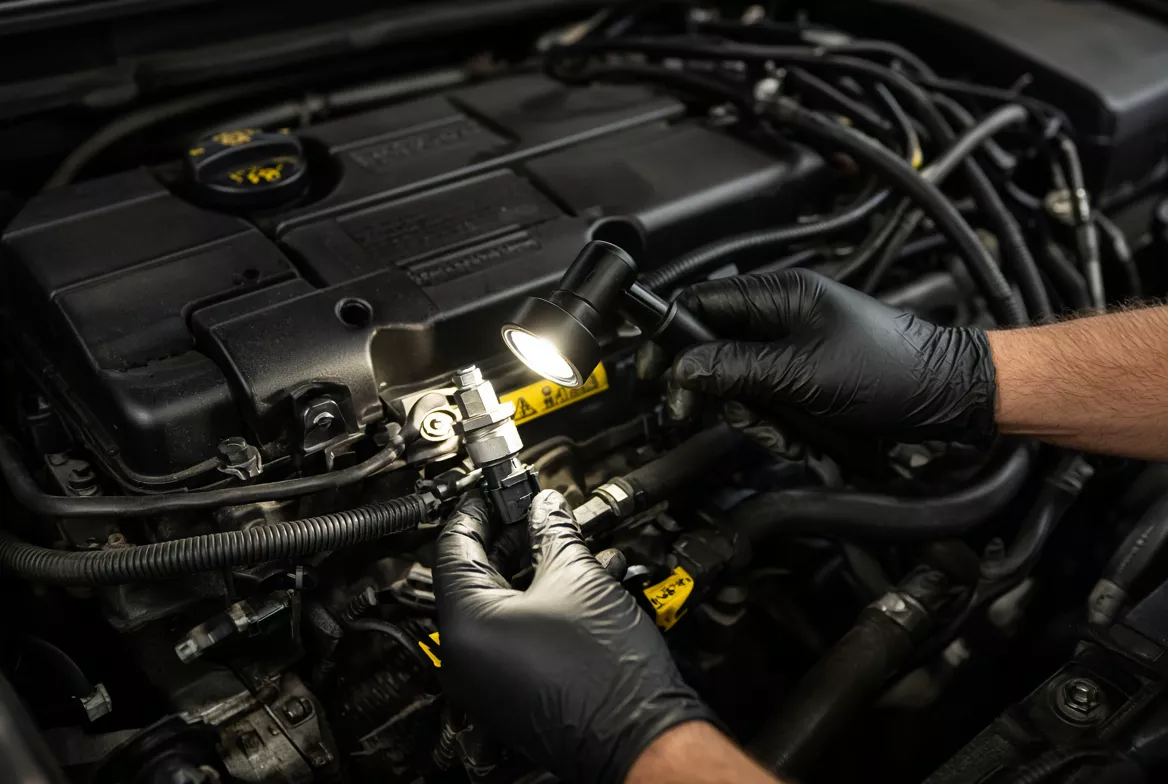
When a diesel runs badly, the symptom is only the beginning of the story. A hard start, rough idle, smoke or limp mode may involve fuel supply and injection—but electrical controls, air delivery, engine mechanical condition and exhaust systems can produce overlapping complaints. Choose the behavior you can actually describe, then use the related trouble codes and system guides to narrow the questions.
Start with what the engine is doing
- Cranks, but will not start: consider cranking conditions, fuel supply, electrical synchronization and the pressure needed by the installed injection system.
- Rough idle, misfire or smoke: distinguish a cylinder-specific issue from common causes affecting the entire engine.
- Reduced power or limp mode: find out whether the controller limited power and which monitored condition triggered the response.
What to record before replacing anything
Capture codes and freeze-frame details before clearing them, describe whether the issue occurs under load or at startup, note water-in-fuel or contamination findings and keep a record of components already replaced. A successful diagnosis can start with a simple distinction: does the problem affect one cylinder, fuel pressure for the entire engine, or a control circuit? The relevant service literature and safe diagnostic procedure decide which tests follow.
Safety: high-pressure common-rail equipment can retain hazardous pressure. Never loosen high-pressure lines to look for spray. Follow the manufacturer’s depressurization and service instructions and use qualified technicians.
Look up a specific diagnostic trouble code or learn about specialist pump and injector services. For an accepted mail-in component, send the exact unit identification and symptoms so DCT can advise the next step.
Keep exploring the right evidence
Understand no-start, rough-running, smoke and reduced-power symptoms before replacing components. Include the exact component number, equipment application, symptoms and checks already completed.
Match the first symptom to evidence that can narrow it
A diesel that cranks but never fires needs a different initial record from one that starts normally and loses power when loaded. Use our crank/no-start guide, under-load power-loss guide or rough-running guide to document when the problem occurs. Note any diagnostic codes, operating temperatures, recent service, fuel quality and engine designation; symptoms alone rarely identify a failed fuel pump.