
COMPLETE MANUFACTURER REFERENCE / 4 FAMILIES
Keep working equipment working.
Caterpillar-powered equipment earns its living under load, often far from a convenient replacement-parts counter. The exact fuel-system architecture matters: a sleeve-metered system, a PFR arrangement and a DP-series pump should not be treated as interchangeable.
Find Caterpillar diesel pump families, exact model identifiers and diagnostic questions. Ask DCT about service eligibility and parts assistance. Include the complete pump nameplate, engine application, operating complaint and relevant supply or control findings.
Make a better decision before ordering parts
First, photograph the entire component and any information plate. Then record the engine make, model and serial number, plus the equipment it powers. A pump that looks similar is not automatically calibrated or fitted the same way.
Second, write down the complaint in ordinary language: no-start, difficult starting, intermittent loss of power, a fuel leak, contamination, or a concern discovered during another repair. Include what a qualified technician has already checked. That context can prevent an unnecessary component purchase.
Third, contact DCT before sending a component. Our team will review the information, confirm whether an appropriate service or parts path is available and provide receiving instructions for any approved shipment.
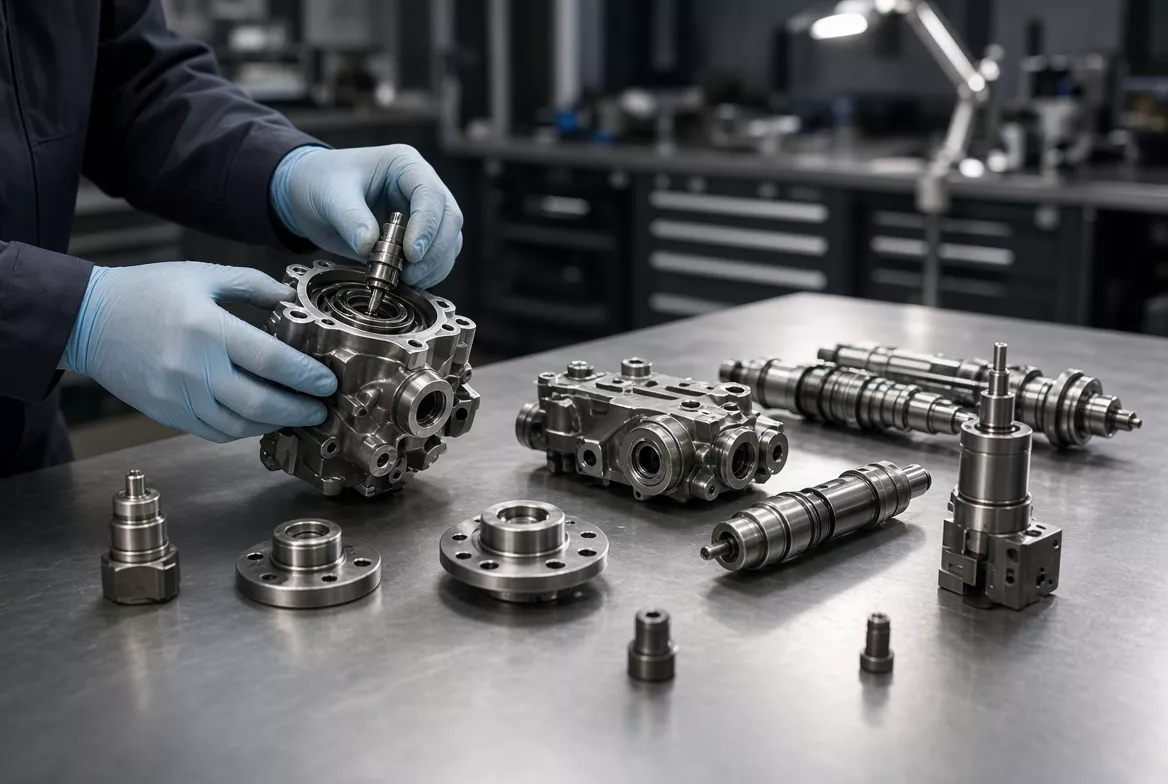
Family-by-family guidance
These are all the pump families named under CATERPILLAR in DCT’s source register. Each note focuses on getting the component identified, separating a symptom from a diagnosis, and making the next step simpler. A family being listed is not a promise of available inventory, parts interchange or repair acceptance.
What to document before comparing these pump families
Caterpillar diesel fuel injection spans distinct equipment generations and control systems. Match the entire part and engine serial before comparing components.
The following points apply to different pump designs where relevant. Use the approved engine and component procedure; do not treat a family label as a calibration specification.
- Take a sharp close-up of all numbers and a wider photograph showing the complete housing, drive and controls.
- Record the equipment make, engine model and serial, plus any manual or historical parts-book number.
- Describe the complaint, storage history and any previous modifications or substituted parts.
- Is the identification from the original plate or an old parts invoice?
- Which engine number can be used to verify the correct configuration?
CATERPILLAR / PUMP FAMILY
DP210
The DP210 label deserves to be read in full. Keep any suffix, drive-end marking and engine-manufacturer number with the DP210 reference. Names reused across decades and applications are not proof that two assemblies have the same settings or parts.
Before arranging removal, replacement or approved shipping: Share clear photos of the complete pump and its markings, engine/equipment identification and symptoms through an inquiry. DCT confirms suitability and provides the correct receiving instructions before a component is shipped.
Explore DP210: identification, symptoms and next steps
Before you decide it needs a pump
When working construction machines, industrial engines and jobsite power has to earn its keep, the first good result is a reliable identity for the DP210 unit. That saves time chasing an attractive but potentially incompatible replacement.
Identify this CATERPILLAR family confidently
The digits in “DP210” are part of its identification, but not a complete calibration or fitment record. Verify the complete assembly number against the actual engine and application.
Why the application matters: In working construction machines, industrial engines and jobsite power, the engine or machine serial reference may be needed to locate the correct fuel-system specification. Keep that identification with any part photos and diagnostic notes.
The observations that help the most
Safety and accuracy: Avoid ordering a similarly named pump or assuming service acceptance until the exact assembly has been identified.
Three questions worth asking before authorizing work
- Has the pump been replaced, rebuilt or re-tagged previously?
From concern to a practical next step
See the simple three-step mail-in process · Browse identification guides · Resources for repair shops
CATERPILLAR / PUMP FAMILY
DP310
The DP310 label deserves to be read in full. Keep any suffix, drive-end marking and engine-manufacturer number with the DP310 reference. Names reused across decades and applications are not proof that two assemblies have the same settings or parts.
Explore DP310: identification, symptoms and next steps
Before you decide it needs a pump
When working construction machines, industrial engines and jobsite power has to earn its keep, the first good result is a reliable identity for the DP310 unit. That saves time chasing an attractive but potentially incompatible replacement.
Identify this CATERPILLAR family confidently
The digits in “DP310” are part of its identification, but not a complete calibration or fitment record. Verify the complete assembly number against the actual engine and application.
The observations that help the most
Three questions worth asking before authorizing work
- Has the pump been replaced, rebuilt or re-tagged previously?
From concern to a practical next step
CATERPILLAR / PUMP FAMILY
PFR
The PFR label deserves to be read in full. Keep any suffix, drive-end marking and engine-manufacturer number with the PFR reference. Names reused across decades and applications are not proof that two assemblies have the same settings or parts.
Individual pumping elements and unit-related systems demand special attention to the exact engine installation and adjustment arrangement. A familiar family word alone does not establish interchangeability.
Before you remove, replace or ship it: Photograph the installed layout, element numbering or configuration, fuel connections and any accessible part stamping. Follow the manufacturer procedure for safe removal and timing.
Explore PFR: identification, symptoms and next steps
Before you decide it needs a pump
Element-style systems must be considered in the context of the engine and the individual pumping position; a stand-alone element number rarely tells the whole story.
For working construction machines, industrial engines and jobsite power, a complaint isolated to one cylinder or pumping position needs to stay tied to that installed position. Mixing several parts on the bench can erase the evidence that would have saved diagnostic time.
Identify this CATERPILLAR family confidently
Because “PFR” is a short designation, include the CATERPILLAR maker name in searches and keep the entire identification plate in any inquiry. A short letter code is easily mistaken for unrelated equipment terminology.
The observations that help the most
- Identify the installed position and photograph the element, mounting and fuel connections before disassembly.
- Retain orientation and timing information in accordance with the OEM removal instructions.
- Record which cylinder or bank showed the complaint, rather than assuming every element needs replacement.
Safety and accuracy: Do not transfer individual elements between engines without verified application and calibration instructions.
Three questions worth asking before authorizing work
- Which installed position or cylinder does the assembly belong to?
- Are there differences between the original number and the replacement listing?
- What manufacturer timing or setting reference applies to this engine?
From concern to a practical next step
CATERPILLAR / PUMP FAMILY
Sleeve Metered
Sleeve-metered Caterpillar fuel equipment deserves its own identification line. That wording describes a specialized fuel-metering approach, not a generic substitute for a distributor pump or modern common-rail unit. Preserve the engine arrangement and service reference before changing parts.
Explore Sleeve Metered: identification, symptoms and next steps
Before you decide it needs a pump
When working construction machines, industrial engines and jobsite power has to earn its keep, the first good result is a reliable identity for the Sleeve Metered unit. That saves time chasing an attractive but potentially incompatible replacement.
Identify this CATERPILLAR family confidently
Keep “Sleeve Metered” exactly as it appears on the original part or official engine record. Similar words in another maker’s catalog may describe a different installation, governor or test procedure.
The observations that help the most
Three questions worth asking before authorizing work
- Has the pump been replaced, rebuilt or re-tagged previously?
From concern to a practical next step
Your pump is not just a model number.
Need help with a Caterpillar injection pump? Send the full pump identification, engine application and symptoms or prior test findings. DCT will review a supported service or parts inquiry and provide receiving instructions for an accepted component.
See how simple nationwide mail-in service works Ask about parts and availability