
COMPLETE MANUFACTURER REFERENCE / 15 FAMILIES
The name on the plate is just the beginning.
A Roosa Master DB and a Stanadyne DS4 are members of a broad manufacturer family, not the same pump. Mechanical rotary designs, electronic rotary arrangements and the modern DCR line call for different diagnostic paths. Your engine and full assembly number are the keys.
Explore 15 Stanadyne / Roosa Master families, compare identification markings and learn what details help DCT assess an individual component. Include the complete pump nameplate, engine application, operating complaint and relevant supply or control findings.
More identification insights and technical background
Roosa Master is the historic name many equipment owners use when they mean a Stanadyne rotary diesel injection pump. The DB, DB2, DB4 and related mechanical distributor pumps belong to a different service conversation from electronic DS or DE models and modern common-rail families.
Stanadyne and Roosa Master design differences
Stanadyne traces its history through the Roosa Master rotary design. The shared lineage helps locate the right terminology, but each model must still be identified by complete number and controls.
Pump families in our reference
Search this family list: DB2, DB4, DS / DS4, JDB, DBG, DM, DE / DE10, DB, CBC, JDC, DCR, CDC, DC, EcoForce.
Stanadyne Roosa Master history, identification and practical service questions
A Screw Company, a Generator Mechanic and a Pump That Changed Farming
Hartford Machine Screw Company got its start in Connecticut in 1876 making screws and fasteners, and later became part of Standard Screw. Nobody there was dreaming about diesels.
Then came Vernon Roosa. He worked out a rotary distributor-type injection pump in 1941, and by 1947 he was in New York City keeping diesel generator sets running when the Hartford company took notice. That June, Roosa and development engineer Ernest Willson headed to Hartford to turn the idea into a production pump, and the first contract came by 1952.
Roosa’s trick was elegant. Instead of one pumping element per cylinder, a single pair of opposed plungers fed every cylinder through a spinning distributor rotor. The result was smaller, lighter and simpler than an inline pump, and it helped small, high-speed diesels compete with gasoline engines on farms, boats and generator sets.
The Roosa Master DB line followed in 1958, the company took the Stanadyne name in 1970, and in 1993 it introduced the DS4, billed as the world’s first electronic rotary pump. Plenty of owners still type the old name as one word, Roosamaster. We answer to both.
Did You Know? The American Society of Mechanical Engineers named the Roosa Master pump a Historic Mechanical Engineering Landmark, with the ceremony held in 1988. Not many parts on your tractor have their own plaque.
How to Identify a Stanadyne or Roosa Master Pump
Stanadyne rotary pumps are round, with the injection lines leaving the hydraulic head in a circle at one end, and a tag on the side of the housing. The tag carries the model number: letters like DB2, DB4, DS4, DE, JDB or DBG, then digits, a dash and a four-digit spec number.
Engine makers often add their own number. A GM 6.5 DS4 tagged DS4831-5288, for example, corresponds to GM part number 19209059. Send us both.
Older pumps may say Roosa Master instead of Stanadyne. Same family, same bench.
How to Read a Stanadyne Model Number
Stanadyne packs a lot into a few characters. Here’s how we read a tag like DB2831-xxxx:
- The family code comes first. DB2, DB4, DS4, DM4, JDB, DBG and friends.
- The next digit is usually the cylinder count. DB2829 and DB2831 are V8 pumps; DB4629 is a six, DB4429 a four and DB4329 a three.
- The next two digits are a size code. The 29 on a 6.2 pump and the 31 on a 6.5 pump mark a real difference inside, which is why the two don’t swap blindly.
- After the dash comes the spec number, the exact calibration for one engine and application. DS4831-5288 is one example.
| Model number starts with | Family | Typical application |
|---|---|---|
| DB2829- | DB2 | GM 6.2 (1982-93), Ford 6.9 IDI |
| DB2831- | DB2 | GM 6.5 mechanical (1992-93) and HMMWV, Ford 7.3 IDI |
| DB2335- and DB2435- | DB2 | John Deere 3029, 4039 and 4045 |
| DB4629-, DB4429-, DB4329- | DB4 | John Deere 3029, 4039, 4045 and 6068; Perkins 1004 and 1006 |
| DS4831- | DS4 | GM 6.5 turbo diesel (1994-2002) |
| DE2635- | DE10 | John Deere PowerTech Level 12 engines |
| DM4629- | DM4 | John Deere 4230 |
| JDB633 and JDB635 | JDB | John Deere 4020-era tractors |
| DBGVC631- and DBGFC631- | DBG | John Deere 4010, International 706 |
Discussing Stanadyne Roosa Master components by mail
Tell us whether the unit is mechanical, electronically controlled or a modern diesel common-rail design, and share the nameplate. We can discuss available testing and service.
Ask About Stanadyne / Roosa Master Pump Service: Start your repair inquiry
How mail-in service works | Browse pump families
Related pump-family guides
- Stanadyne / Roosa Master DB2 Injection Pump Repair, Testing & Rebuild Options
- Stanadyne / Roosa Master DB4 Injection Pump Repair, Testing & Rebuild Options
- Stanadyne DS / DS4 Injection Pump Repair, Testing & Rebuild Options
- Stanadyne / Roosa Master DE / DE10 Injection Pump Repair, Testing & Rebuild Options
- Stanadyne DCR Injection Pump Repair, Testing & Rebuild Options
Additional detailed family guides
- DB: identification, applications and repair questions
- JDB: identification, applications and repair questions
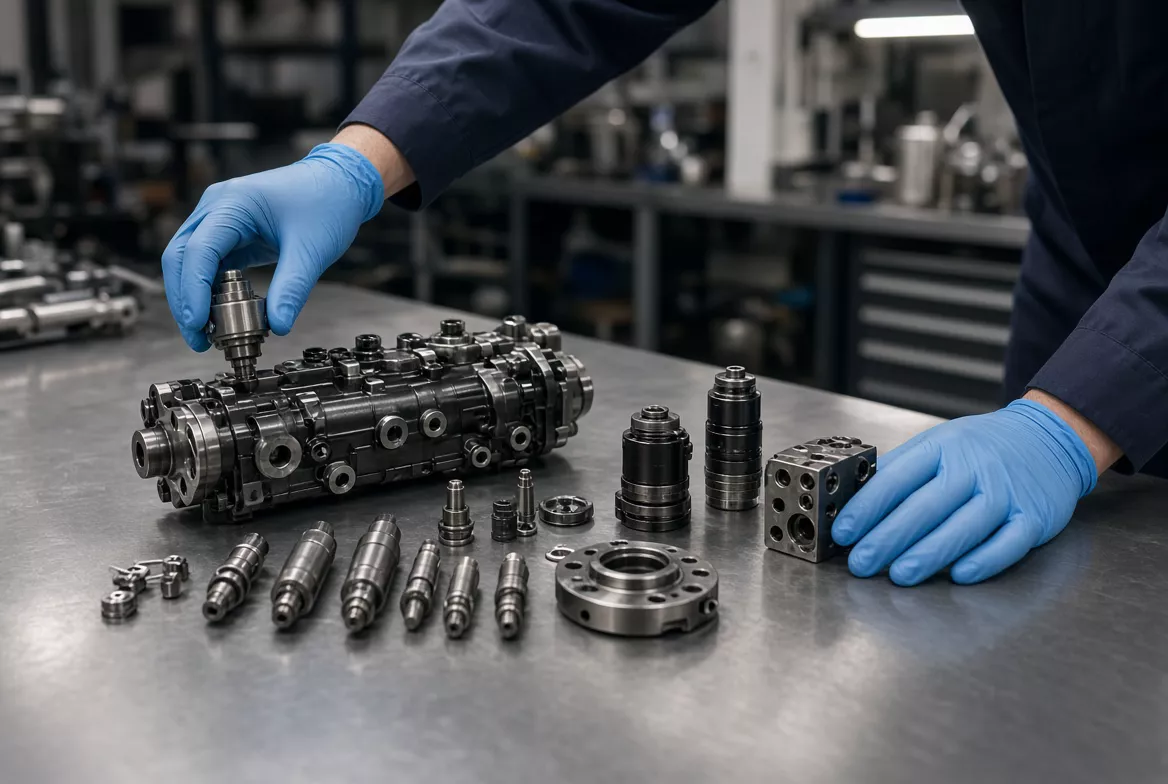
Family-by-family guidance
These are all the pump families named under STANADYNE / ROOSA MASTER in DCT’s source register. Each note focuses on getting the component identified, separating a symptom from a diagnosis, and making the next step simpler. A family being listed is not a promise of available inventory, parts interchange or repair acceptance.
What to document before comparing these pump families
Stanadyne DB, JDB, DS4 and other families vary in controls and configuration. Keep the complete plate and original engine application with the inquiry.
The following points apply to different pump designs where relevant. Use the approved engine and component procedure; do not treat a family label as a calibration specification.
- Document starting and load symptoms, leak locations and fuel-supply condition.
- Photograph the identification plate, drive connection and external controls before removal.
- Record application-specific timing and recent work without attempting speculative adjustments.
- Did the symptom begin after storage, fuel service or a prior repair?
STANADYNE / ROOSA MASTER / PUMP FAMILY
CBC
The CBC label deserves to be read in full. Keep any suffix, drive-end marking and engine-manufacturer number with the CBC reference. Names reused across decades and applications are not proof that two assemblies have the same settings or parts.
Distributor-style equipment has its own timing, fuel-supply and calibrated delivery questions. A visually similar pump can conceal different governor, control or drive configurations.
Before you remove, replace or ship it: Document cold-start behavior, external leaks, air-in-fuel evidence and the existing timing marks before any removal. Keep original linkages and fittings organized.
Explore CBC: identification, symptoms and next steps
Before you decide it needs a pump
Distributor-style systems combine fuel delivery and distribution in a calibrated assembly. Exact governor, timing advance and application details may matter as much as the broad model label.
Owners of tractors, industrial engines, trucks and older electronically controlled diesels may encounter a no-start that resembles a pump failure. Capturing the sequence of symptoms and any controller observations before removal helps separate a component concern from the surrounding engine system.
Identify this STANADYNE / ROOSA MASTER family confidently
Because “CBC” is a short designation, include the STANADYNE / ROOSA MASTER maker name in searches and keep the entire identification plate in any inquiry. A short letter code is easily mistaken for unrelated equipment terminology.
Why the manufacturer matters: STANADYNE / ROOSA MASTER documentation and historical naming can overlap with other suppliers. Include the original maker marking and any OEM replacement number. Similar family names are not proof of component interchange.
The observations that help the most
Safety and accuracy: Distributor-pump settings and internal components are not universally interchangeable across similarly named variants.
Three questions worth asking before authorizing work
- Is the complaint present cold, hot, under load or all the time?
- Which full assembly and engine numbers appear on the tag?
From concern to a practical next step
See the simple three-step mail-in process · Browse identification guides · Resources for repair shops
STANADYNE / ROOSA MASTER / PUMP FAMILY
CDC
The CDC label deserves to be read in full. Keep any suffix, drive-end marking and engine-manufacturer number with the CDC reference. Names reused across decades and applications are not proof that two assemblies have the same settings or parts.
Before arranging removal, replacement or approved shipping: Share clear photos of the complete pump and its markings, engine/equipment identification and symptoms through an inquiry. DCT confirms suitability and provides the correct receiving instructions before a component is shipped.
Explore CDC: identification, symptoms and next steps
Before you decide it needs a pump
When tractors, industrial engines, trucks and older electronically controlled diesels has to earn its keep, the first good result is a reliable identity for the CDC unit. That saves time chasing an attractive but potentially incompatible replacement.
Identify this STANADYNE / ROOSA MASTER family confidently
Because “CDC” is a short designation, include the STANADYNE / ROOSA MASTER maker name in searches and keep the entire identification plate in any inquiry. A short letter code is easily mistaken for unrelated equipment terminology.
The observations that help the most
- Take a sharp close-up of all numbers and a wider photograph showing the complete housing, drive and controls.
- Record the equipment make, engine model and serial, plus any manual or historical parts-book number.
- Describe the complaint, storage history and any previous modifications or substituted parts.
Safety and accuracy: Avoid ordering a similarly named pump or assuming service acceptance until the exact assembly has been identified.
Three questions worth asking before authorizing work
- Is the identification from the original plate or an old parts invoice?
- Has the pump been replaced, rebuilt or re-tagged previously?
- Which engine number can be used to verify the correct configuration?
From concern to a practical next step
STANADYNE / ROOSA MASTER / PUMP FAMILY
DB
The DB label deserves to be read in full. Keep any suffix, drive-end marking and engine-manufacturer number with the DB reference. Names reused across decades and applications are not proof that two assemblies have the same settings or parts.
STANADYNE / ROOSA MASTER / PUMP FAMILY
DB2
The DB2 family is part of the classic Roosa Master/Stanadyne rotary story. When one develops starting or running issues, complete model identification helps separate a fuel-delivery problem from a pump-specific concern.
STANADYNE / ROOSA MASTER / PUMP FAMILY
DB4
The DB4 label deserves to be read in full. Keep any suffix, drive-end marking and engine-manufacturer number with the DB4 reference. Names reused across decades and applications are not proof that two assemblies have the same settings or parts.
STANADYNE / ROOSA MASTER / PUMP FAMILY
DBG
The DBG label deserves to be read in full. Keep any suffix, drive-end marking and engine-manufacturer number with the DBG reference. Names reused across decades and applications are not proof that two assemblies have the same settings or parts.
Explore DBG: identification, symptoms and next steps
Before you decide it needs a pump
Identify this STANADYNE / ROOSA MASTER family confidently
Because “DBG” is a short designation, include the STANADYNE / ROOSA MASTER maker name in searches and keep the entire identification plate in any inquiry. A short letter code is easily mistaken for unrelated equipment terminology.
The observations that help the most
Three questions worth asking before authorizing work
- Is the complaint present cold, hot, under load or all the time?
- Which full assembly and engine numbers appear on the tag?
From concern to a practical next step
STANADYNE / ROOSA MASTER / PUMP FAMILY
DC
The DC label deserves to be read in full. Keep any suffix, drive-end marking and engine-manufacturer number with the DC reference. Names reused across decades and applications are not proof that two assemblies have the same settings or parts.
Explore DC: identification, symptoms and next steps
Before you decide it needs a pump
Identify this STANADYNE / ROOSA MASTER family confidently
Because “DC” is a short designation, include the STANADYNE / ROOSA MASTER maker name in searches and keep the entire identification plate in any inquiry. A short letter code is easily mistaken for unrelated equipment terminology.
The observations that help the most
Three questions worth asking before authorizing work
- Is the complaint present cold, hot, under load or all the time?
- Which full assembly and engine numbers appear on the tag?
From concern to a practical next step
STANADYNE / ROOSA MASTER / PUMP FAMILY
DCR
The DCR label deserves to be read in full. Keep any suffix, drive-end marking and engine-manufacturer number with the DCR reference. Names reused across decades and applications are not proof that two assemblies have the same settings or parts.
These systems require fuel-supply, pressure-control, rail and injector evidence to be considered together; a pressure code on its own is not a pump diagnosis.
Before you remove, replace or ship it: Ask the shop to record commanded versus measured rail pressure where available, fuel-filter condition, supply restrictions and any contamination findings. Do not open high-pressure lines during operation.
STANADYNE / ROOSA MASTER / PUMP FAMILY
DE / DE10
The DE / DE10 label deserves to be read in full. Keep any suffix, drive-end marking and engine-manufacturer number with the DE / DE10 reference. Names reused across decades and applications are not proof that two assemblies have the same settings or parts.
Electrical signals and fuel delivery belong to the same diagnostic conversation. A control fault may imitate a mechanical failure, and a pump symptom does not identify the failed part by itself.
Before you remove, replace or ship it: Bring relevant fault codes, crank/start behavior, supply voltage or wiring observations made by a qualified technician, and the exact pump/ECU numbers if available.
Read the DE / DE10 technical guide Ask DCT about this family
STANADYNE / ROOSA MASTER / PUMP FAMILY
DM
The DM label deserves to be read in full. Keep any suffix, drive-end marking and engine-manufacturer number with the DM reference. Names reused across decades and applications are not proof that two assemblies have the same settings or parts.
Explore DM: identification, symptoms and next steps
Before you decide it needs a pump
Identify this STANADYNE / ROOSA MASTER family confidently
Because “DM” is a short designation, include the STANADYNE / ROOSA MASTER maker name in searches and keep the entire identification plate in any inquiry. A short letter code is easily mistaken for unrelated equipment terminology.
The observations that help the most
Three questions worth asking before authorizing work
- Is the complaint present cold, hot, under load or all the time?
- Which full assembly and engine numbers appear on the tag?
From concern to a practical next step
STANADYNE / ROOSA MASTER / PUMP FAMILY
DS / DS4
DS4 is associated with electronically managed rotary diesel injection in applicable systems. Electrical diagnosis and pump condition are both important; neither should be assumed from a code alone.
STANADYNE / ROOSA MASTER / PUMP FAMILY
EcoForce
The EcoForce label deserves to be read in full. Keep any suffix, drive-end marking and engine-manufacturer number with the EcoForce reference. Names reused across decades and applications are not proof that two assemblies have the same settings or parts.
Explore EcoForce: identification, symptoms and next steps
Before you decide it needs a pump
Identify this STANADYNE / ROOSA MASTER family confidently
Keep “EcoForce” exactly as it appears on the original part or official engine record. Similar words in another maker’s catalog may describe a different installation, governor or test procedure.
The observations that help the most
Three questions worth asking before authorizing work
- Is the complaint present cold, hot, under load or all the time?
- Which full assembly and engine numbers appear on the tag?
From concern to a practical next step
STANADYNE / ROOSA MASTER / PUMP FAMILY
JDB
The JDB label deserves to be read in full. Keep any suffix, drive-end marking and engine-manufacturer number with the JDB reference. Names reused across decades and applications are not proof that two assemblies have the same settings or parts.
STANADYNE / ROOSA MASTER / PUMP FAMILY
JDC
The JDC label deserves to be read in full. Keep any suffix, drive-end marking and engine-manufacturer number with the JDC reference. Names reused across decades and applications are not proof that two assemblies have the same settings or parts.
Explore JDC: identification, symptoms and next steps
Before you decide it needs a pump
Identify this STANADYNE / ROOSA MASTER family confidently
Because “JDC” is a short designation, include the STANADYNE / ROOSA MASTER maker name in searches and keep the entire identification plate in any inquiry. A short letter code is easily mistaken for unrelated equipment terminology.
The observations that help the most
Three questions worth asking before authorizing work
- Is the complaint present cold, hot, under load or all the time?
- Which full assembly and engine numbers appear on the tag?
From concern to a practical next step
STANADYNE / ROOSA MASTER / PUMP FAMILY
MDCR
MDCR has its own place beside other Stanadyne names. A common-rail-related reference should not be diagnosed or serviced by the same assumptions used for classic DB and DS rotary pumps.
Explore MDCR: identification, symptoms and next steps
Before you decide it needs a pump
A rail-pressure complaint can involve the supply side, control system, injectors or high-pressure pump. A fault-code description alone does not identify which component has failed.
For a owner or repair shop, the expensive decision is often whether a supply problem, rail control issue or component failure justifies removing the MDCR assembly. Measurements from the machine can protect against a costly guess.
Identify this STANADYNE / ROOSA MASTER family confidently
Numbers and suffixes within the “MDCR” naming family can reflect different assemblies. Treat the full stamped string and exact engine installation as the reference, not a generic online CP/HP-series listing.
The observations that help the most
- Record rail-pressure demand versus actual pressure under an OEM-approved diagnostic procedure, where supported.
- Document low-pressure fuel delivery, filter condition and any evidence of water or metallic contamination.
- Keep injector leakage or return-test findings together with the pump report; a high-pressure pump cannot be judged in isolation.
Safety and accuracy: Common-rail systems can retain dangerously high pressure. Never loosen or open high-pressure lines to troubleshoot a running system; follow the engine maker’s depressurization instructions.
Three questions worth asking before authorizing work
- Is the reported pressure problem present at crank, idle or loaded operation?
- Were supply-pressure or restriction measurements obtained with the correct procedure?
- Has any technician documented contamination before dismantling the system?
From concern to a practical next step
Your pump is not just a model number.
Need help with a Stanadyne Roosa Master injection pump? Send the full pump identification, engine application and symptoms or prior test findings. DCT will review a supported service or parts inquiry and provide receiving instructions for an accepted component.
See how simple nationwide mail-in service works Ask about parts and availability