
Accessibility

SPECIALIZED DIESELFUEL INJECTION SERVICES
Hutchinson, KS(620) 665-6700
Great Bend, KS(620) 792-4333


Illustration of a diesel injection pump and several fuel injectors

DIESEL FUEL INJECTION / HOW THE SYSTEM WORKS

HEUI Diesel Fuel Injection Systems

Hydraulically actuated electronic unit injectors and high-pressure oil controls.

HEUI definition: hydraulically actuated, electronically controlled unit injection

HEUI uses pressurized engine oil to move the injection mechanism while electronically controlled components determine events. That is different from common rail generating high fuel pressure in a shared rail.

  • Oil actuation circuit: Track the correct oil-pressure control and feedback for the engine.
  • Fuel delivery circuit: Evaluate the fuel-supply and injector side independently.
  • Engine application: Use the applicable HEUI design rather than assuming every HEUI engine shares the same HPOP, ICP or IPR arrangement.

A CLOSER LOOK AT THE TECHNOLOGY

THE PART ONLY MAKES SENSE IN ITS SYSTEM.

HEUI stands for hydraulically actuated electronically controlled unit injection. These systems use high-pressure engine oil to actuate injection, creating a diagnostic relationship between the fuel injector, oil supply, oil-pressure controls and electronics.

A rough-running or hard-starting HEUI-equipped engine does not automatically indicate defective injectors. Oil pressure, oil condition, control signals, wiring, fuel supply and mechanical engine condition can influence injector operation.

That distinction matters when a component is suspected of failing. The exact assembly number, its engine application and the symptoms around it are more useful than a broad system name alone. DCT can review those details to discuss which supported service questions are worth asking next.

THE STORY INSIDE THE SYSTEM

THREE DETAILS THAT CHANGE THE ANSWER.

These component families help reveal why a model-specific service plan matters. They are identification references, not a promise that every item is accepted for repair.

01 / THE DETAILS

HEUI applications to identify

The engine serial range and injector number are critical to selecting information.

Relevant examples and component names include Caterpillar HEUI applications; International / Navistar HEUI engines; Ford Power Stroke HEUI-family applications; Other verified compatible HEUI designs. The exact model and application determine what these names mean for a particular service request.
02 / THE DETAILS

High-pressure oil-side context

Engine-side components have different test and repair scopes than an injector bench.

Relevant examples and component names include High-pressure oil pump (HPOP); Injection pressure regulator (IPR); Injection control pressure (ICP) sensor; High-pressure oil lines and related seals. The exact model and application determine what these names mean for a particular service request.

03 / THE DETAILS

Injector assembly components

Disassembly and repairability are specific to the injector family.

Relevant examples and component names include Injector solenoids, spool and poppet valves; Internal injector components and sealing kits; O-rings and injector assemblies. The exact model and application determine what these names mean for a particular service request.

THE DECISION THAT COUNTS

GOOD TESTING ANSWERS A SPECIFIC QUESTION.

Before a component is disassembled or shipped, the evidence and the supported test method need to match the equipment. That helps distinguish a useful evaluation from an expensive assumption.

Share the engine configuration, the original part number and what changed when the problem appeared. Previous diagnostic measurements can be valuable, but they need context: a reading without its test condition can tell the wrong story.

What a technical evaluation may examine
  1. Identify the engine family, exact HEUI injector and prior engine-side oil-pressure tests.
  2. Ask whether reported symptoms were checked against oil-side and fuel-side conditions.
  3. Determine the injector tests or repair procedures DCT can support for that family.
  4. Separate component repair authorization from engine-side HPOP, IPR or ICP replacement recommendations.
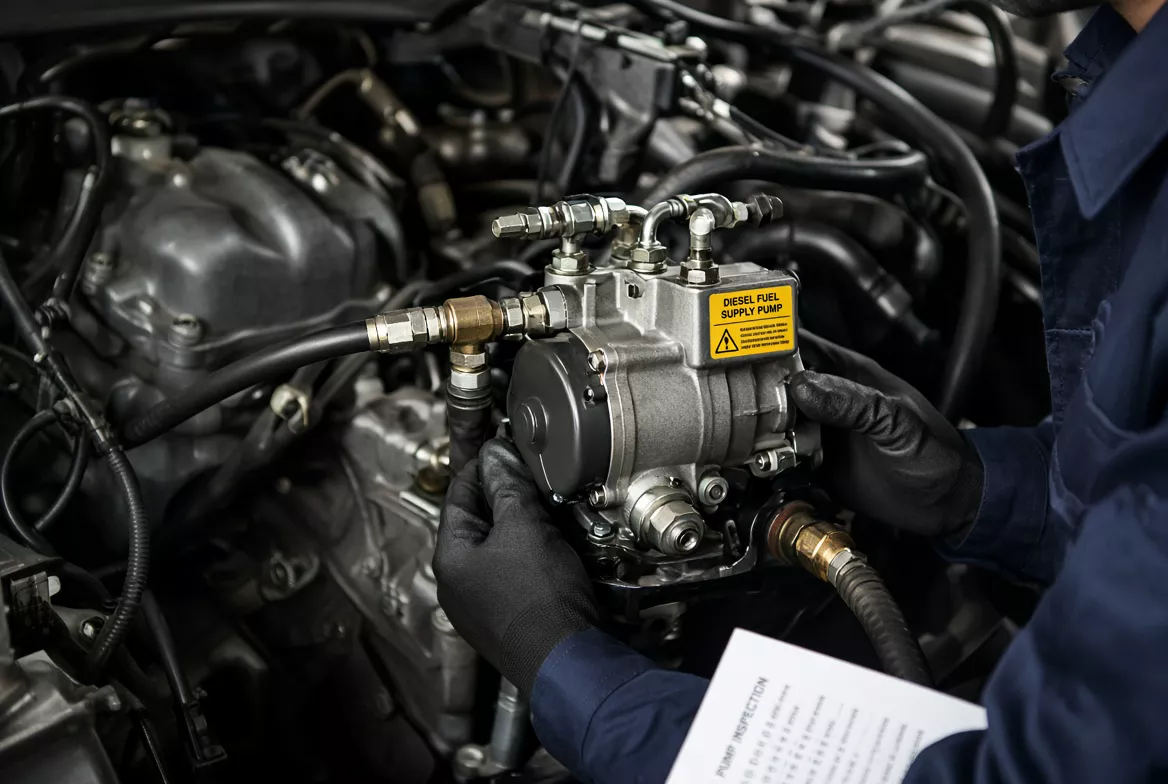
Close-up of diesel engine fuel lines, fittings and mounted components

Make the first inquiry a stronger one.

Tell DCT what component you have and what has already been learned. For some models, the correct answer is a targeted test; for others it may be repair, rebuilding, exchange, replacement—or no service until more information is available.

Useful identification and diagnostic details to include
  • Injector numbers, engine serial number and vehicle/equipment model
  • Cold versus hot starting symptoms and any recorded oil-pressure data
  • Injector electrical faults, harness findings and prior service notes
  • Fuel, oil or contamination observations, when documented

Questions about HEUI Diesel Fuel Injection Systems

How does HEUI differ from common rail?

HEUI uses hydraulic engine-oil pressure for injector actuation; common rail uses a high-pressure fuel rail supplied by a fuel pump.

Does replacing a HEUI injector fix low injection-control pressure?

Not necessarily. High-pressure oil-system components and leakage must also be considered.

Can HEUI injectors be serviced separately from the engine?

Certain injectors may be eligible for off-engine evaluation, but related oil-pressure and engine controls require their own diagnosis.

Confirm the exact unit before service

Learn about heui diesel fuel injection systems and how to request an identification review with Diesel Control Technicians. Include the exact component number and engine application when contacting DCT about a supported testing, repair or parts option.

HEUI: high-pressure oil and fuel are different systems

HEUI injectors rely on controlled high-pressure oil actuation and fuel supply. Distinguishing oil-side pressure from fuel-side symptoms prevents the wrong test, part or service request.

Evidence to record: Identify the engine model, relevant oil-control codes and the symptoms that led to the inquiry.