
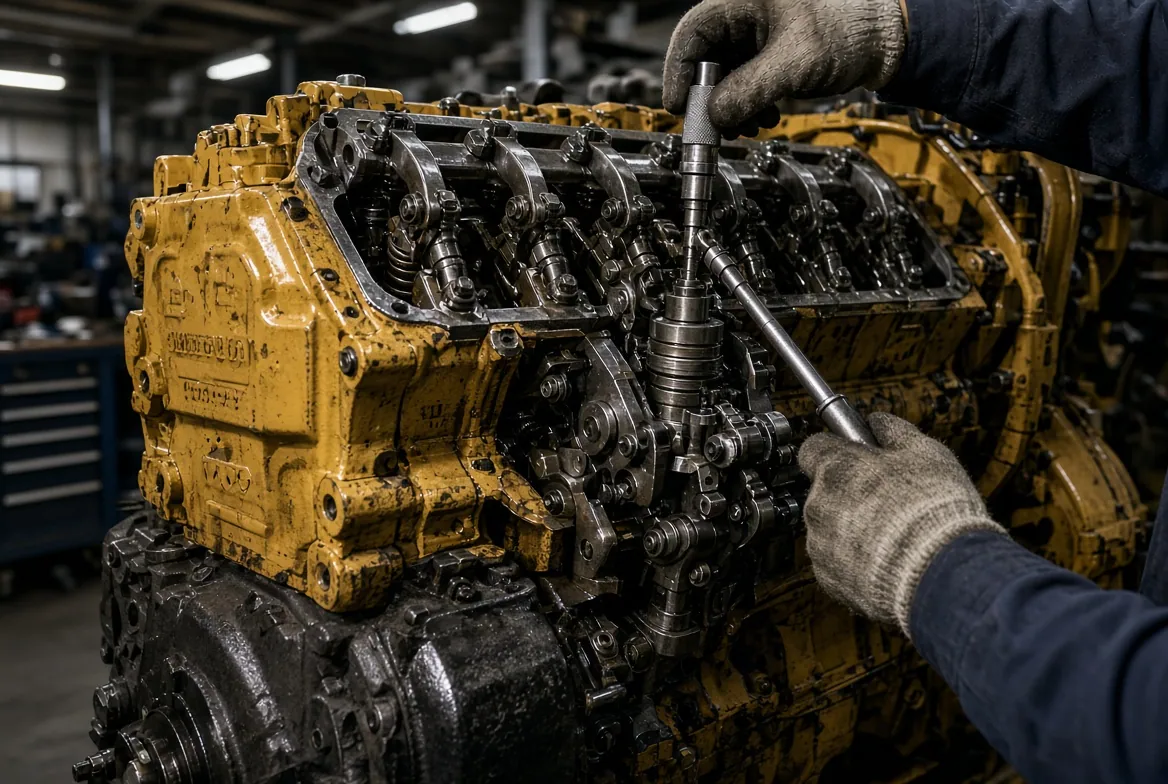
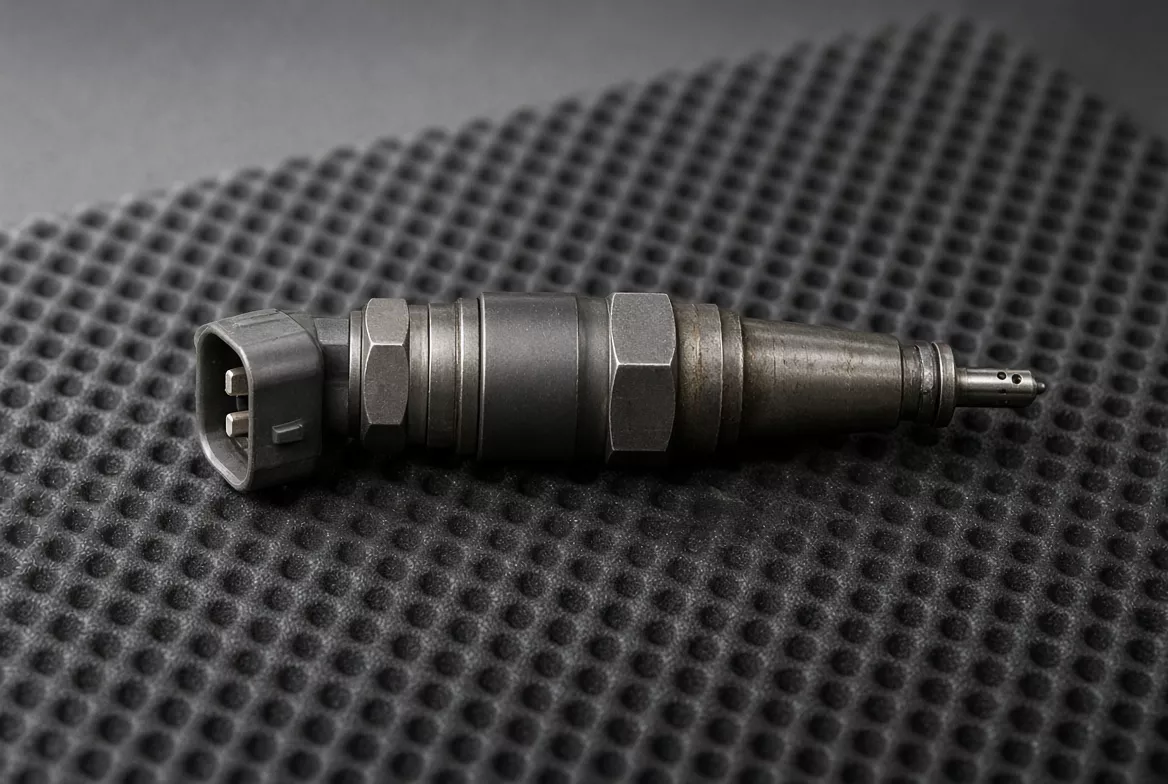
Caterpillar’s 3406E and C15 on-highway engines use mechanically actuated electronic unit injectors (MEUI). The camshaft drives each injector through a rocker to create injection pressure, and an electronically controlled valve sets timing and quantity. Most injector complaints on these engines come down to five checks: the injector itself, its trim code, its mechanical adjustment, its wiring, and the sleeve it sits in. A sixth, fuel supply, affects all of them.
Where you’ll find them
The 3406E and C15 were widely used in over-the-road trucks, and related Cat engines appear in vocational trucks and heavy equipment. They have a reputation for durability, and many are still running at very high mileage, which means many are running on well-used injectors.
What typically goes wrong
Worn injectors
Over hundreds of thousands of miles, wear inside the injector affects how precisely it delivers fuel. Expect gradually increasing smoke, rougher running, lower fuel economy and eventually reduced power.
Electrical faults
Injector solenoids and the harness and connectors under the valve cover are exposed to heat, oil and vibration. Intermittent misfires and injector codes often trace to a connector or harness rather than the injector. Check resistance and connection quality before replacing anything.
Missing or incorrect trim codes
Each Cat unit injector carries calibration information that must be loaded into the engine’s control module when the injector is replaced, using Cat’s electronic service tool. Without the correct trim information, the module can’t compensate for that injector’s characteristics. A rough idle or imbalance right after injector work should send you to the trim settings first. See diesel injector coding.
Injector adjustment
Because the camshaft drives the injector, its rocker adjustment matters. Caterpillar specifies an injector adjustment procedure as part of overhead maintenance. An incorrect setting changes plunger travel and can reduce injection pressure, and an overly tight one can bottom the plunger and damage the injector or cam train. A misadjusted injector can mimic a failed one.
Injector sleeve leaks
Injectors sit in sleeves surrounded by coolant. A leaking sleeve lets coolant, fuel or combustion gas cross over, which shows up as coolant loss, bubbles in the cooling system, coolant in the fuel or white smoke. Coolant in the fuel damages injectors, so the repair should include evaluating them. See diesel injector cup and sleeve leaks.
Fuel supply
A restricted filter, a weak transfer pump or air in the supply starves injectors. Fuel pressure should be checked against specification, ideally under load. Contaminated fuel affects every injector at once.
Checks in the right order
- Read active and logged codes with Cat’s electronic service tool.
- Run a cylinder cutout test to identify weak cylinders.
- Confirm trim codes match the injectors installed.
- Inspect wiring and connectors for suspect cylinders.
- Check injector adjustment per the overhead procedure.
- Check fuel pressure and filter restriction.
- Check coolant and fuel for cross-contamination.
Keeping a C15 truck earning
On a truck that earns its living on the road, the fastest repair is often an exchange set rather than waiting for the original injectors. For high-mileage engines heading toward overhaul, the injector decision belongs in the overhaul plan. See replacing injectors during an in-frame overhaul.
C15 symptom guide
| Symptom | First checks |
|---|---|
| Rough idle right after injector replacement | Trim codes for the new injectors |
| Intermittent misfire codes | Harness and connectors under the valve cover |
| One cylinder weak in the cutout test | Injector adjustment, then the injector |
| White smoke and coolant loss | Injector sleeve |
| Power loss under load, all cylinders | Fuel pressure, filters, transfer pump |
| Gradually rising smoke and fuel use | Injector wear across the set |
Mixed sets and trim information
High-mileage C15s have often had injectors replaced individually over the years, sometimes from different sources. Each injector’s trim information has to match what’s loaded in the engine’s module. When an engine with a history of individual replacements starts running unevenly, a quick audit of which injector is in which cylinder, and whether its trim is loaded correctly, can save a lot of guesswork.
Manufacturer reference: Caterpillar: SIS2GO service information For procedures and specifications, use the current manufacturer information for your engine and model year.
Get C15 injectors tested or exchanged
Diesel Control Technicians works on fuel injection systems for over-the-road trucks and heavy equipment. Send DCT your injector part numbers and engine serial number to check exchange availability, or request approval to ship the identified set for supported testing with your cutout results and codes.
QUESTIONS ABOUT YOUR DIESEL COMPONENT?
Dealing with Cat C15 and 3406E Injector Problems: What to Check?
Cat C15 and 3406E injector-related symptoms can overlap with oil, electrical and engine problems. Learn how system identification changes the diagnostic questions to ask. Include the injector or nozzle number, engine identification, relevant cylinder observations and any completed injector testing.