
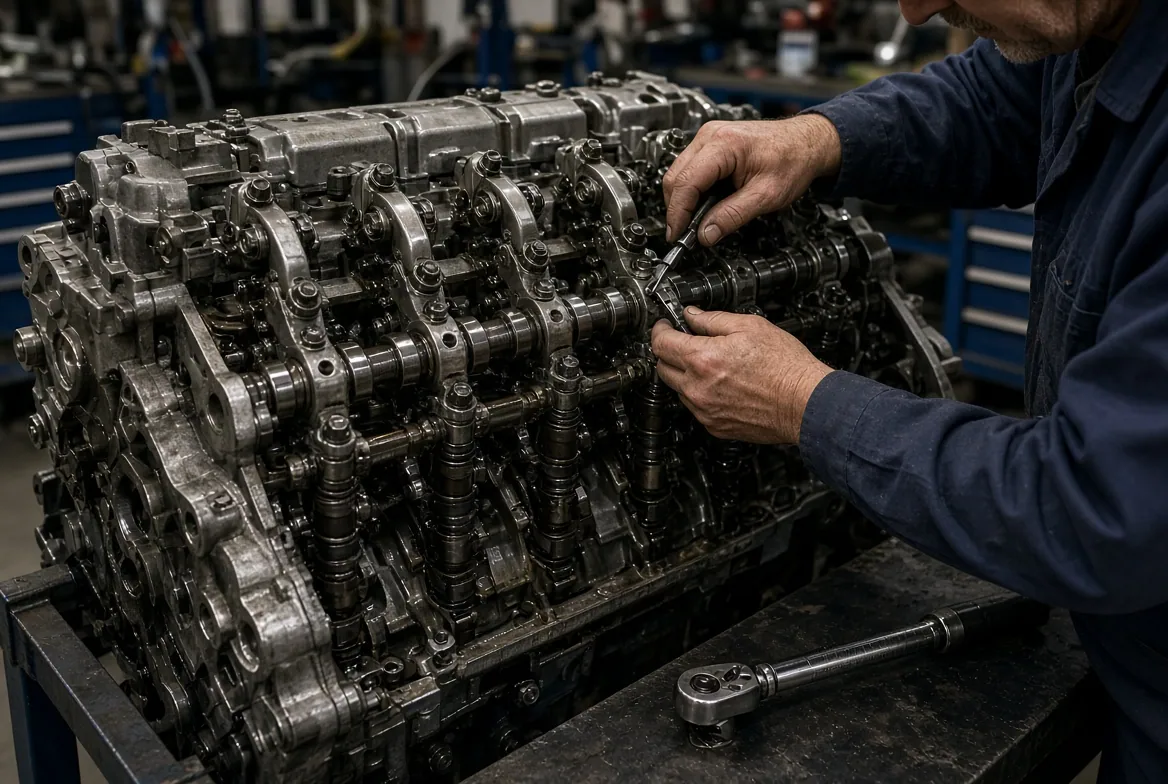
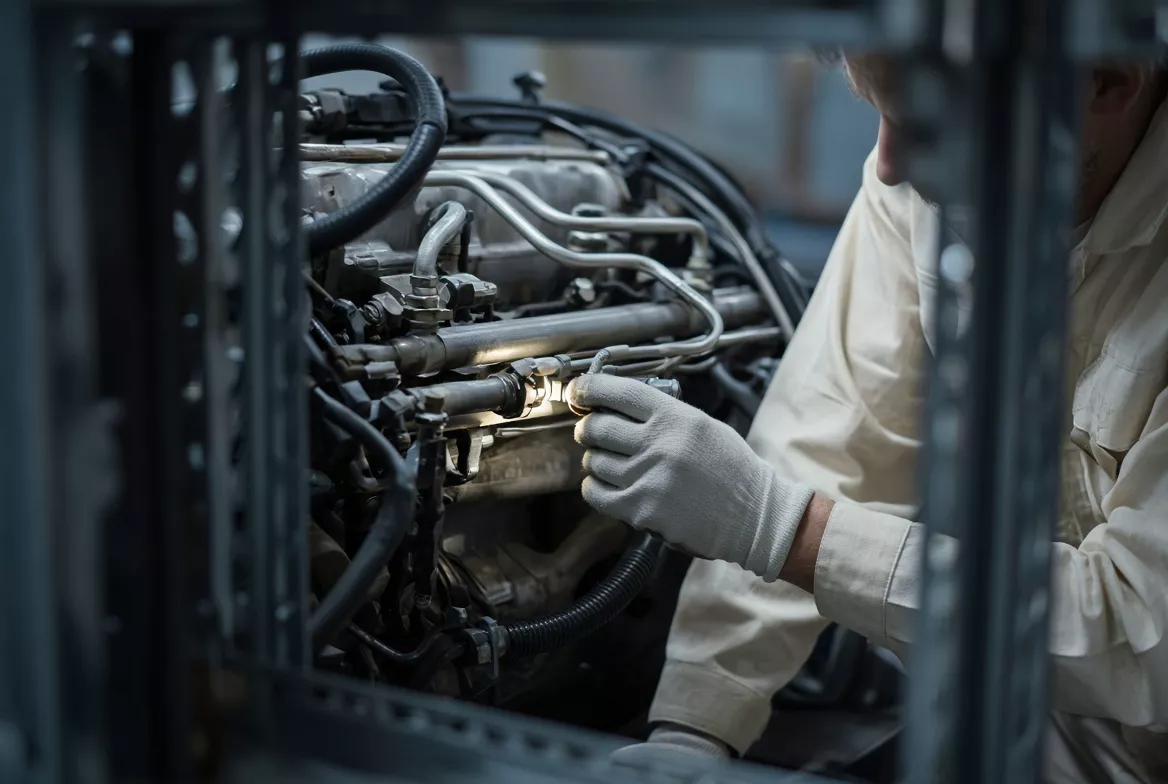
The Detroit Diesel Series 60 uses electronic unit injectors (EUI): each injector is a pump and nozzle in one, pressurized by a lobe on the overhead camshaft through a rocker arm, with an electronically controlled valve deciding when injection begins and ends. When a Series 60 misfires, smokes or loses power, the problem may be the injector, its wiring, its mechanical adjustment, its sealing in the head, or the low-pressure fuel supply.
That mix of electrical, hydraulic and mechanical factors is what makes Series 60 injector diagnosis distinctive.
How a Series 60 injector works
The camshaft pushes the injector rocker, and the rocker pushes the injector plunger down on every cycle, whether or not the engine needs fuel. While the injector’s solenoid valve is open, fuel simply spills back into the fuel gallery. When the engine’s electronic control closes the valve, the trapped fuel is pressurized and injection begins. Opening the valve again ends injection.
So the camshaft provides the pressure, and the electronics provide the timing and quantity. Fuel reaches the injectors at low pressure through passages in the cylinder head.
Where Series 60 injector trouble comes from
Electrical faults
Injector solenoids, the harness under the valve cover and the connectors at each injector are frequent sources of misfire codes. Heat, oil and vibration take their toll. Inspect the harness and connector before condemning an injector.
Response-time and performance faults
Series 60 electronic controls monitor how each injector’s solenoid valve responds. Detroit’s diagnostic software can display injector response information along with cylinder cutout results, which helps identify an injector whose valve is slow or inconsistent.
Internal wear
Plunger and valve wear reduce injection quality over time. Expect gradually increasing smoke, a rougher idle, reduced power and more fuel used for the same work.
Overhead adjustment
Because the camshaft drives the injector, the injector’s mechanical adjustment matters. Detroit specifies an injector height adjustment, made with a gauge, as part of overhead maintenance. An incorrect adjustment changes injector stroke and can affect timing, power and smoke, and a misadjusted injector can look like a bad one.
Injector tube leaks
Series 60 injectors sit in tubes in the cylinder head, surrounded by coolant. A leaking tube lets coolant, fuel or combustion gas cross over. Coolant loss, bubbles in the cooling system or coolant in the fuel point here. See diesel injector cup and sleeve leaks.
Fuel supply and fuel in the oil
A weak fuel pump, restricted filters or air in the supply starve the injectors. Leaking injector O-rings can let fuel into the oil, so check the oil level and condition on any engine with a fuel complaint.
Working through a Series 60 complaint
- Read active and inactive codes with Detroit diagnostic software or a capable aftermarket tool.
- Run a cylinder cutout test to find weak cylinders.
- Review injector response information if available.
- Inspect the injector harness and connectors on suspect cylinders.
- Verify the overhead adjustment, including injector height, on suspect cylinders.
- Check fuel pressure, filter restriction and for air in the fuel.
- Check oil and coolant for cross-contamination.
Replace one or the set?
On a high-mileage Series 60 at or near overhaul, injectors are often replaced as a set. A single injector with an electrical failure on a healthy set can be replaced individually. Our guide to replacing injectors during an in-frame overhaul covers the fleet decision.
Series 60 symptoms and where they point
| Symptom | First checks |
|---|---|
| Intermittent misfire code on one cylinder | Harness and connector at that injector |
| Steady misfire, one cylinder weak in cutout test | Injector adjustment, then the injector |
| Smoke and power loss across all cylinders | Fuel supply, filters, air in fuel |
| Coolant loss with bubbles in the overflow | Injector tubes |
| Rising oil level | Injector O-rings and seals |
| Rough running after overhead service | Injector height adjustment |
What to include with Series 60 injectors
Mark each injector with its cylinder number, and include the engine serial number, the codes, cutout results and any injector response data you pulled. Note when the overheads were last set and whether any injectors are newer than the others. That history helps separate an injector problem from an adjustment or harness problem.
Manufacturer reference: Bosch Aftermarket: diesel test benches and tools For procedures and specifications, use the current manufacturer information for your engine and model year.
Keep the trucks moving
Diesel Control Technicians works on fuel injection systems for over-the-road trucks and fleets. Send your Series 60 injector part numbers to confirm the options, then ship the accepted injectors to DCT following written receiving instructions marked by cylinder, with the engine serial number, codes and cutout results. If downtime is the bigger problem, ask whether an exchange set is available for your part numbers.
QUESTIONS ABOUT YOUR DIESEL COMPONENT?
Dealing with Detroit Series 60 Injector Problems: EUI Diagnosis?
Detroit Series 60 EUI diagnosis involves fuel delivery and electronically controlled injector behavior. Review distinguishing symptoms and the evidence needed before condemning an injector. Include the injector or nozzle number, engine identification, relevant cylinder observations and any completed injector testing.