
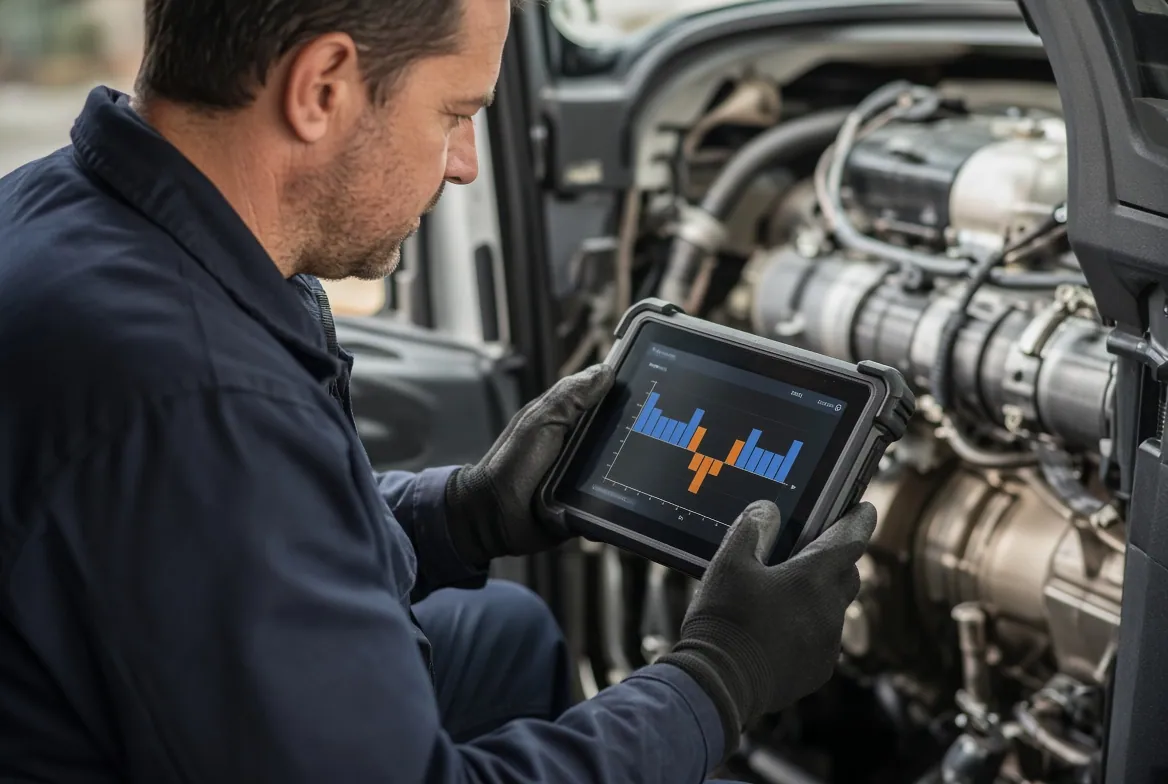
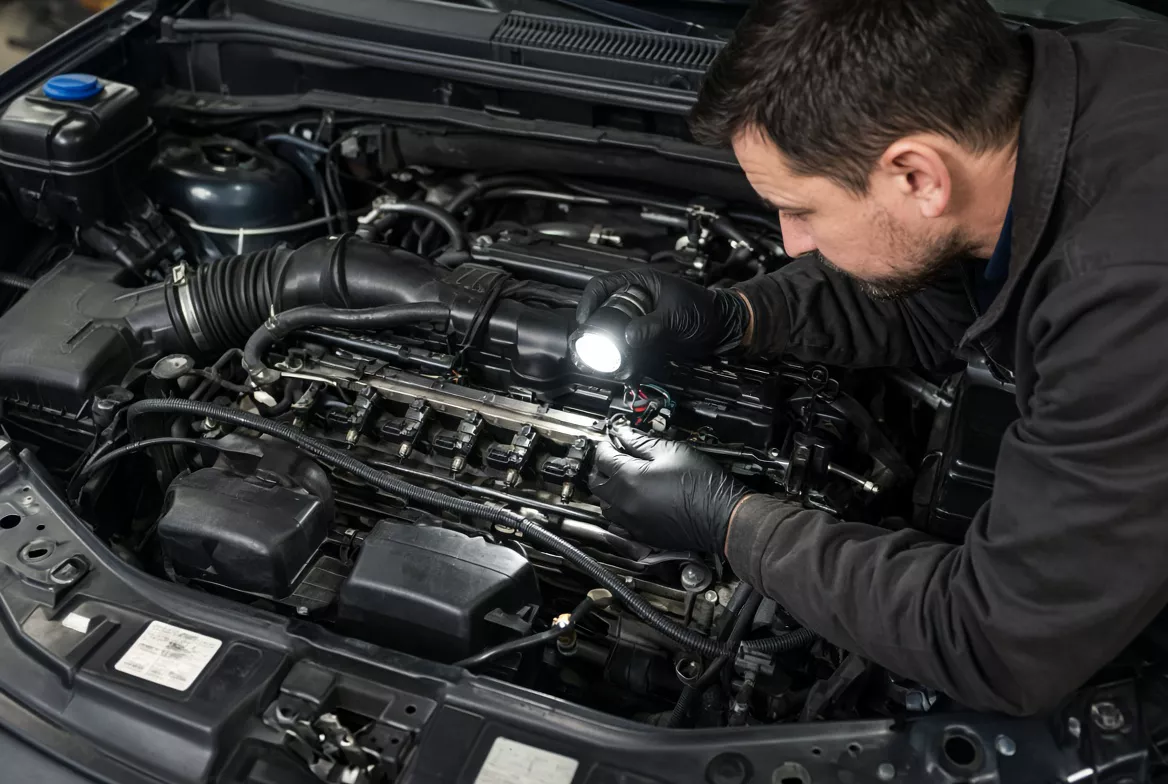
Balance rates show how much the engine computer is adjusting fuel to each cylinder to make them all contribute equally at idle. A value near zero means the cylinder needs little correction. A large positive value means the computer is adding fuel because that cylinder is weak. A large negative value means it’s removing fuel because the cylinder is strong. The term is most closely associated with the Duramax, where the values are displayed in cubic millimeters of fuel, but many engines provide similar data under names like contribution, cylinder balance or fuel correction.
They’re one of the most useful clues a scan tool gives you, and one of the most misread.
How the computer measures balance
At idle, the computer watches the crankshaft speed sensor. Each cylinder’s firing accelerates the crankshaft slightly. If one cylinder produces a smaller kick than the others, the computer adds fuel to that cylinder and trims the others until the speed pulses even out. The size of each correction is the balance rate.
Two things follow from that:
- The computer is measuring power contribution, not injector delivery. A cylinder can be weak because of its injector, or because of low compression, a valve problem or a leaking injector seal.
- It works best at a steady idle. Under load, balance correction typically isn’t active the same way, so the numbers describe idle behavior.
How to take a good reading
- Fully warm the engine.
- Let it idle in park or neutral with accessories off (air conditioning, high idle, PTO).
- Wait for the values to stabilize, then record them.
- Repeat on another day or at the start and end of a drive to see whether the pattern is consistent.
Readings taken cold, with the air conditioner cycling or while the engine is still settling down, can mislead.
What the patterns usually mean
| Pattern | Common interpretation |
|---|---|
| All values close to zero | Cylinders are well matched |
| One cylinder strongly positive, others near zero | That cylinder is weak: injector, compression or seal |
| One cylinder strongly negative | That cylinder is strong, often over-fueling from a worn or leaking injector |
| Values spread widely and drifting over time | The set is wearing |
| Values that jump around | Air in the fuel, a supply problem or an intermittent electrical fault |
The engine maker’s service information gives the acceptable range for your engine. Stay with those limits instead of forum folklore, and pay attention to trends. A cylinder slowly moving away from zero over months tells you something even before it’s out of range.
What can skew the numbers
- Firing-order effects. Because contribution is inferred from crankshaft speed, a problem in one cylinder can influence the readings of its neighbors in the firing order. Don’t condemn the cylinder with the second-largest number without looking at the one beside it.
- Mechanical problems. Low compression, a burnt valve or incorrect valve lash change cylinder contribution regardless of the injector.
- Air in the fuel, which makes readings erratic.
- A mismatched set, such as one new injector among old ones.
- Wrong or missing injector codes on engines that require them. See diesel injector coding.
What balance rates can’t tell you
They don’t measure return flow. An injector can balance acceptably at idle while leaking enough fuel back to the tank to drag down rail pressure under load. They also don’t measure behavior at high load, where some injector faults show up. That’s why balance data pairs well with an injector return-flow test and, when injectors come out, a bench test.
From balance rates to a decision
- One clear outlier: confirm with a cylinder cutout or contribution test, rule out compression, then test or replace the injector.
- A wide spread across the set: test the set before deciding whether to replace one or all. See replacing one injector or all of them.
- Erratic values: fix the fuel supply first.
Manufacturer reference: Bosch Mobility: common-rail system overview For procedures and specifications, use the current manufacturer information for your engine and model year.
Send us your numbers
If you’re sending injectors to Diesel Control Technicians for testing, include the balance rates or contribution data you recorded and the cylinder each injector came from. That context helps us connect what the bench shows with what the engine was telling you. Local customers can schedule an on-vehicle service in Hutchinson, subject to appointment and confirmation.
QUESTIONS ABOUT YOUR DIESEL COMPONENT?
Need guidance on Diesel Injector Balance Rates: How to Read Them?
Balance-rate values are clues about cylinder correction, not a standalone injector verdict. Understand interpretation limits and which corroborating evidence improves a diagnosis. Include the injector or nozzle number, engine identification, relevant cylinder observations and any completed injector testing.