
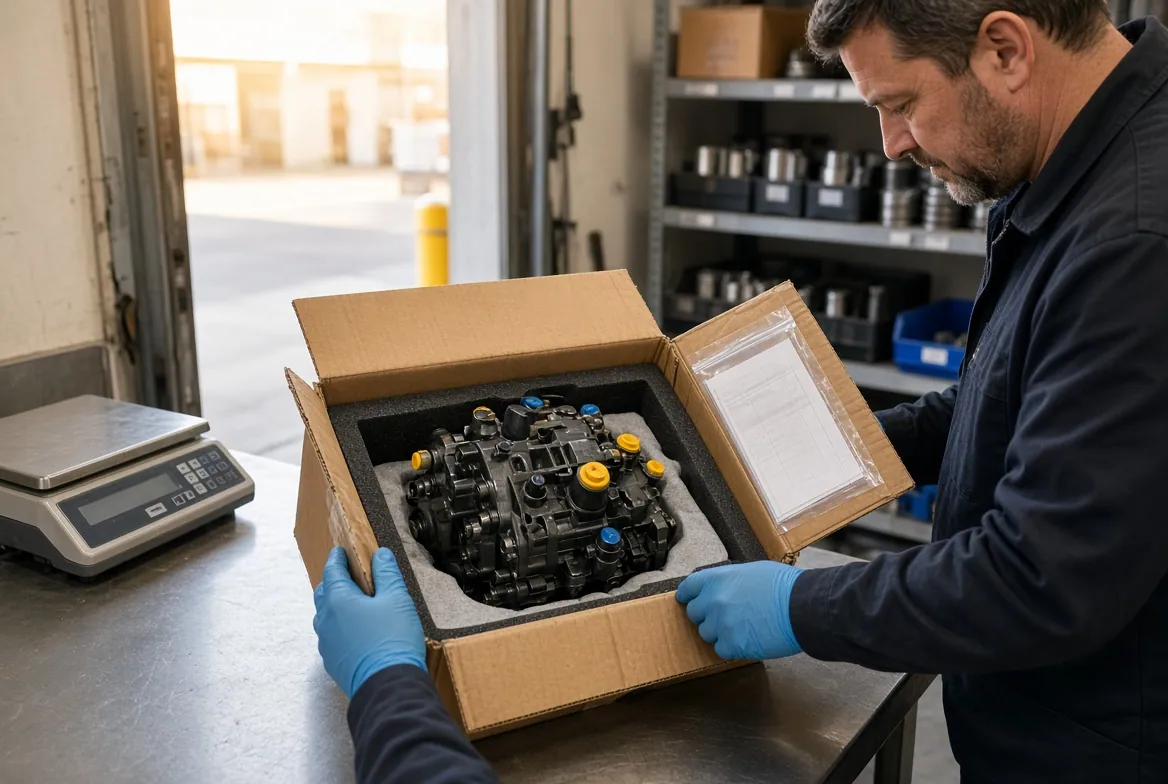
Expert mail-in service. Easy as 1, 2, 3. Tell DCT what you have; we’ll confirm whether we can accept the component and provide shipping instructions; then we’ll help you understand testing and service options. The detailed preparation steps below support that simple customer journey—additional approved work and charges are discussed separately.
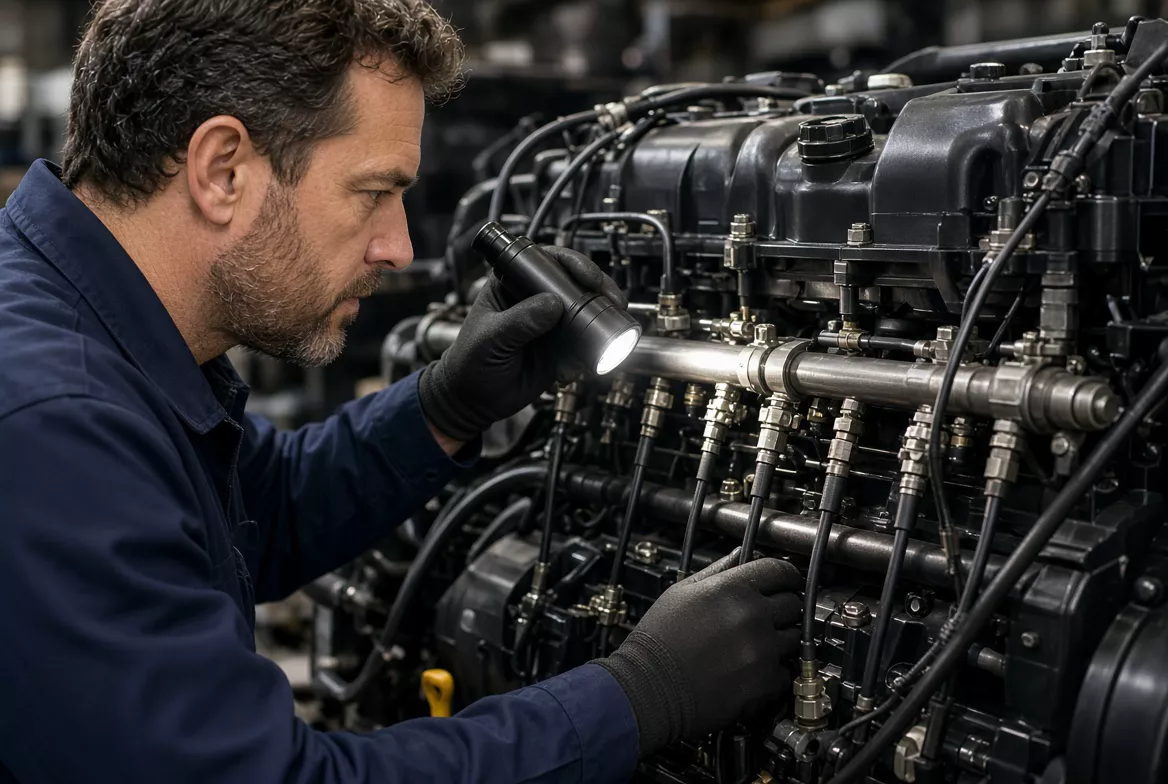
Mail-in repair means you remove the injectors or injection pump, ship them to a fuel injection specialist, and get tested, repaired or rebuilt parts shipped back for installation. Your mechanic handles everything on the engine. The specialist handles the component.
It’s how most of Diesel Control Technicians’ work reaches us: customers from across the country ship their parts to DCT, while local customers coordinate a suitable Hutchinson automotive drive-in appointment or obtain approval for component receiving at the DCT-designated location. Done right, mail-in gives you access to specialized test equipment no matter where the truck, tractor or generator is parked.
Here’s how the process works and how to keep it from costing you extra days.
The process in five steps
- Submit a tracked service request. Provide the complete injector or pump part number where available, equipment details, contact information, symptoms and requested service. DCT assigns an inquiry tracking number.
- Obtain DCT’s shipping approval. Staff review whether the component is eligible and email the receiving address, initial terms and approved packaging and carrier requirements. Do not ship before receiving written approval.
- Package and ship the component. Protect ports and fragile fittings, include your DCT tracking reference and follow the specific receiving instructions. Our guide to how to ship diesel injectors and pumps explains common packing considerations.
- Review the diagnosis and approve the quotation. After arrival, DCT records the component, performs the initially authorized evaluation and explains findings. Repairs beyond that scope require your separate authorization before work begins.
- Complete the approved service and return. DCT carries out authorized work, performs applicable verification and coordinates the approved return shipping or pickup. Your installer follows the engine manufacturer’s installation and final checks.
Confirm scope before you ship
A mail-in quote should distinguish initial evaluation, repair that requires separate approval, and exchange. Ask whether DCT supports the full component number, what a passing or inconclusive result means, how a nonrepairable unit is handled, and what test or calibration record will accompany a serviced part. The shipping box should not act as automatic authorization for additional work. If the work may include injector repair, use our injector repair quote checklist to compare evaluation and post-repair verification.
What to put in the box
- Your name, business name if any, phone number, email and return shipping address
- Engine or equipment make, model and year, and the engine serial number
- Part numbers from the parts themselves
- The cylinder each injector came from, marked on the injector or its bag
- The symptoms, any codes, and what has already been tested or replaced
- What you want done: test only, test and repair, rebuild, or exchange
- Anything unusual: fuel contamination, a previous repair, performance parts, or a known history
The symptom description matters more than people expect. “Hard start when hot after sitting 20 minutes” tells a technician far more than “won’t run right.”
Planning your downtime
Total time out of service includes removal, transit to DCT, intake, bench work, possible repair authorization, return transit and installation. Ask for the current estimate for your exact part and requested service; shipping and parts availability can change the schedule.
A few ways to keep the clock short:
- Contact the shop before you ship if the part is unusual or the application is critical, so questions about parts and procedures are answered before the box arrives.
- Ship early in the week so the box doesn’t sit in a terminal over a weekend.
- Ask about an exchange unit when downtime matters more than keeping your original part. With an exchange, a ready unit ships to you and your old part returns as a core. Our article on injector exchange and core programs explains how that works.
When mail-in is the right call — and when it isn’t
Mail-in makes sense when the component has already been identified as the likely problem, when you want test results before you replace anything, or when the right equipment isn’t available nearby.
It’s not the first step when the cause is still a mystery. If an engine has low power and nobody has checked supply pressure, air in the fuel or boost, removing parts to ship them can be premature. Get the on-engine basics done first. Local customers in Kansas can skip the shipping entirely and have the vehicle or machine tested where it sits at either Kansas location.
Common questions
Should I send all the injectors or just the suspect one?
Send the components justified by the on-engine diagnosis and the engine maker’s procedure. Testing a full set can make sense when several units have questionable results, contamination affects the system or repeated access labor is high; it is not a universal requirement. Ask DCT about model-specific test eligibility and see whether to replace one injector or all of them.
Can I send a pump without its gear or brackets?
Usually yes, but tell us what’s attached and what isn’t. Don’t remove parts that affect timing or calibration unless the removal procedure calls for it.
Do I need to drain the fuel?
Drain as much as practical and cap every opening. Leaking fuel can soak packaging and cause problems in transit.
Manufacturer reference: FedEx: guidance on shipping automotive parts · Bosch: Diesel Repair Network and supported component service For procedures and specifications, use the current manufacturer information for your engine and model year.
Ready to ship?
Contact Diesel Control Technicians with the part number and a short description of the problem before you ship. We’ll confirm where to send it and what to include, and get your parts back to you as quickly as the work allows.
Prepare your inquiry about Mail-In Diesel Fuel Injection Repair: Start with the part number, symptoms and clear photographs. Our shipping guide explains packaging, while DCT supplies the authorized Kansas receiving destination after reviewing the component. Ask about acceptance first.
QUESTIONS ABOUT YOUR DIESEL COMPONENT?
Need guidance on Mail-In Diesel Fuel Injection Repair: How It Works?
Nationwide mail-in service begins with a component inquiry, not an unsolicited shipment. Learn how DCT reviews suitability, supplies receiving instructions and discusses evaluation and authorization. Include the exact component number, equipment application, symptoms and checks already completed.