
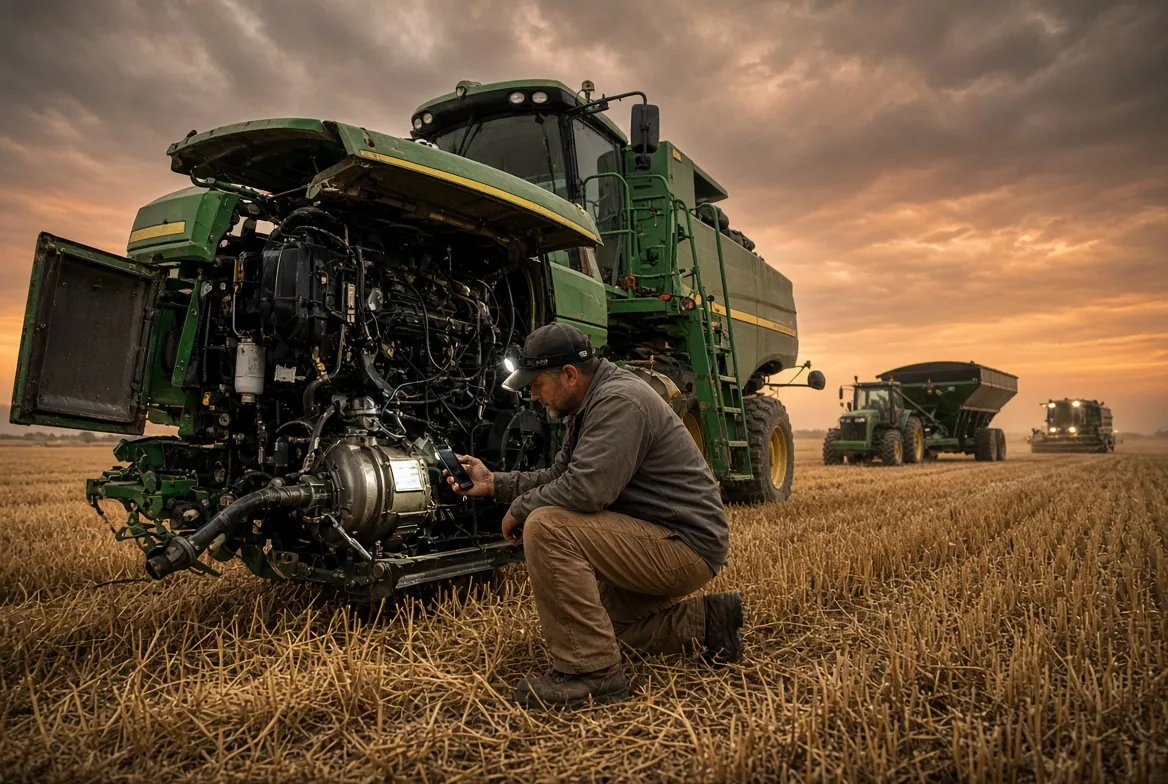
When a tractor or combine goes down in the middle of harvest or planting, the repair is only part of the cost. Crop waiting in the field, custom work you have to hire and a weather window that won’t wait make every lost day expensive. The way to keep an injection failure from becoming a lost week is to confirm the diagnosis fast, choose the quickest repair path for your part, and do as much preparation as possible before the season starts.
When it fails in the field
1. Confirm it’s really the injection system
Before anything comes off the machine, rule out the problems that stop a diesel in its tracks and look like pump failure:
- Plugged fuel filters, especially after fueling from a nurse tank or bulk tank
- Water in the separator
- Air in the fuel after a filter change or running dry
- A failed fuel shutoff solenoid or its wiring
- A weak lift or transfer pump
- On electronic engines, active codes that point somewhere specific
A failed filter can be fixed in the field in minutes. A pump pulled unnecessarily costs days.
2. Gather what the shop will need
- The pump or injector part numbers, from the parts themselves
- The engine serial number and machine model
- What happened: sudden stop, gradual power loss, hard starting, smoke
- Any codes or readings
- Whether there’s any chance of water, debris or the wrong fuel
3. Decide: repair your part or exchange
| Situation | Fastest route |
|---|---|
| Common part, exchange available | Exchange unit ships, your part returns as a core |
| Uncommon or older part | Repair or rebuild your own, ship expedited both ways |
| Diagnosis still uncertain | On-machine testing, then decide |
| Contamination event | Inspect the whole fuel system before replacing anything |
See diesel injector exchange programs for how exchanges work.
4. Ship smart
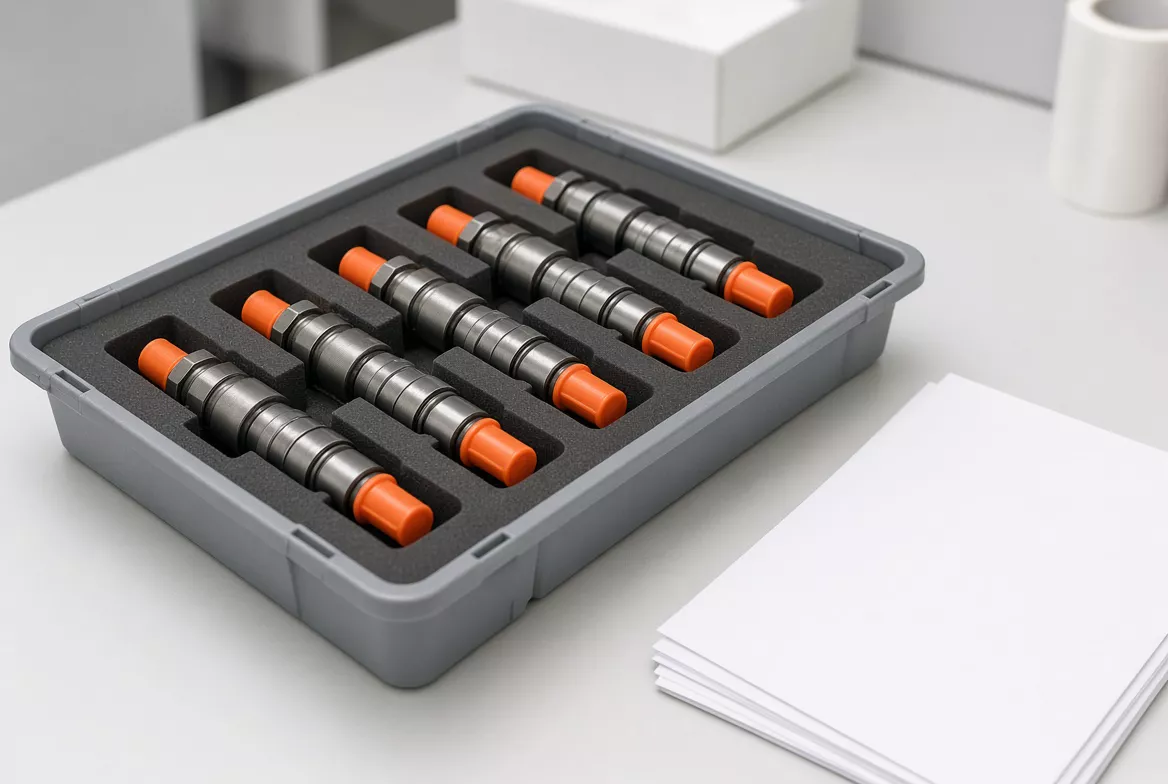
Pack the parts carefully, cap every port and include a note with your phone number and what you need. Ship early in the day and early in the week if you can. Contact the shop before you ship so they know it’s coming and how urgent it is. See how to ship diesel injectors and pumps.
Before the season starts
The best harvest repair is the one you did in January.
- Service suspect machines in the off-season. A tractor that started hard last fall or smoked under load is telling you something. Winter is the time to have the pump or injectors tested.
- Change fuel filters and drain water separators before the first day in the field.
- Check your bulk fuel. Water and sediment in the farm tank end up in every machine you fuel. See farm diesel fuel storage tanks.
- Carry spare filters for every machine in the field.
- Know your part numbers. Keep a list of injection pump and injector numbers for each critical machine, so you’re not reading tags in the dark.
- Know who you’ll call. Decide in advance where the work will go.
A field card for each critical machine
Before the season, put together a one-page card for each tractor, combine and sprayer you can’t afford to lose:
- Machine model and serial number
- Engine model and serial number
- Injection pump part number and injector part numbers
- Fuel filter part numbers and how many spares are on hand
- Where the water separator drains and how to bleed the system
- Who to call for fuel injection work, and how to ship to them
When something fails at dusk with rain on the way, the card saves an hour of hunting for numbers and makes the first call productive.
Manufacturer reference: John Deere: engine parts and support For procedures and specifications, use the current manufacturer information for your engine and model year.
Central Kansas farms have a shorter path
DCT serves farm equipment owners from Hutchinson and Great Bend, Kansas. Share the pump and equipment details so our team can confirm eligibility, advise which location should receive an approved component, and explain available testing or repair choices. A vehicle or machine appointment is not offered at Great Bend; general vehicle service is provided in Hutchinson only.
Plan the next move for Tractor Injection Pump Failure at Harvest: Keep the engine and component identifiers, earlier diagnostic results and service question together. Our mail-in process explains how DCT assigns the correct receiving facility when a component is approved, while the inquiry form gets the review started. For vehicle appointments, Hutchinson provides automotive service.
QUESTIONS ABOUT YOUR DIESEL COMPONENT?
Dealing with Tractor Injection Pump Failure at Harvest: A Downtime Plan?
Injection problems during harvest make clear decisions especially important. Organize symptoms, exact pump identification and receiving arrangements before a time-sensitive specialist inquiry. Include the complete pump nameplate, engine application, operating complaint and relevant supply or control findings.