
Field Guides / Injector families & identification
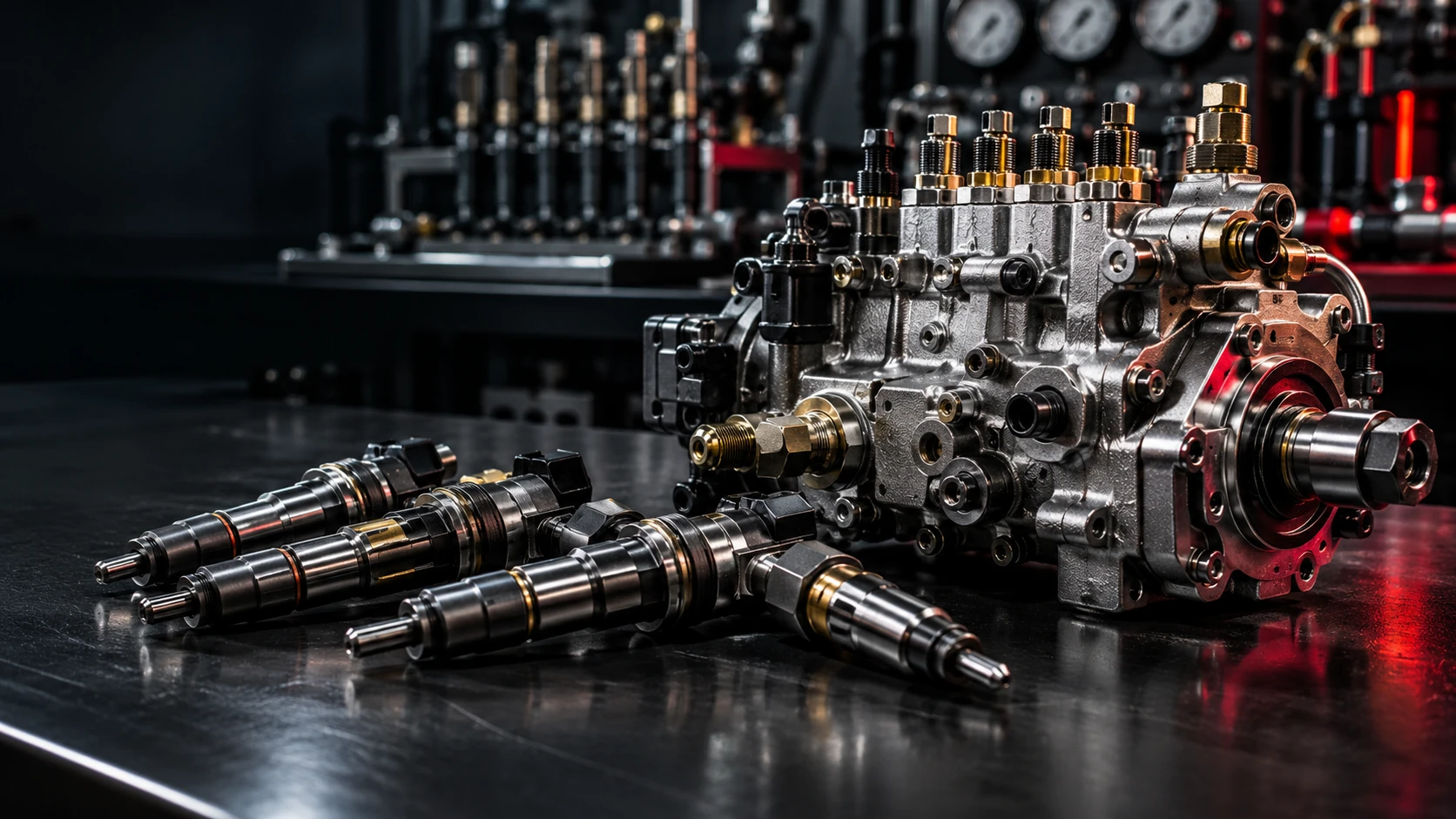
Duramax L5P owners often see several expensive fuel-system components discussed together because they share symptoms. The L5P's injection hardware and high-pressure pump system are distinct from earlier Duramax generations. An injector estimate should be tied to an exact component identification, the vehicle's fault history and evidence that separates injection delivery from rail-pressure control and cylinder performance.
What the symptoms or question actually mean
A rough idle, haze, misfire indication or difficult start does not tell a technician which part failed. Balance data can be influenced by combustion condition; unusual return behavior may coexist with low feed pressure or a regulator fault. Water and abrasive particles can damage more than one component. A single generic pressure code does not prove an individual injector is defective.
What to check and document
Record VIN, year, engine hours, mileage, fault codes with freeze-frame conditions, original Denso/OEM injector number and any recent repairs. Use the L5P-specific service diagnostic flow to evaluate both low- and high-pressure sides safely. If an injector is removed for authorized testing, preserve its cylinder assignment and calibration information. Never crack high-pressure lines to observe spray.
How to make the repair or operating decision
The decision tree should distinguish an injector with failed supported testing, a possible pump or pressure-control issue, and contamination requiring wider inspection. Ask the repair provider to explain why the proposed component scope is necessary and what evidence supports each added part. Confirm that the testing provider has the actual injector generation's approved capability before committing to shipping.
Prevent avoidable repeat work
The final invoice should record what was replaced, why, any programming performed and the verification results. If complaints persist after service, review the original pre-repair data rather than assuming another injector failed. Fuel quality and installation cleanliness deserve particular attention if multiple units have similar damage.
Practical checklist
- Record complete VIN, injector number and model year.
- Retain rail-pressure actual/desired data from the complaint condition.
- Ask for contamination inspection findings.
- Compare approved injector testing against other fuel-system hypotheses.
- Preserve coding and cylinder-position notes.
Before identifying a replacement or service path
Record the complete part number from the component itself, the engine serial number, application, and the symptom that led to removal. OEM branding alone does not establish interchangeability. Testing, calibration, coding and rebuild support depend on the exact design and approved service procedures.
Frequently asked question
Can a balance-rate value alone confirm a bad L5P injector?
No. It is one diagnostic clue within an engine-specific procedure. Mechanical cylinder condition, fuel supply, software strategy and other faults can affect the value; professional confirmation is required before component condemnation.
Reference and further reading
Need to evaluate an actual component?
DCT can review the manufacturer and part number, application, observed symptoms and requested service for eligibility. A web guide is not a diagnosis, service authorization, or promise that every model can be rebuilt. Get receiving approval before shipping.
Request a component-service review · Mail-in process · Contact DCT
Scope: Educational guidance for diesel owners and qualified professionals. Consult OEM procedures, safety notices, applicable regulations and a qualified technician; do not attempt high-pressure fuel disassembly from this article.