
A fuel pressure regulator is supposed to make a chaotic hydraulic job look effortless. Demand changes, the engine speeds up, injectors open and close, and the control system continually adjusts to keep pressure where it belongs. P0089 means the performance of the pressure regulator 1 control system has failed an expected check on the vehicle. It does not mean a technician has removed the regulator, tested it, and found it defective.
Look up the exact meaning of 4 codes covered below
P0089 quick distinction: performance is not a circuit-open verdict
A regulator performance code indicates a measured or inferred control problem; it does not identify which part has failed.
- Identify the system: Use the engine and calibration information to identify the actual regulator or metering device called regulator 1.
- Compare evidence: If supported by the tool, note commanded versus actual pressure alongside operating condition and related codes.
- Check upstream and electrical causes: Fuel supply, restriction, sensor plausibility and actuator control can create similar symptoms; follow OEM tests.
Related guidance: Fuel-pressure regulator overview P0087 low rail pressure
Fuel-pressure control faults need system context
Record the full engine application, pressure data and tests performed before requesting a metering valve or regulator. A control performance code can result from supply, sensing, mechanical or electrical causes that require different checks.
Metering valve identification Fuel-pressure testing information
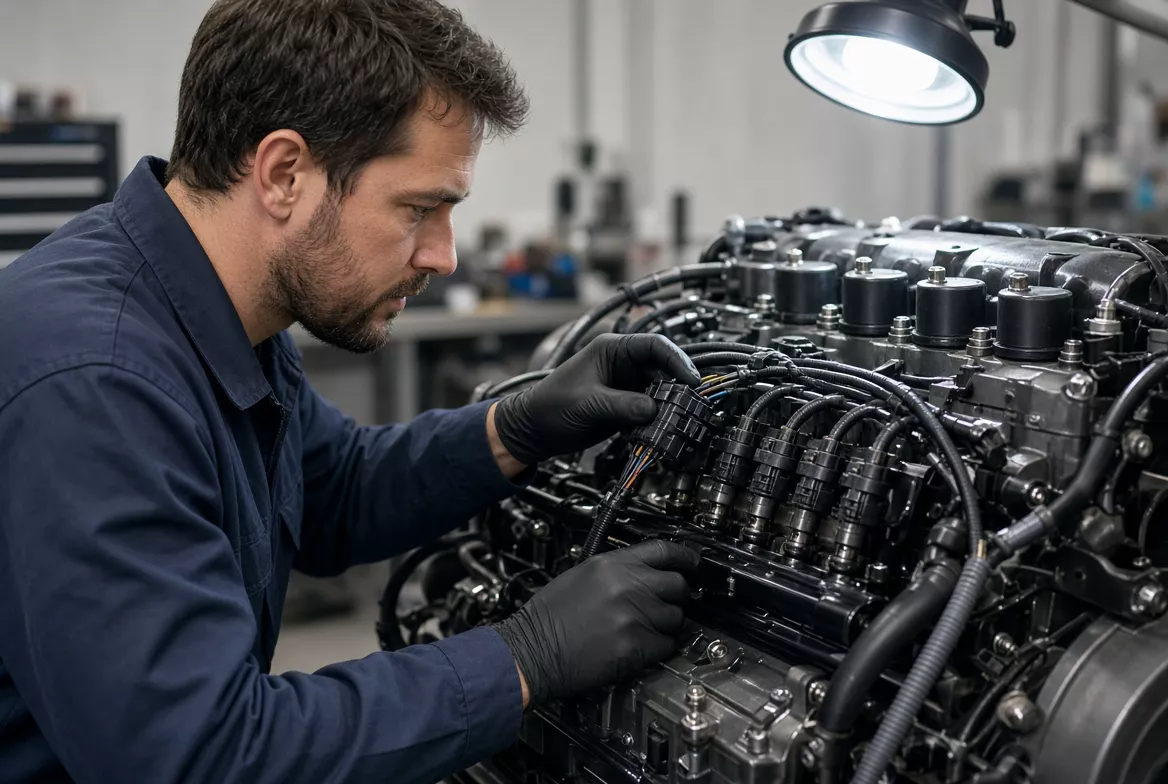
The most important question: what is regulator 1 on this engine?
Different diesel architectures control pressure by metering fuel at the pump inlet, regulating fuel elsewhere in the circuit, or combining multiple devices. The scan tool’s “regulator 1” label is not enough to identify the physical part. Before testing, a technician should obtain the wiring diagram, component description, commanded control data and diagnostic enable conditions for the exact application. A regulator that cannot work because the high-pressure pump is starved is different from a regulator that receives the right command and fails to respond.
Why P0089 may appear with low or high pressure
An actuator can stick, wear, receive an incorrect electrical signal or respond poorly to changing demand. Pressure feedback may also be inaccurate, leading the controller to conclude that regulation is failing. Inadequate supply, internal leakage or a pump problem can push the pressure-control system toward the end of its range even when the regulator has no internal defect. P0087 or P0088 alongside P0089 tells you which pressure direction was observed, but still cannot assign responsibility to a single component.
How the investigation becomes specific
Record all DTCs and freeze-frame conditions, then confirm the pressure sensor’s credibility. The technician compares requested rail pressure with measured pressure and the relevant regulator command under OEM-defined conditions. Electrical power, grounds, actuator circuit integrity and supply fuel conditions are evaluated before hydraulic performance is judged. If testing indicates a particular metering valve or pump assembly, component evaluation may then be warranted. The evidence must connect the failed control response to the actual part.
Explore P0087, P0088 and the pressure regulator code center. Contact our team with the regulator identification and test results if you need to discuss a component repair.
Regulator 1 performance versus circuit codes
P0089 is a regulator 1 performance code, which can require a different diagnostic sequence from a driver or wiring fault. The related electrical codes distinguish the monitored fault more precisely: P0090 refers to the fuel pressure regulator 1 control circuit/open, P0091 to the regulator 1 control circuit low, and P0092 to the regulator 1 control circuit high. These labels do not guarantee that regulator 1 is a particular physical valve on every engine; the manufacturer’s diagram and test procedure must identify which regulator is being monitored, how it is driven, and how the controller detects each state. If the circuit is faulty, judging mechanical pressure control before repairing the electrical problem can send the diagnosis in the wrong direction.
Frequently asked questions
Does P0089 mean I should replace the rail pressure regulator?
No. The code describes monitored regulation performance; the actual component assignment and cause must be verified.
Can a weak lift pump trigger a pressure regulator performance code?
On some systems, inadequate supply can force the high-pressure controller to its limits. Supply testing helps determine whether the regulator is responding to an upstream problem.
Keep exploring the right evidence
P0089 identifies fuel pressure regulation performance trouble. Learn how metering, supply, sensors and electrical control affect the diagnosis. Include the exact component number, equipment application, symptoms and checks already completed.
Find your exact trouble code in this group
Differentiate control requests from pressure or leakage outcomes, and use the vehicle-specific relief and return system design. The individual descriptions below identify which monitor needs attention; the full guide explains the associated system.
| DTC | Monitored condition | Diagnostic distinction |
|---|---|---|
| P0089 | Fuel pressure regulator 1 performance | Pressure regulation performance is suspect; command/feedback/supply relationship comes first. |
| P0090 | Pressure regulator 1 control circuit/open | Control circuit may be open; use wiring diagrams and commanded tests. |
| P0091 | Pressure regulator 1 control circuit low | Electrical low-state concern; identify the device and its circuit before testing. |
| P0092 | Pressure regulator 1 control circuit high | Electrical high-state concern; verify harness, supply, ground and driver behavior. |
The code descriptions are general. Confirm the exact definition, engine application and OEM diagnostic procedure before relying on a component conclusion. High-pressure diesel fuel is hazardous; do not loosen live common-rail connections.