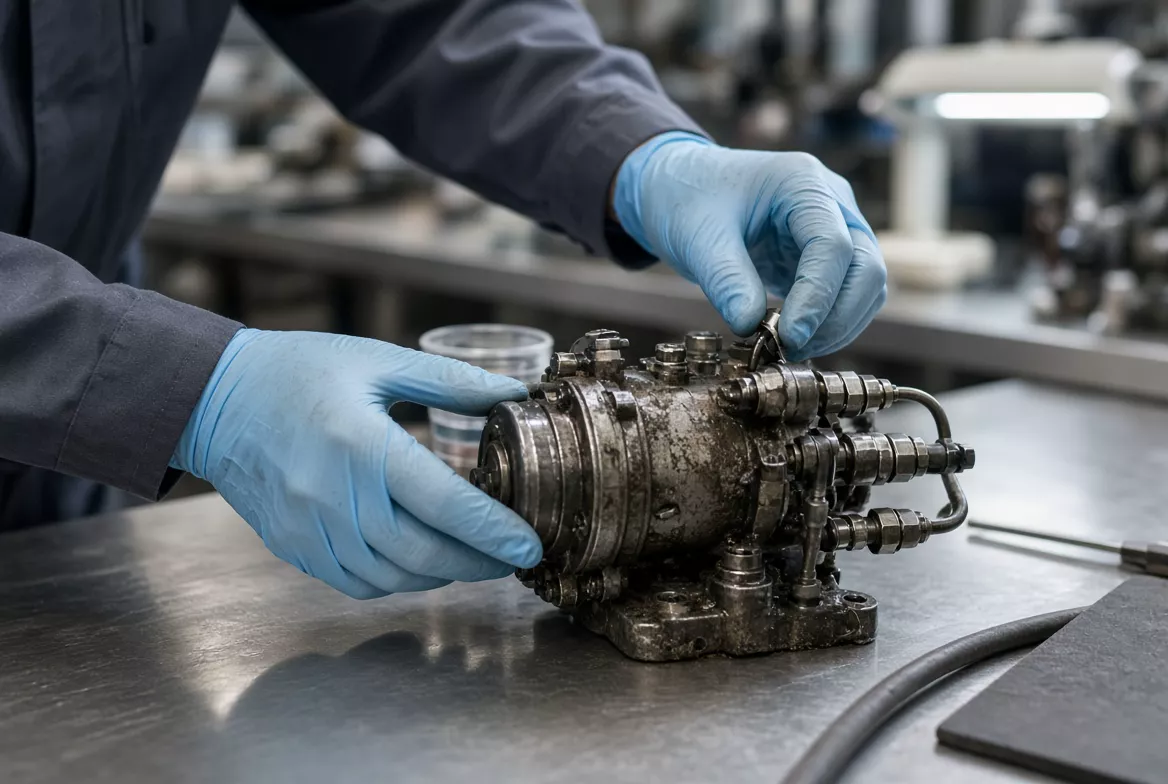
The engine cranks, coughs, and refuses to cooperate. Someone says, ‘Must be the injection pump.’ Maybe. But before you put an high-value precision component on trial, gather the evidence. A diesel fuel system is an ensemble, and the loudest symptom does not always reveal the guilty part.
Clue 1: Has the engine got clean, adequate fuel?
A restricted filter, air leak, inadequate lift-pump supply, contaminated fuel, or improperly primed system can prevent the injection equipment from receiving the fuel it needs. Start with vehicle- or engine-maker diagnostic procedures, not improvised high-pressure tests.
Clue 2: What does the symptom look like?
No start can be linked to supply, synchronization, pressure, compression, electrical power, or controls. Hard hot starting has a different diagnostic story than a pump that leaks when parked. Intermittent stalling may involve wiring and supply issues. Smoke and rough running have still more possible causes.
Record when symptoms occur: cold, hot, under load, after shutdown, only at idle, or only at highway speed.
Clue 3: Mechanical, electronic, or common rail?
A mechanical in-line pump is diagnosed differently from an electronic VP44 or modern common-rail CP4. A code describing low rail pressure points to a system condition, not necessarily a single defective part. Injector back leakage and rail controls deserve consideration where applicable.
Clue 4: Did contamination start the trouble?
Water, incorrect fuel, biological growth, dirt, or metallic debris can change the repair plan. If significant metal is found in a modern common-rail system, do not simply install a replacement pump and hope the debris disappears. Follow the OEM inspection and remediation procedure.
When does bench testing help?
Once the exact component is identified and vehicle-side evidence has been considered, an appropriate bench evaluation may confirm or rule out some pump defects. The goal is a supported decision, not a guess dressed as a diagnosis.
Five complaints that put the pump on the suspect list
Hard starting or extended cranking can involve inadequate fuel supply, air intrusion, poor compression, inadequate cranking speed, injector leakage, glow-plug concerns on applicable engines or the injection pump itself. Record whether the trouble is cold-only, hot-only or present at every start. The pattern may be more informative than the complaint’s severity.
A sudden stall may arise from interrupted fuel feed, electrical power, control failures or internal pump trouble. On an electronically controlled system, fault history, wiring and control-module behavior deserve attention. On a mechanical engine, examine fuel supply, shutdown controls and linkage as well as the pump.
Loss of power under load often warrants supply-side checks before major components are removed. A partially restricted filter or inadequate transfer supply can be less obvious at idle. Appropriate data under the condition that reproduces the complaint is more useful than observing a freely revving unloaded engine.
Excessive smoke deserves a broader engine diagnosis. Black smoke may be associated with an imbalance between fuel and available air, while white or gray smoke can have several causes including incomplete combustion. The color alone does not identify an injection pump defect, and the correct interpretation depends on the engine and operating condition.
An external fuel leak is a clear condition to address, but the location matters. A loose connection, return fitting or feed hose is different from a worn shaft seal or a crack in the pump body. Never attempt to find a high-pressure leak with a bare hand; injection injuries can be severe.
How to narrow the question without guessing at parts
Start with the basics the engine manufacturer’s diagnostic process calls for. Establish clean fuel and adequate low-pressure supply, verify electrical power and communication where relevant, and record diagnostic codes without assuming they identify the culprit. Common-rail systems may call for requested-versus-actual pressure data and injector return-flow checks. Mechanical systems may require observations of governing, timing, air intrusion and delivery behavior.
If a filter shows water, metal or heavy debris, the diagnostic priorities change. A component that produces metallic contamination can damage other parts of the fuel system. Continued operation or a pump-only replacement may make matters worse. Our contamination guide explains the system-level implications.
When an off-engine evaluation becomes useful
A component inspection or bench test is most informative when the reason for removal is understood. Include the pump’s complete identification number, the engine application and the observations that led the technician to suspect the pump. Explain what happened before and after any fuel-filter, injector, sensor or wiring service. A properly documented symptom history can prevent a second repair attempt from repeating the first one.
Is a low-rail-pressure fault code enough reason to buy a pump?
No. The code indicates a pressure condition detected by the engine controls. Inadequate supply, metering faults, sensors and excessive injector return can contribute to that condition. Use the appropriate diagnostic procedure to establish the cause.
Request a Mail-In Repair Evaluation: Start your repair inquiry
How mail-in service works | Browse pump families