
Field Guides / Advanced diesel diagnostics
The strongest injection pump case study contains measurable information, not just a story that the engine was weak before and strong afterward. A supported bench test can provide incoming delivery, leakage, governing or control observations suited to the actual pump family. The repair report then identifies authorized work and the final test outcome. This format helps independent shops and owners judge what a component specialist can actually establish.
What the symptoms or question actually mean
A legacy mechanical pump may have a different set of test points from a modern electronic or common-rail unit. Mixing numbers from unrelated test plans is technically meaningless. A statement such as ‘low flow’ needs operating conditions and a valid acceptance range. Some internal failure findings may be physical observations rather than measured flow points. Both are valuable when stated accurately.
What to check and document
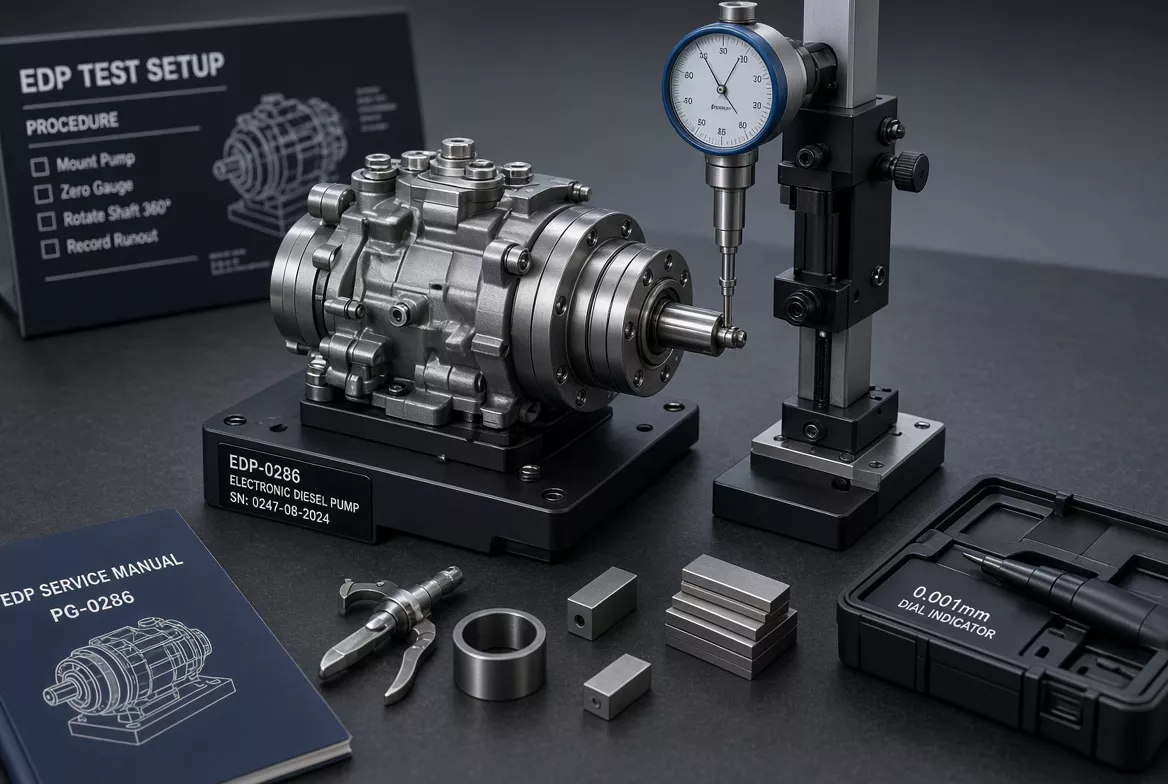
A publishable record includes pump tag, engine application, symptom as reported, previous tests, as-received condition, the supported procedure, measured discrepancies, authorized repairs, final verification and the limits of the claim. The unit’s serial and customer identity should be redacted as appropriate. Any missing field should be labeled unknown, not inferred from stock illustrations.
How to make the repair or operating decision
The before-and-after comparison may show an improvement in supported bench parameters, but vehicle performance requires separate installation and engine verification by the field shop. If a unit passed incoming tests, documenting the negative result is valuable: it can steer diagnosis back to supply or electrical controls. A responsible report makes clear which outcomes were measured and which still require checks on the installed engine.
Prevent avoidable repeat work
Keep the incoming and final test reports together, along with the component number, work authorization and any installation follow-up. This gives owners and repair shops a useful record for future service decisions.
Practical checklist
- Identify exact pump family and supported test procedure.
- Capture real as-received measurements and photos.
- Document authorized repair scope and parts.
- Report final measurements using the same valid basis.
- Separate component verification from engine verification.
Use the evidence before the replacement decision
Record the exact engine, controller calibration, operating condition, fault status, measured observations and service-manual test references. An isolated code or visual finding is rarely enough to condemn a high-value injection component. High-pressure systems require trained personnel and OEM-approved safe depressurization procedures.
Frequently asked question
Can a bench report prove that the original truck’s low-power problem was fixed?
Not alone. It measures the component under a defined procedure. The installing shop must verify the actual engine and vehicle outcome under appropriate conditions.
Need to evaluate an actual component?
Understand the essential fields of authentic pump repair case studies and why real measured outcomes matter. If a component requires specialist evaluation, contact DCT before arranging shipment.
Request a component-service review · Mail-in process · Contact DCT
High-pressure diesel fuel systems require trained personnel. Follow the equipment manufacturer’s safety and repair instructions.