

Black smoke is soot: fuel that didn’t find enough oxygen to burn completely. That leaves only two ways to cause it. Either the engine is getting too little air, or it’s getting too much fuel or fuel that isn’t atomizing properly. The air side is usually quicker to check and more often the culprit, so start there.
Air-side causes
Restricted air intake. A plugged air filter, a collapsed intake hose or debris in the intake starves the engine. Simple to check, often overlooked.
Boost leaks. A split intercooler hose, a loose clamp or a cracked charge-air cooler lets pressurized air escape before it reaches the cylinders. Fueling isn’t reduced enough to match the air that’s been lost, so the mixture runs rich. Black smoke under load is the classic symptom.
Turbocharger problems. Damaged compressor or turbine wheels, worn bearings, or a variable-geometry turbo stuck in the wrong position all reduce airflow.
EGR stuck open. On engines with exhaust gas recirculation, a valve stuck open replaces fresh air with exhaust gas, which has little oxygen to offer.
Exhaust restriction. A plugged exhaust filter or a damaged pipe raises back pressure and reduces how much air the engine can move.
Sensor problems. On electronic engines, a mass-airflow, boost or intake temperature sensor reading incorrectly can lead the computer to fuel for air that isn’t there.
Fuel-side causes
Worn or eroded nozzles. Over time, nozzle holes can enlarge and spray patterns degrade. Coarse droplets don’t burn completely.
Leaking or dribbling injectors. Fuel that drips after the injection event burns late and dirty.
Over-fueling injectors. A worn injector may deliver more than specified, especially at high load. On common-rail engines, scan-tool balance data may show that cylinder as strong.
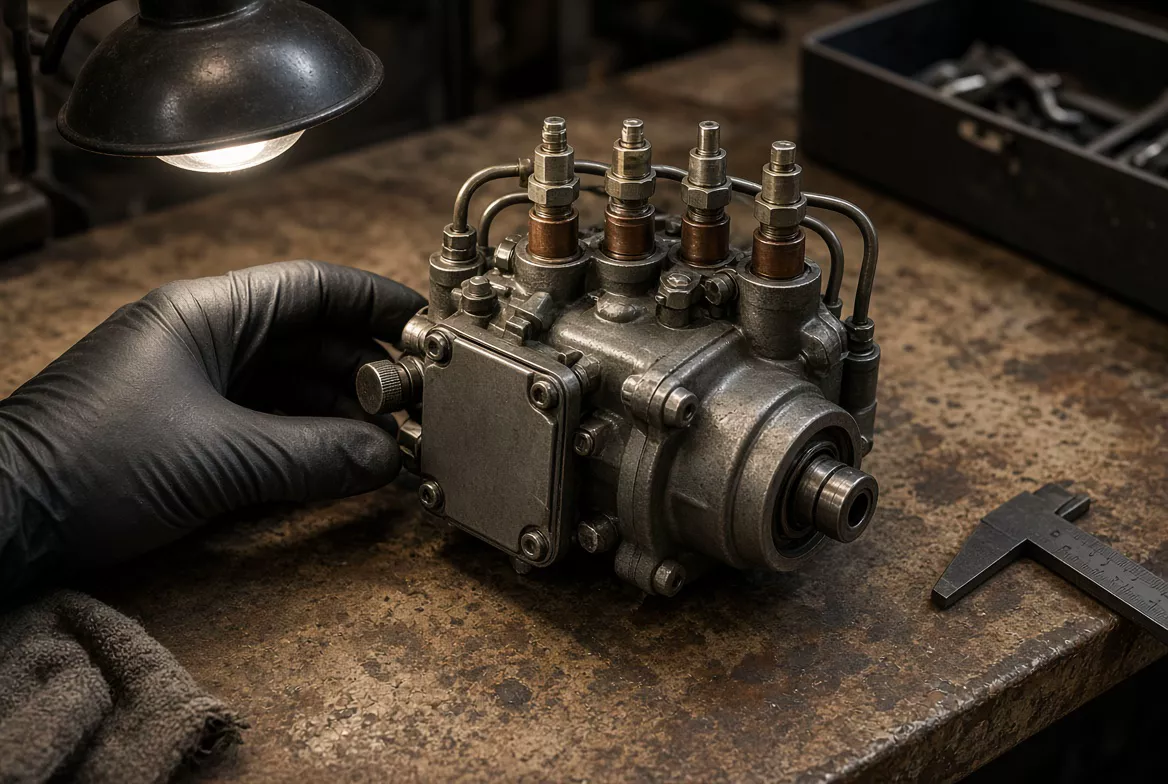
Incorrect pump settings. On mechanical pumps, fuel settings, governor adjustments or a tampered boost compensator can deliver more fuel than the engine can burn. The P7100 on 12-valve Cummins trucks, for example, uses a boost-dependent fuel control that is often adjusted by owners.
Retarded timing. Late injection leaves less time for combustion.
Wrong injectors or calibration. Injectors or pumps from another application, or performance parts, can over-fuel.
How to tell which side it is
| Clue | Leans air | Leans fuel |
|---|---|---|
| Smoke mainly under load, low boost reading | ✓ | |
| Hissing or whistling under load | ✓ | |
| Smoke at idle or light load too | ✓ | |
| One cylinder out of balance | ✓ | |
| Smoke appeared after injector or pump work | ✓ | |
| Smoke appeared after turbo or intake work | ✓ | |
| Smoke plus raw-fuel smell and rough running | ✓ |
Measure boost under load and compare it with specification. On electronic engines, compare intake airflow and boost readings to expected values. If air is good, the fuel system moves up the list.
A note about modern diesels with exhaust filters
On a late-model diesel with an intact diesel particulate filter, you shouldn’t see black smoke from the tailpipe in normal operation. The filter traps soot. If a DPF-equipped vehicle is blowing visible black smoke, either the filter is damaged or missing, or soot is escaping before the filter, such as from a cracked exhaust manifold or up-pipe. Meanwhile, the engine may be loading its filter with soot from the same problem, leading to more frequent regenerations.
When black smoke becomes a problem
Occasional puffs under hard acceleration on an older mechanical diesel are common. Persistent black smoke means wasted fuel, high exhaust temperatures, sooted oil and, on newer engines, a loaded particulate filter. High exhaust temperatures under load can damage pistons and turbochargers, so don’t tow heavy with an engine that’s smoking hard.
Manufacturer reference: Bosch Mobility: common-rail system overview For procedures and specifications, use the current manufacturer information for your engine and model year.
When the air side checks out
Diesel Control Technicians tests injectors and calibrates injection pumps for pickups, heavy trucks and equipment. If boost and air flow are where they should be and the smoke continues, ask DCT whether the identified injectors qualify for an approved off-vehicle evaluation, or confirm whether Hutchinson automotive drive-in diagnostics are appropriate. For an overview of injector symptoms beyond smoke, see bad diesel injector symptoms.
QUESTIONS ABOUT YOUR DIESEL COMPONENT?
Diesel Black Smoke: Bad Injectors or Not Enough Air?
Black smoke often indicates an air–fuel imbalance, but an injector is not always responsible. Compare airflow, load, control and fuel-delivery evidence before drawing conclusions. Include the exact component number, equipment application, symptoms and checks already completed.