
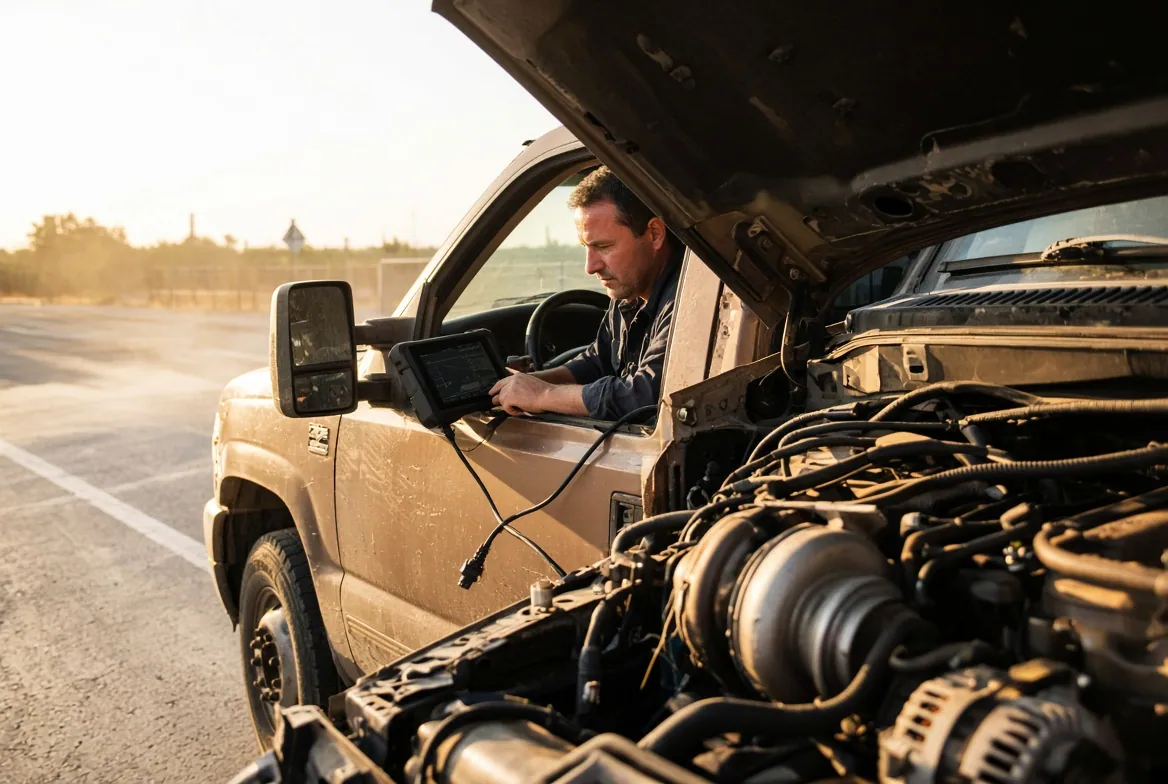
A diesel that starts easily cold but cranks and cranks after it’s been driven and shut off for a few minutes usually has an internal leak somewhere in the injection system. Hot fuel is thinner than cold fuel, and hot engine oil is thinner than cold oil. Thin fluids slip past worn clearances more easily, so a pump or injector that seals well enough when cold loses too much pressure when hot to start the engine quickly.
The specific suspect depends on which injection system your engine uses.
Why heat matters so much
Diesel injection depends on building high pressure during cranking, when the engine is turning slowly and every bit of leakage counts. On a cold start, thick fuel helps seal worn surfaces. After a hot shutdown, fuel in the pump, lines and injectors heats up further from the engine, and leakage increases. If total leakage is greater than what the pump can make up at cranking speed, injection pressure never reaches the point needed to start.
Common-rail engines: injector return and pump wear
On common-rail diesels, the usual hot-start culprit is excessive injector return flow. Worn injectors leak fuel back to the tank and the rail can’t reach minimum starting pressure while cranking. A worn high-pressure pump makes it worse. Watch rail pressure on a scan tool during a hot crank: if it climbs slowly or stalls below the minimum the engine needs, you’ve confirmed the symptom. A return-flow test shows whether the injectors are responsible.
On the LB7 Duramax, hard starting when warm has been linked to injector bodies that crack and open up as the engine heats. That’s one reason LB7 injectors have the reputation they do; see Duramax LB7 injector problems.
Rotary and inline pump engines: pump wear
On older mechanical systems, the injection pump is the most common hot-start suspect. Rotary pumps such as the Stanadyne DB2 and Bosch VE are lubricated by fuel and wear at the same internal surfaces that seal pressure. A worn pump may start a cold engine fine and struggle hot. Worn nozzles that open early or leak can add to the problem.
Electronic distributor pumps: heat and electronics
The Bosch VP44 on 1998.5–2002 Cummins trucks carries its control electronics on the pump, where they’re exposed to engine heat and depend on fuel flow for cooling. Heat-related stalling, hard hot starts and timing or metering codes are typical complaints, and low supply pressure makes them worse. See Cummins VP44 pump failure.
HEUI engines: high-pressure oil leaks
On the 7.3 and 6.0 Power Stroke, the International DT466E and Cat HEUI engines, injectors are fired by high-pressure engine oil. To start, the high-pressure oil pump must build a minimum injection control pressure (ICP) while cranking. Hot oil leaks more easily from worn injector O-rings, fittings and passages, so a small leak that’s tolerable cold can prevent a hot start. Watching ICP during a hot crank is the key test. See HEUI injectors explained.
Causes outside the injection system
- Weak lift pump or supply restriction, which matters more when fuel is hot and starts to vaporize
- Hot fuel and aeration: return fuel heats the tank, and low fuel levels make it worse
- Starter heat soak: a starter that cranks slowly when hot can’t spin the engine fast enough to build pressure
- Weak batteries or poor connections, which affect cranking speed and, on some engines, injector driver voltage
A practical test sequence
- Confirm the complaint: time how long it cranks cold vs. hot, and note how long after shutdown it happens.
- Check cranking speed hot. A slow crank points to the starter or batteries.
- On electronic engines, watch rail pressure or ICP during a hot crank.
- Check supply pressure and look for air.
- Perform a return-flow test (common rail) or an oil leak test (HEUI).
- On mechanical systems, have the pump and nozzles tested.
Manufacturer reference: Bosch Mobility: common-rail system overview For procedures and specifications, use the current manufacturer information for your engine and model year.
Have the leak found on the bench
Hard hot starts are often the first symptom of worn injectors or a worn pump, and they tend to get worse. Diesel Control Technicians tests pumps and injectors on the bench for customers across the country and can discuss automotive drive-in evaluations at Hutchinson by confirmed appointment. If you’ve already confirmed low cranking pressure when hot, ask DCT to review the identified suspect components and provide approval before shipping with your notes.
Where Diesel Hard to Start When Hot leads next: Confirm the actual pump or component family before replacing parts. Record the engine application, existing tests and symptoms, then review the testing process or request a component review. DCT confirms service eligibility and receiving instructions individually.
QUESTIONS ABOUT YOUR DIESEL COMPONENT?
Need guidance on Diesel Hard to Start When Hot? Why Heat Causes It?
Heat-related starting complaints may expose supply, leakage or control faults that disappear when cold. Review symptom timing and supporting evidence before choosing a replacement part. Include the exact component number, equipment application, symptoms and checks already completed.