
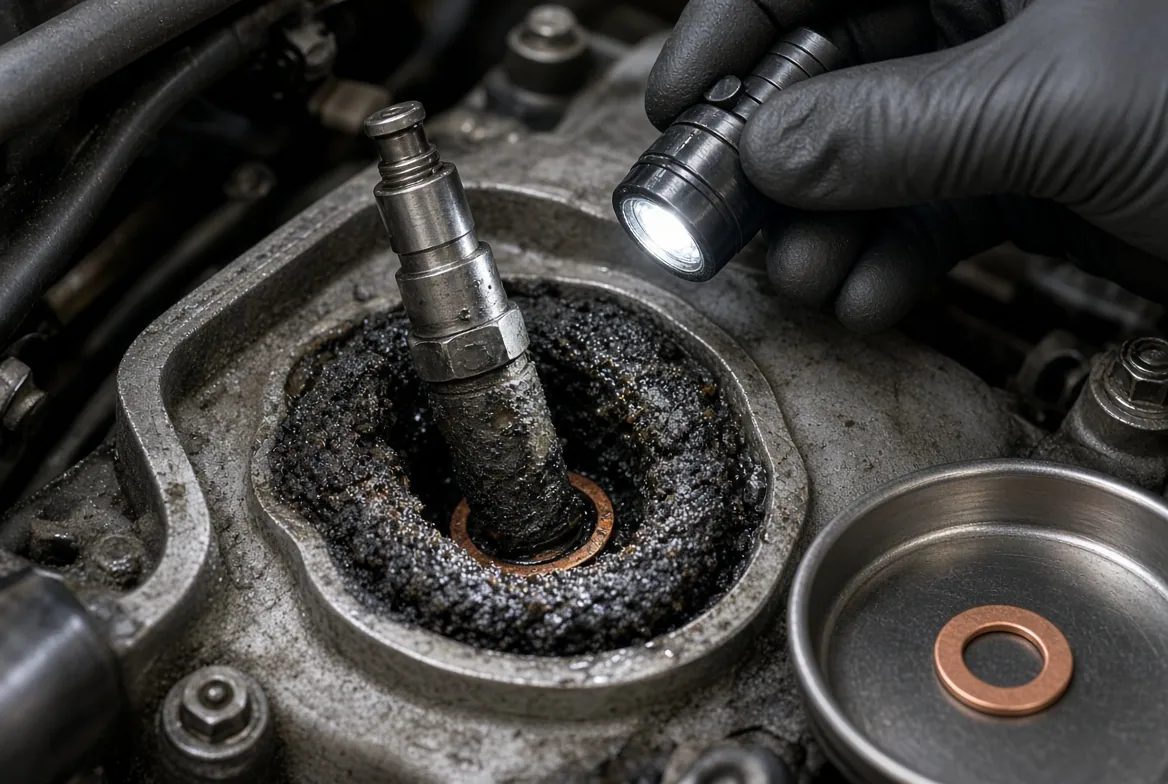
“Black death” is the nickname for the hard, black carbon that builds up around a diesel injector when combustion gas leaks past its seal. The injector usually seals against the cylinder head with a soft copper washer. When that seal fails, every combustion stroke blows hot gas and soot up past the injector. Over time the soot cakes into a crust around the injector and its hold-down, sometimes filling the injector well.
The name is most associated with Mercedes-Benz diesels, including those in Sprinter vans, but the same kind of leak can happen on any engine whose injector seals against combustion with a washer.
The symptoms
- A ticking, hissing or chuffing sound from the top of the engine, often more noticeable under acceleration
- Black, crusty carbon around one or more injectors, visible under the engine cover
- Exhaust or fuel smell, sometimes noticeable in the cab
- Rough running or a misfire on the affected cylinder if the leak is large
- A wet-looking residue at the injector base. That can also be oil, so the leak should be confirmed, using a suitable manufacturer-approved inspection by a qualified technician. Never touch or test an operating high-pressure fuel system for leaks.
Why it happens
On many of these engines, the injector is clamped down rather than threaded into the head. The clamp crushes the copper washer to form the seal. Repeated heating and cooling, combined with combustion pressure, can wear or loosen that seal. Incorrect installation, a reused washer, a dirty seat or wrong clamp torque make it more likely.
Once gas starts leaking, the seal usually doesn’t recover. It gets worse.
Why waiting makes it worse
Carbon from the leak packs around the injector body. The longer it builds, the harder the injector becomes to remove. A badly carboned injector can seize in its bore, and forcing it out can damage the injector, the bore or both. What could have been a seal replacement turns into an extraction job, and sometimes a new injector.
How it’s repaired
A typical repair sequence, summarized from an automotive service guide on the problem (Mercedes-Benz diesel injectors: the “black death”):
- Confirm the leak.
- Warm the engine to help loosen fasteners and carbon.
- Relieve fuel pressure according to the service procedure, then remove lines and hold-downs. On piezo-injector engines, disable the injector circuit first, because piezo injectors operate at hazardous voltage.
- Extract the injectors, with a puller if needed.
- Clean carbon from the injector, the well and the bore, and clean the seat carefully without damaging the nozzle tip.
- Install new seals and new hold-down bolts where the procedure calls for torque-to-yield fasteners.
- If any injector is replaced, program its compensation code.
The same guide recommends replacing all the injector seals at the first sign of a leak, warning that fixing only one or two often leads to another leak within a year.
Is the injector still good?
Often it is. The injector itself didn’t cause the leak, so a clean, undamaged injector may be fine to reinstall with new seals. But an injector that was seized, pried or hammered during removal, or one that ran hot with a leaking seal for a long time, should be tested before it goes back in. Reinstalling an injector you’re not sure about means doing the job twice.
For engines that need injector coding after replacement, see diesel injector coding. If the engine misfires after the repair, check misfire after new injectors for common post-installation causes.
Manufacturer reference: Bosch: Diesel Repair Network and supported component service For procedures and specifications, use the current manufacturer information for your engine and model year.
Test before you reinstall
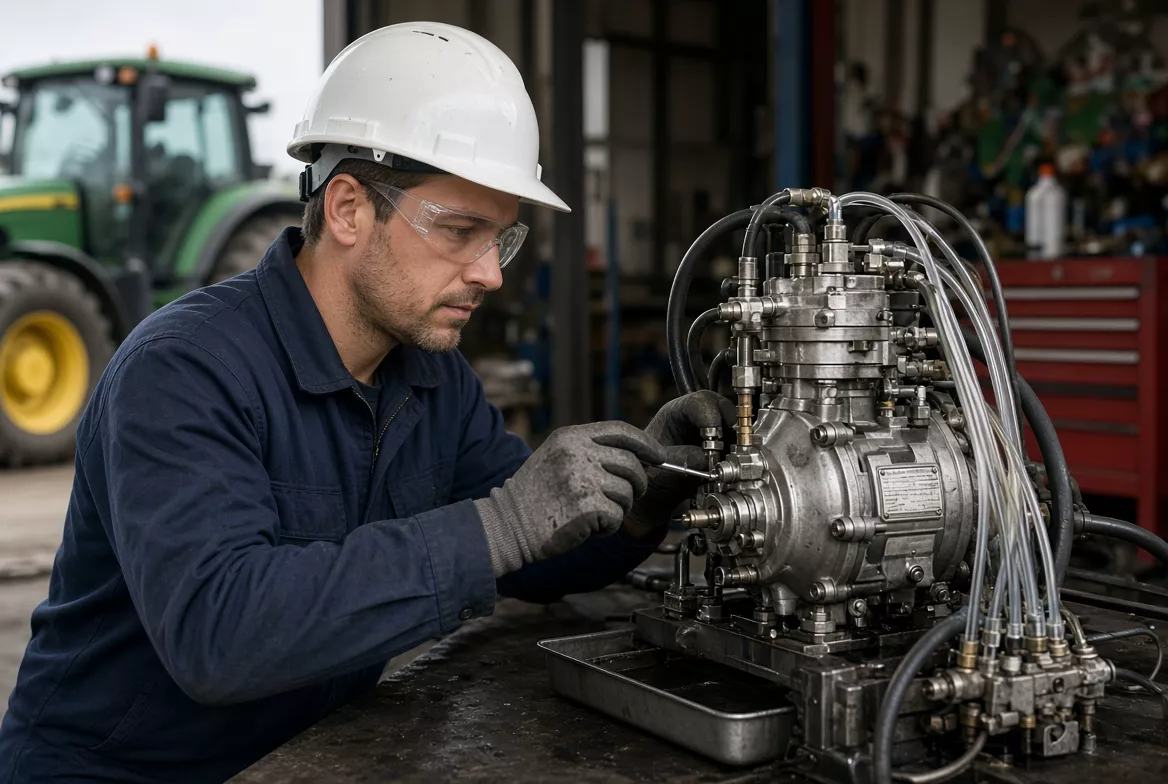
Once the injectors are out, it’s the right moment to know whether they’re healthy. Diesel Control Technicians can bench test them, clean and repair where appropriate, and tell you whether they’re fit to go back in with new seals. Ask DCT to confirm that the removed injectors are suitable for evaluation. After written receiving approval, send the identified components marked by cylinder, with notes on removal difficulty.
Match the sealing concern to the engine design
Seal locations and failure patterns differ by injector and engine. Have the engine model, injector number and observations ready before considering injector service or a seal kit.
Injector seal component information Injector service options
QUESTIONS ABOUT YOUR DIESEL COMPONENT?
Need guidance on Diesel Injector Seal Leaks and “Black Death” Explained?
Carbon buildup around an injector may indicate a sealing problem, sometimes called black death. Review recognition, engine-specific causes and evaluation considerations before disturbing the assembly. Include the injector or nozzle number, engine identification, relevant cylinder observations and any completed injector testing.