
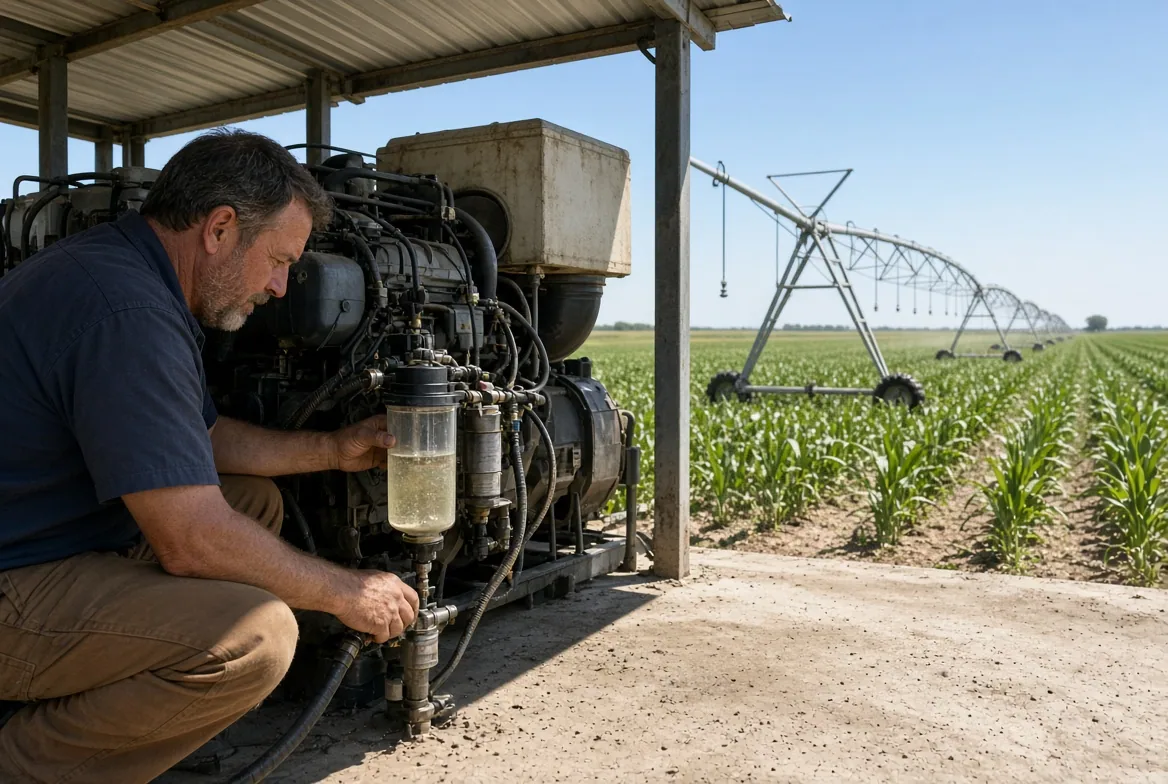
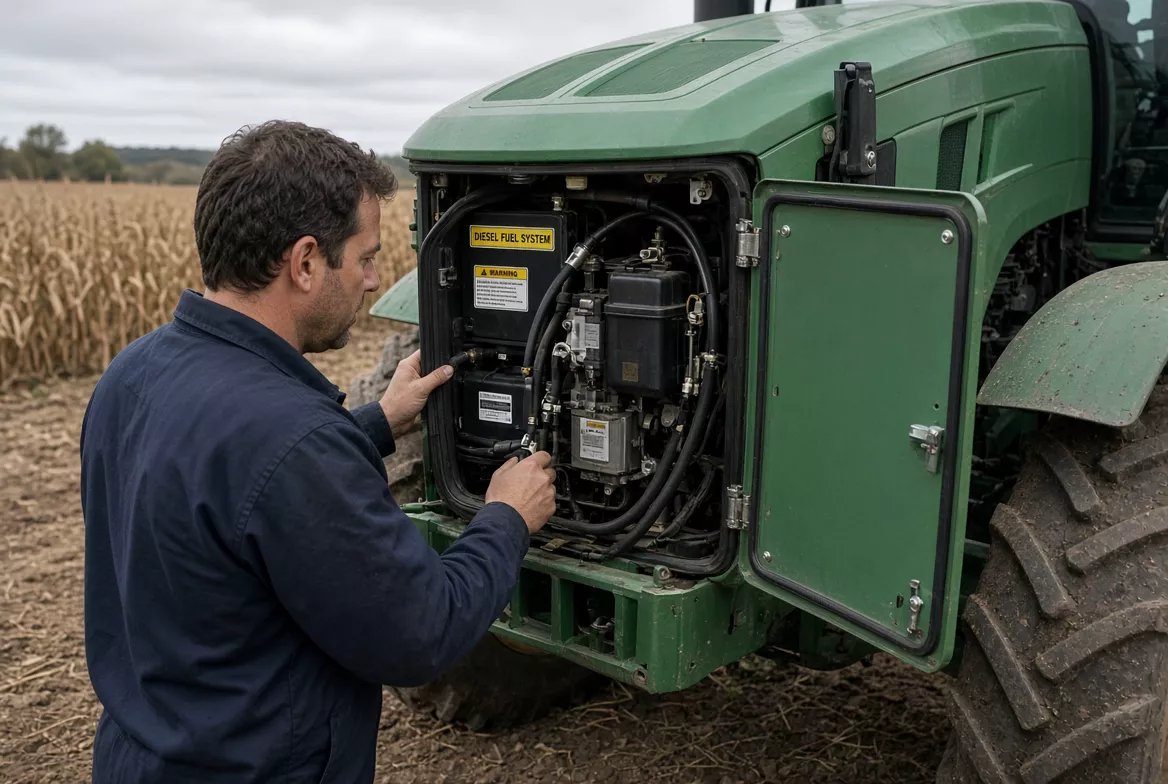
A diesel irrigation power unit has an unusual life. During the season it may run for days at a time at a steady speed and load, often in heat and dust. Then it sits for months. That combination is hard on fuel injection in specific ways: fuel that sits at the well site picks up water and degrades, long continuous runs magnify any supply or cooling weakness, and first starts after winter expose whatever happened in storage. Most irrigation engine injection problems are preventable with fuel care and a disciplined pre-season routine.
Why irrigation duty is different
Long, steady runs. A power unit running continuously at a set speed with a pump load is a test of fuel supply, filtration and cooling. A restriction that a truck would never notice can cause a slow loss of power over a long run.
Site fuel storage. Tanks at the well are often small, exposed to sun and temperature swings and refilled irregularly. Daily heating and cooling draws moist air in and condenses water inside the tank.
Seasonal storage. Months of sitting allow fuel to degrade, water to settle and, in some cases, microbial growth to develop at the fuel-water boundary.
Remote locations. A failure may go unnoticed until the field shows it, and getting to the engine takes time.
Common injection problems
- Water damage to injection pumps and injectors from contaminated site tanks
- Plugged filters from sediment, water and microbial growth
- Hard starting after storage from stale fuel, stuck nozzles or air in the system
- Governor hunting under load, where speed rises and falls as the pump load changes, often from governor wear or air in the fuel. See diesel surging at idle.
- Power loss over a long run from filter restriction or supply problems
- Smoke and poor running from worn or carboned nozzles
Engines used for irrigation span mechanical pumps and electronic common rail depending on age and manufacturer, so the details depend on what’s under the hood.
Pre-season checklist
- Inspect and drain the site tank. Check for water at the bottom and sediment. If microbial growth is present, the tank needs cleaning, not just draining.
- Replace fuel filters and drain the water separator.
- Check fuel lines and connections for cracks and air leaks.
- Fill with fresh, clean fuel.
- Bleed the system following the engine maker’s procedure.
- Check batteries, cooling system and safety shutdowns.
- Start and run the engine under load before you need it, and watch for smoke, hunting or hard starting.
During the season
- Keep the site tank topped up to reduce condensation space.
- Drain the water separator at regular intervals.
- Watch for slow power loss over long runs, an early sign of filter restriction.
- Respond to hard starting early, before the engine fails to start at all.
End of season
- Fill the tank to reduce condensation over winter, or follow your fuel supplier’s guidance on long-term storage.
- Change filters so contaminated filters don’t sit in the system.
- Plan service for suspect engines over winter, when a pump or injectors can be tested without crop on the line.
For more on keeping farm fuel clean, see farm diesel fuel storage tanks and water in diesel fuel.
When the engine runs but the pivot falls behind
An irrigation power unit has to hold a steady speed against the pump’s load. If the engine can’t hold speed, from a restricted filter, worn injectors or a tired governor, the water pump slows and delivery drops, and the pivot may not keep pace. Watch for engine speed that sags over a long run, smoke that increases as the day heats up, or speed that hunts as the load changes. Each of those is an early warning that’s far easier to fix in the off-season than in July.
Manufacturer reference: Cummins: diesel fuel storage and transfer For procedures and specifications, use the current manufacturer information for your engine and model year.
Help from the middle of Kansas irrigation country
DCT works on industrial and agricultural injection systems, including the fuel injection systems on engines that drive pivots and well pumps. Irrigators in central Kansas can schedule an appointment for pumps, injectors or the power unit, and we’ll confirm the best location. If your engine is farther away, send approved components to DCT using its written receiving instructions; ask us about the current shop schedule and take advantage of winter downtime when practical.
Plan the next move for Irrigation Engine Fuel Injection: Keep the engine and component identifiers, earlier diagnostic results and service question together. Our mail-in process explains how DCT assigns the correct receiving facility when a component is approved, while the inquiry form gets the review started. For vehicle appointments, Hutchinson provides automotive service.
QUESTIONS ABOUT YOUR DIESEL COMPONENT?
Need guidance on Irrigation Engine Fuel Injection: Keep the Pivot Running?
An irrigation engine needs dependable fuel delivery through long operating periods. Learn what operating clues, fuel storage history and component details help narrow an injection-related inquiry. Include the machine and engine identification, operating conditions, fuel source and any previous checks.