
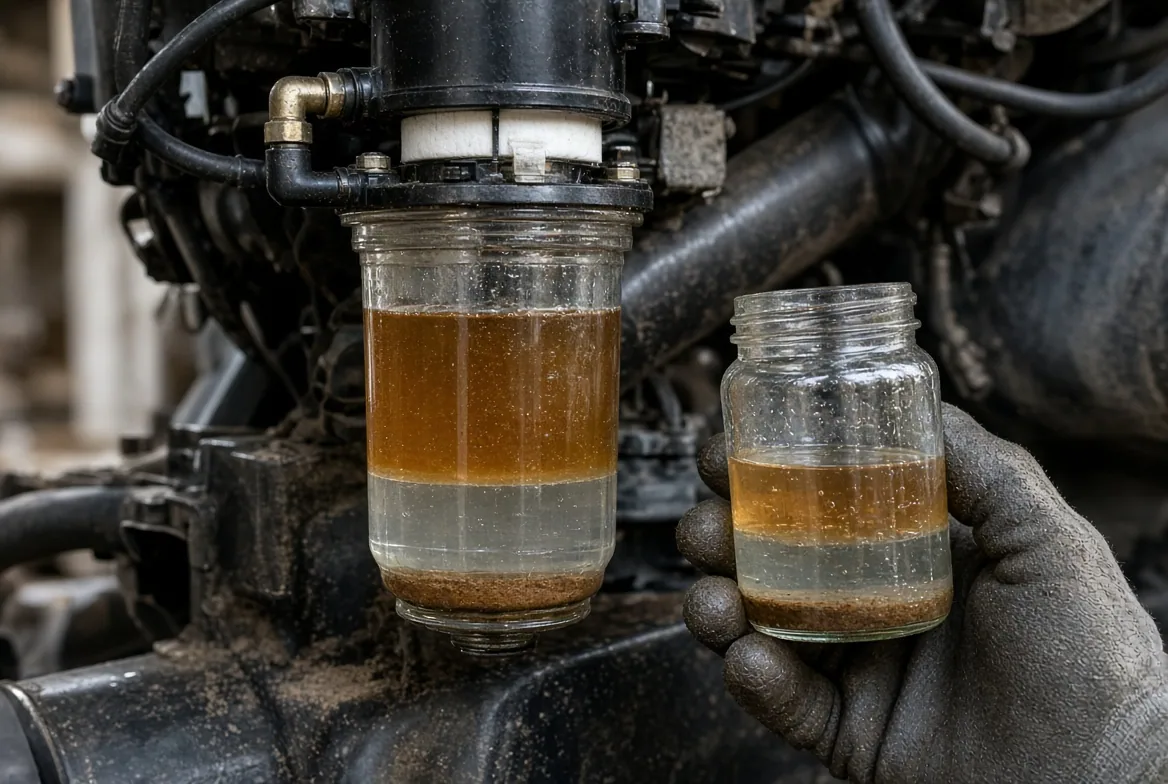
Water is the most damaging common contaminant in diesel fuel. It strips the lubricating film from injection pump and injector surfaces, causes corrosion, can freeze in winter and feeds microbial growth that plugs filters. If you have a small amount, caught by the water separator, drain it and find the source. If you have a large amount, the engine is stumbling or the water separator is full, stop running the engine, because every minute pushes water deeper into the system, and modern common-rail systems are especially vulnerable.
Signs of water in the fuel
- A water-in-fuel warning light or message
- Water in the separator bowl, visible as a separate layer at the bottom
- Sputtering, misfiring or power loss, sometimes suddenly
- Hard starting
- White smoke from cylinders not burning properly
- Rust or corrosion on filter parts or in fuel samples
- Filters that plug quickly or look slimy, a sign of microbial growth
The three forms of water
Free water is a separate layer that settles to the bottom of a tank or filter bowl. It’s the easiest to remove and the most dangerous if it reaches injection components in a slug.
Emulsified water is suspended in the fuel as tiny droplets, making the fuel look hazy. Water separators remove some of it.
Dissolved water is held in the fuel at the molecular level. Small amounts are normal and become a problem when they come out of solution as temperature drops.
What water does to the injection system
- Lubrication loss. Pumps and injectors rely on fuel to lubricate moving parts. Water doesn’t lubricate, so surfaces wear and score.
- Corrosion. Precision surfaces rust and pit, which causes sticking and leakage.
- High-pressure damage. In common-rail systems, water under extreme pressure causes rapid erosion and damage.
- Freezing. Water can freeze in filters and lines, stopping the engine.
- Microbial growth. Bacteria and fungi live where water meets fuel, producing sludge and acids.
What to do right now
A little water, caught by the separator
- Drain the water separator following the engine maker’s procedure.
- Replace the fuel filter if water has reached it.
- Check the tank for water at the bottom.
- Find and fix the source.
A lot of water, or the engine is running badly
- Shut the engine down and don’t restart it.
- Drain the tank and inspect what comes out.
- Drain the separator and replace the filters.
- Flush the fuel lines as appropriate for your system.
- Inspect the injection components. On common-rail systems, water that reached the high-pressure side may have damaged the pump and injectors. Testing them is the only way to know.
- Refill with clean fuel, bleed the system and monitor closely.
If the water came from a fuel purchase, keep a sample and your receipt.
Where the water came from
- Condensation in partly empty tanks
- Leaking fill caps, vents or deck fills on boats
- Contaminated fuel from a supplier or a farm or job-site tank
- Rain getting into open containers
Our guides to farm diesel fuel storage tanks and marine diesel injector service cover prevention in those settings.
Water and winter
In cold weather, free water in a filter or separator can freeze and stop the engine, and water that comes out of solution as fuel cools adds to the problem. Draining the separator more often in winter, and keeping tanks fuller to reduce condensation, prevents many cold-weather no-starts that get blamed on gelled fuel. See diesel won’t start in cold weather.
Keep a record
If water damaged your fuel system, document it: photos of the separator and filters, a fuel sample, fuel receipts and the repair invoice. Insurance and fuel suppliers may ask, and the record helps if injection components are evaluated later.
Manufacturer reference: Cummins: diesel fuel storage and transfer For procedures and specifications, use the current manufacturer information for your engine and model year.
Have exposed components tested
If water reached your injection pump or injectors, find out what it did before deciding what to replace. Diesel Control Technicians tests injection pumps and injectors from all kinds of diesel engines. After DCT confirms acceptance and supplies receiving instructions, send the identified components to DCT with a note about the water event, or arrange receiving of approved components at the DCT-designated Kansas location, and get a clear answer on what can be saved.
After investigating Water in Diesel Fuel: Preserve the relevant fault evidence and follow the engine manufacturer’s safety or contamination requirements. Component evaluation is only one part of a full-system decision. Review contamination concerns and ask DCT about the identified unit.
Document contamination before component work
Retain any credible sample or filter observations and tell DCT which injection components were exposed. Water in fuel can involve a broader system assessment; do not assume a replacement pump alone resolves contamination.
Fuel contamination guidance Discuss eligible component testing
QUESTIONS ABOUT YOUR DIESEL COMPONENT?
Questions about water in Diesel Fuel?
Tell us about the engine, symptoms and checks you’ve already completed. Our specialists can help you decide what to do next.