
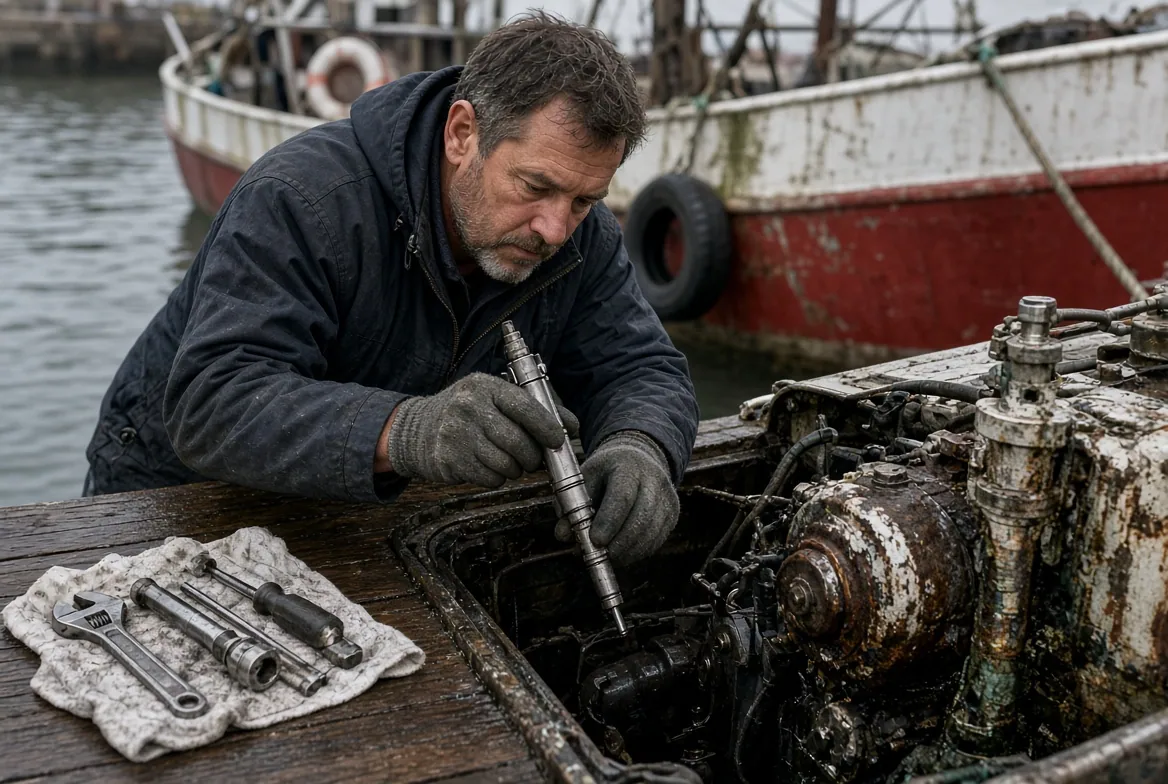
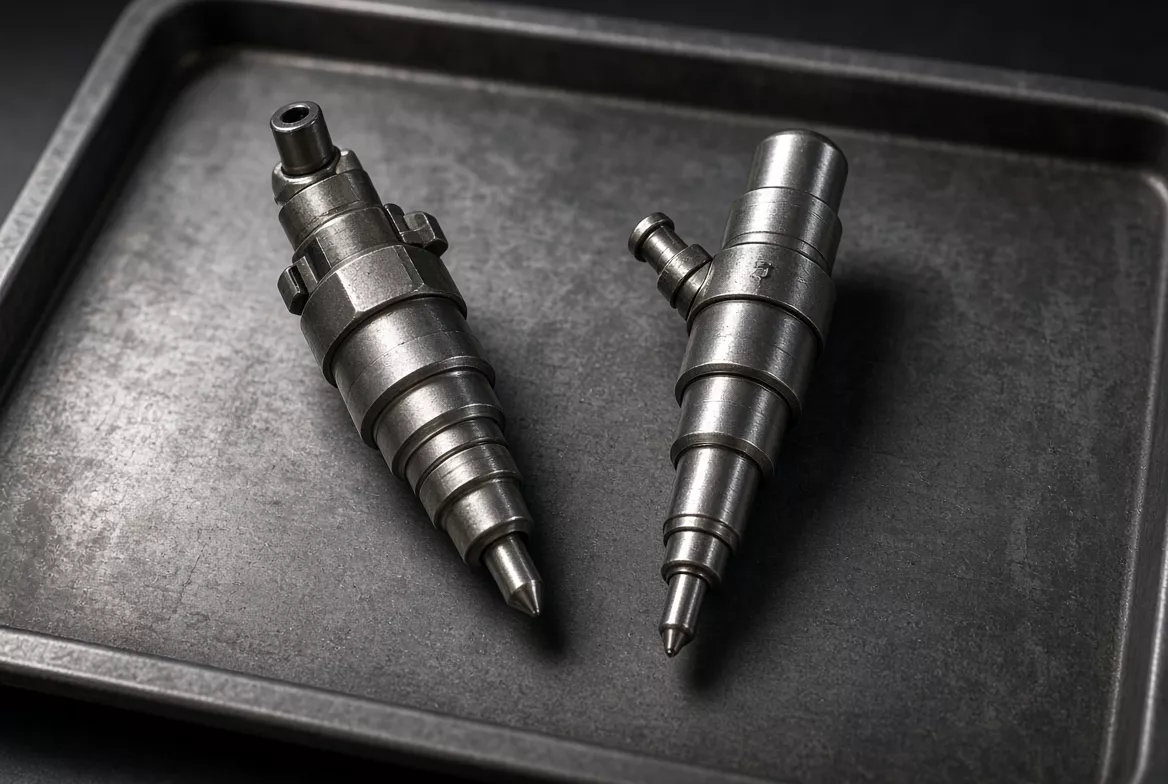
Marine diesels have the same injection systems as engines on land, but they live in the worst possible environment for them: surrounded by water and humid air, often sitting for months between uses. The most common marine injection problems are water in the fuel, corrosion from humid storage, degraded fuel after layup and carboned or worn injectors from light-load running. Clean, dry fuel and timely injector service prevent most of them.
How water gets into a boat’s fuel
- Deck fills with worn O-rings or caps that let rain and spray in
- Vents that admit water in rough conditions
- Condensation in partly full tanks, especially over a long layup
- Contaminated fuel from a dock with low turnover
Because water is heavier than diesel, it settles to the bottom of the tank, where the pickup may draw it in when the boat is moving in a seaway.
What water does to injection parts
Water strips the lubricating film from pump and injector surfaces and causes corrosion. In a mechanical pump or nozzle, rust and pitting cause sticking and poor spray. In a common-rail system, water does damage quickly at very high pressure. Water in the fuel also supports microbial growth that plugs filters, which is often the first sign of trouble at sea.
Layup and humidity
Months of storage let fuel degrade, water accumulate and corrosion develop on precision surfaces. An engine that ran fine at the end of the season may start hard, smoke or run rough after layup. Injectors left in a damp engine room can stick.
Common marine injection problems
- Hard starting after layup
- White or gray smoke at idle, often from poor spray or light-load running
- Black smoke under load from worn nozzles or air restriction
- Rough idle and vibration
- Filters plugging quickly, sometimes with dark slime
- Power loss at cruising speed from filter restriction
Engines that spend a lot of time idling or trolling at light load build carbon on injector tips, much like generators. See standby generator fuel injection for the same effect in another setting.
Prevention
- Keep deck fill O-rings and caps in good condition.
- Fill the tank before layup to reduce condensation, following your fuel supplier’s storage guidance.
- Use primary filters with water separators, and check the bowls regularly. Many boats use dual primary filters with a changeover valve so a clogged filter can be switched at sea.
- Carry spare filters and know how to bleed the system.
- Run the engine under load periodically, not just at idle at the dock.
- Have the injectors tested at regular service intervals, especially on engines that idle a lot.
Mechanical and electronic marine engines
Older and smaller marine diesels often use mechanical pumps and nozzles, which are serviced with pop testing, nozzle reconditioning and pump calibration. Newer marine engines often use electronic common rail, which requires electronic bench testing. Either way, record the engine model and serial number and the injector and pump part numbers before sending anything out. See diesel injector pop test and diesel injector bench testing.
Shipping from a boatyard
Injectors and pumps can be removed at the yard and shipped for testing and service, which is often faster than waiting for local specialty service in a busy season. Pack them dry and capped. See how to ship diesel injectors and pumps.
Spring recommissioning checklist
- Check the fuel tank for water and sediment, and drain or polish as needed.
- Replace primary and secondary fuel filters.
- Inspect fuel hoses and fittings for cracks and leaks.
- Bleed the fuel system following the engine maker’s procedure. If bleeding takes long cranking on a raw-water-cooled engine with a wet exhaust, close the raw-water seacock while cranking and reopen it as soon as the engine starts, so water can’t fill the muffler and flood the cylinders.
- Check batteries and the starting system.
- Run the engine at the dock, then under load on the water, and watch for smoke, rough running or power loss.
- If symptoms persist, have the injectors tested before the season’s first long trip.
Manufacturer reference: Cummins: diesel fuel storage and transfer For procedures and specifications, use the current manufacturer information for your engine and model year.
Send your marine injectors to DCT
For marine injection equipment, send the engine make, model and serial number, the injector or pump identifiers and the original cylinder location when relevant. DCT reviews the exact component and explains whether an approved mail-in evaluation is available before advising where to ship it.
Prepare your inquiry about Marine Diesel Injector Service: Start with the part number, symptoms and clear photographs. Our shipping guide explains packaging, while DCT supplies the authorized Kansas receiving destination after reviewing the component. Ask about acceptance first.
QUESTIONS ABOUT YOUR DIESEL COMPONENT?
Need guidance on Marine Diesel Injector Service: Water, Layup and Testing?
Marine diesel injectors face fuel storage and moisture concerns. Learn which identification details, symptoms and tests help determine appropriate service options. Include the injector or nozzle number, engine identification, relevant cylinder observations and any completed injector testing.