
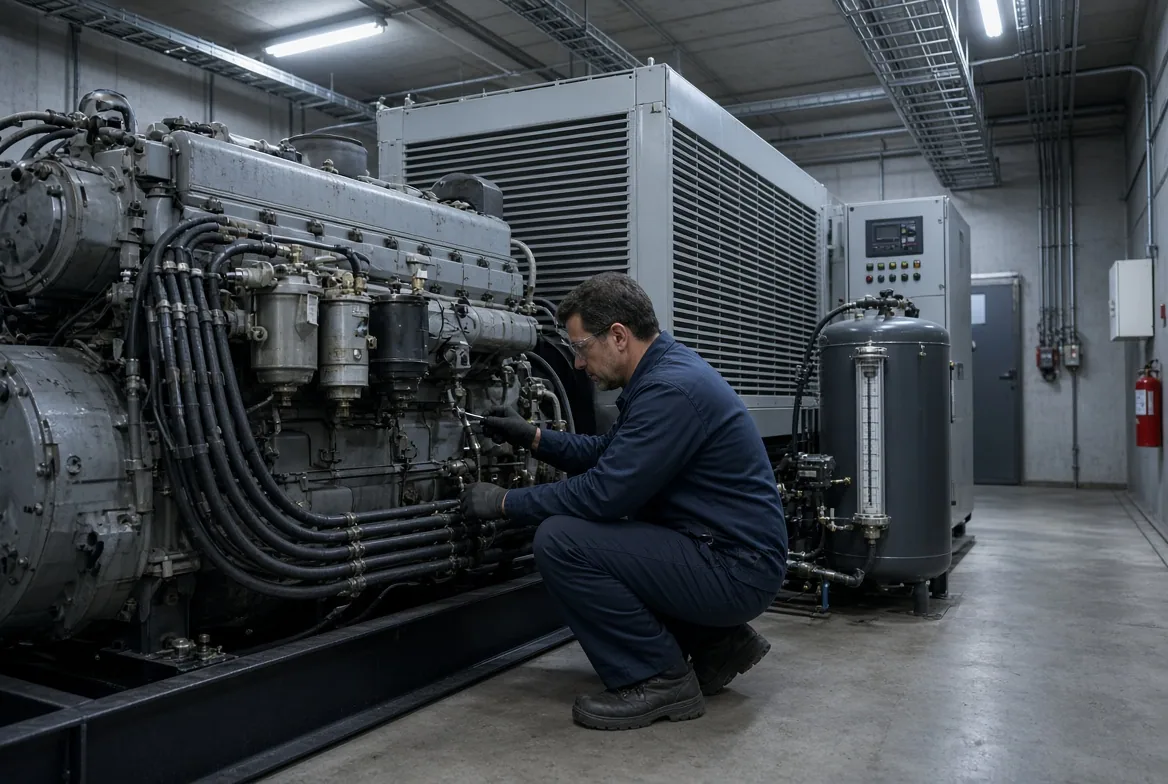
A standby diesel generator has one job: start and carry load when everything else has failed. Its fuel injection system works against that by sitting. Standby units burn little fuel, so the fuel in their tanks ages; their exercise runs are often short and lightly loaded; and the problems that develop in between stay hidden until the outage. The most common injection-related failures are stale or contaminated fuel, carboned injectors from light-load running, governing problems that show up as hunting, and starting failures after long idle periods.
Why standby service is hard on injection
Fuel sits for a long time. A generator that runs only for weekly or monthly exercise may keep the same fuel for a year or more. Diesel degrades over time, forming gums and sediment. Water collects from condensation. Microbial growth can develop at the water boundary.
Light-load exercise builds carbon. Running a diesel at very light load for long periods leads to incomplete combustion. Unburned fuel and carbon build up in the exhaust and on injector tips, sometimes called “wet stacking.” Injectors that spray poorly from carbon cause smoke and poor performance when the generator finally faces real load.
Starting is the critical moment. A generator that won’t start, or starts and can’t accept load, has failed when it matters.
Fuel quality is a code requirement for many installations
For emergency power systems covered by NFPA 110, the standard requires that a fuel quality test be performed at least annually using appropriate ASTM standards. Whether or not your installation falls under that standard, an annual fuel test is a sensible practice for any standby generator. Fuel polishing, filtering and recirculating stored fuel to remove water and sediment, is a common response when tests show contamination. Fire pump engines face the same stored-fuel problem; see diesel fire pump engine fuel systems.
Common symptoms and what they suggest
| Symptom | Likely direction |
|---|---|
| Hard starting or no start after sitting | Stale fuel, air in the system, glow or starting system, stuck injectors |
| Starts but stalls when load is applied | Fuel supply restriction, governing, injector condition |
| Hunting or surging under load | Governor wear, actuator or control problems, air in fuel |
| Black smoke when load is applied | Carboned injectors, air restriction |
| White smoke and rough running at light load | Light-load running, injector condition |
| Filters plugging quickly | Contaminated tank, microbial growth |
Generators maintain a fixed speed to hold frequency, so speed control problems are very visible. Mechanical governors wear like any other; electronically governed units can have actuator, sensor or control faults. See diesel surging at idle for how governing problems are diagnosed.
A readiness routine
- Test the fuel at least annually and act on the results.
- Keep the tank clean and dry: check for water, drain it and polish or replace fuel as needed.
- Change fuel filters on schedule and inspect what comes out.
- Exercise under load when possible. Load bank testing helps burn off carbon and verify performance.
- Watch the exercise runs for smoke, hunting or slow starts.
- Keep batteries and the starting system healthy.
- Lock out automatic starting before any fuel system work. Put the controller in Off and follow the manufacturer’s lockout procedure. A generator that starts itself mid-repair is dangerous.
When the injection system needs attention
If fuel and starting systems check out and the generator still smokes, hunts or struggles under load, the injectors and injection pump are next. Carboned injectors often benefit from cleaning and testing; worn components need repair. See diesel injector cleaning.
Common questions from facility managers
How often should stored generator fuel be replaced?
There’s no single interval. It depends on the fuel, the tank, temperature and how much the generator uses. Regular fuel testing tells you when fuel needs polishing or replacing, which is why annual testing is a sensible baseline.
Is weekly or monthly exercise enough?
Exercise keeps the engine lubricated and confirms that it starts, but light-load runs don’t prove the generator can carry its real load and can contribute to carbon buildup. Periodic testing under load gives a fuller picture.
Does a generator that rarely runs need injector service?
Low hours don’t mean low risk. Injectors in standby engines can stick, corrode or carbon up from the conditions they sit in. If a generator smokes, hunts or starts slowly during exercise, have its injection system checked.
Manufacturer reference: Cummins: diesel fuel storage and transfer For procedures and specifications, use the current manufacturer information for your engine and model year.
Keep it ready with DCT
For generator fuel-injection components, DCT can review a mail-in evaluation request based on the pump or injector number and equipment application. Our Hutchinson and Great Bend facilities receive approved component shipments as assigned by DCT; general vehicle service is provided in Hutchinson. Confirm the supported service path before equipment is dismantled or shipped.
Plan the next move for Standby Generator Fuel Injection: Keep the engine and component identifiers, earlier diagnostic results and service question together. Our mail-in process explains how DCT assigns the correct receiving facility when a component is approved, while the inquiry form gets the review started. For vehicle appointments, Hutchinson provides automotive service.
QUESTIONS ABOUT YOUR DIESEL COMPONENT?
Need guidance on Standby Generator Fuel Injection: Keep It Ready to Run?
Stored diesel fuel and infrequent operation create distinct generator fuel-system challenges. Learn what maintenance records and symptoms help distinguish stale-fuel concerns from injection-component faults. Include the exact component number, equipment application, symptoms and checks already completed.