
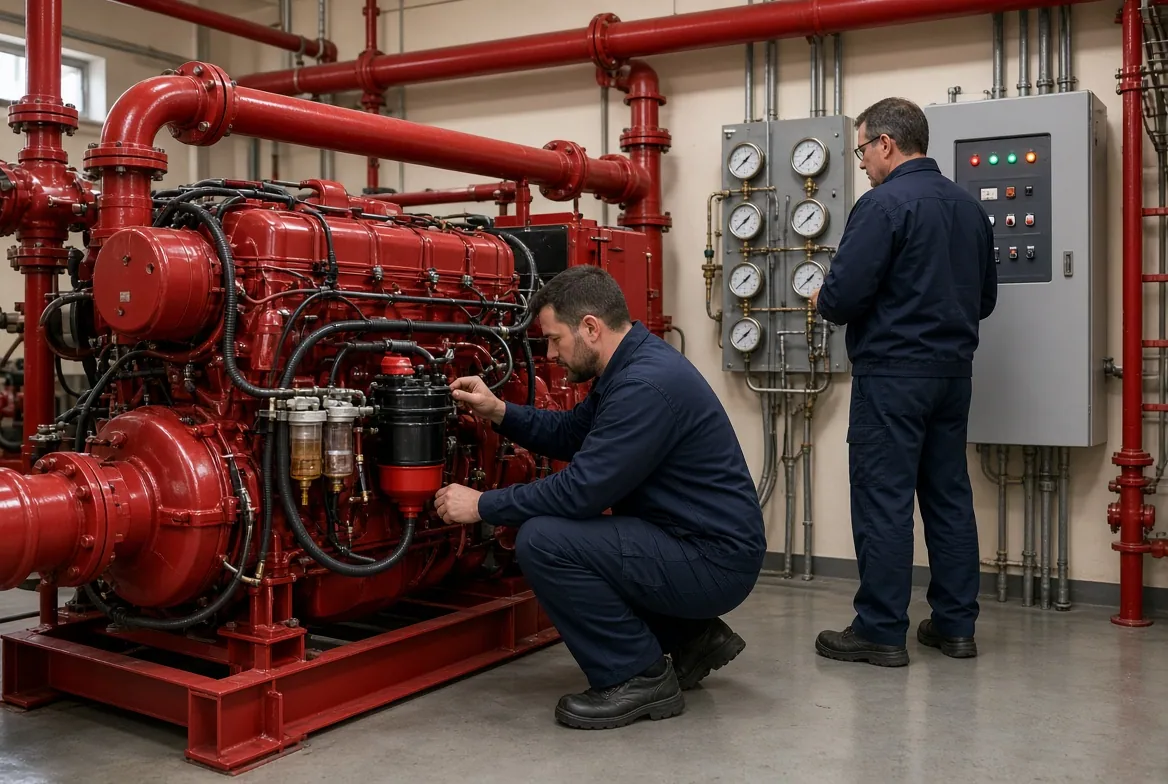
A diesel fire pump engine may run for only a short test each week and sit on the same fuel for a long time, yet it has to start and run at full output the moment a sprinkler system calls for water. Its fuel injection system faces the classic standby problems: stored fuel that ages and collects water, test runs that don’t reflect a real emergency load, and issues that stay hidden until the engine is needed. Readiness comes from caring for the fuel, watching the test runs closely and acting on early warning signs.
How fire pump duty differs
Routine no-flow testing. Diesel fire pumps are commonly run on a weekly schedule in a no-flow, or “churn,” test, typically for at least 30 minutes under NFPA 25, with full flow testing performed annually. Check the current edition and your authority having jurisdiction for the requirements that apply to you. A churn test runs the engine, but not at the load it would carry pumping water through an open system.
Long fuel storage. A dedicated fuel tank may hold the same fuel for a long time because the engine burns so little during testing. Degradation, water and microbial growth are real risks.
Indoor installation. Pump rooms are supposed to be kept heated. A room that sees big temperature swings encourages condensation in the tank and deserves attention in its own right.
Criticality. A fire pump engine that fails to start, or starts and can’t hold speed, is a life-safety failure.
Fuel care
- Check the tank for water regularly and drain it
- Test the fuel for degradation at least annually. NFPA 25 requires it for diesel fire pump fuel; confirm the edition your authority having jurisdiction enforces. Recondition or replace fuel that fails
- Keep the tank appropriately full to reduce condensation space
- Change fuel filters on schedule and inspect what comes out
- Inspect fuel lines and fittings for leaks and damage
- Prevent automatic starts during fuel system work by following the controller manufacturer’s procedure, and handle the work as a planned impairment
Watch the test runs
Weekly runs are your early warning system. Pay attention to:
- Starting: crank time, and whether the engine starts on the first attempt
- Smoke: white or black smoke at start-up or during the run
- Speed stability: hunting or surging during the run
- Unusual noise, such as knocking
- Fuel or oil leaks
A fire pump engine that takes longer to start each week, or smokes more than it used to, is telling you something before it fails.
Injection problems to expect
Fire pump engines include both mechanical and electronic injection systems depending on age and manufacturer. Typical issues include:
- Carboned or worn injectors, causing smoke and poor performance
- Stuck or corroded injection components from water or degraded fuel
- Governing problems affecting speed regulation. See diesel surging at idle.
- Supply problems from plugged filters or air in the fuel
For the same standby challenges in generators, see standby generator fuel injection.
When the engine needs injection work
Plan injection service so the fire protection system is never left without coverage, in coordination with your fire protection contractor and the authority having jurisdiction. Testing injectors and pumps during a planned window, rather than waiting for a failure, keeps the outage short and planned.
Questions facilities ask about fire pump engines
Can we take the fire pump out of service to repair it?
Any impairment of a fire protection system should be coordinated with your fire protection contractor and the authority having jurisdiction, with appropriate measures while the system is impaired. Planning injection work ahead of time keeps the impairment short.
How do we know whether the fuel is still good?
Fuel testing is the only reliable way. Visual checks for water, haze and sediment help, but they won’t tell you about degradation that isn’t visible.
Why does the engine smoke at the start of each test?
Some smoke at a cold start can be normal for an older engine. Smoke that’s increasing, persistent or accompanied by rough running points to injection or fuel problems worth investigating.
Manufacturer reference: Cummins: engine-specific technical information For procedures and specifications, use the current manufacturer information for your engine and model year.
Keep readiness approval with the responsible contractor
Fire-pump readiness depends on the installed engine, controls, fuel supply and applicable inspection or testing requirements. A bench-tested pump or injector alone cannot certify the complete emergency system. The responsible facility or qualified fire-protection contractor must follow the relevant instructions and document return to service.
Plan fire pump injection work with DCT
For a fire-pump diesel engine, record the engine and injection-component identification before submitting an inquiry. DCT reviews component eligibility and tells the customer which Kansas facility should receive an approved pump or injector. Engine-mounted diagnostics, critical-service requirements and reinstallation must follow the equipment manufacturer’s procedures.
Plan the next move for Diesel Fire Pump Engine Fuel System: Keep the engine and component identifiers, earlier diagnostic results and service question together. Our mail-in process explains how DCT assigns the correct receiving facility when a component is approved, while the inquiry form gets the review started. For vehicle appointments, Hutchinson provides automotive service.
QUESTIONS ABOUT YOUR DIESEL COMPONENT?
Need guidance on Diesel Fire Pump Engine Fuel System: Readiness Guide?
A diesel fire-pump engine must be ready when called upon. Review fuel quality, inspection records and component-identification considerations while keeping required system procedures and qualified service oversight central. Include the complete pump nameplate, engine application, operating complaint and relevant supply or control findings.