
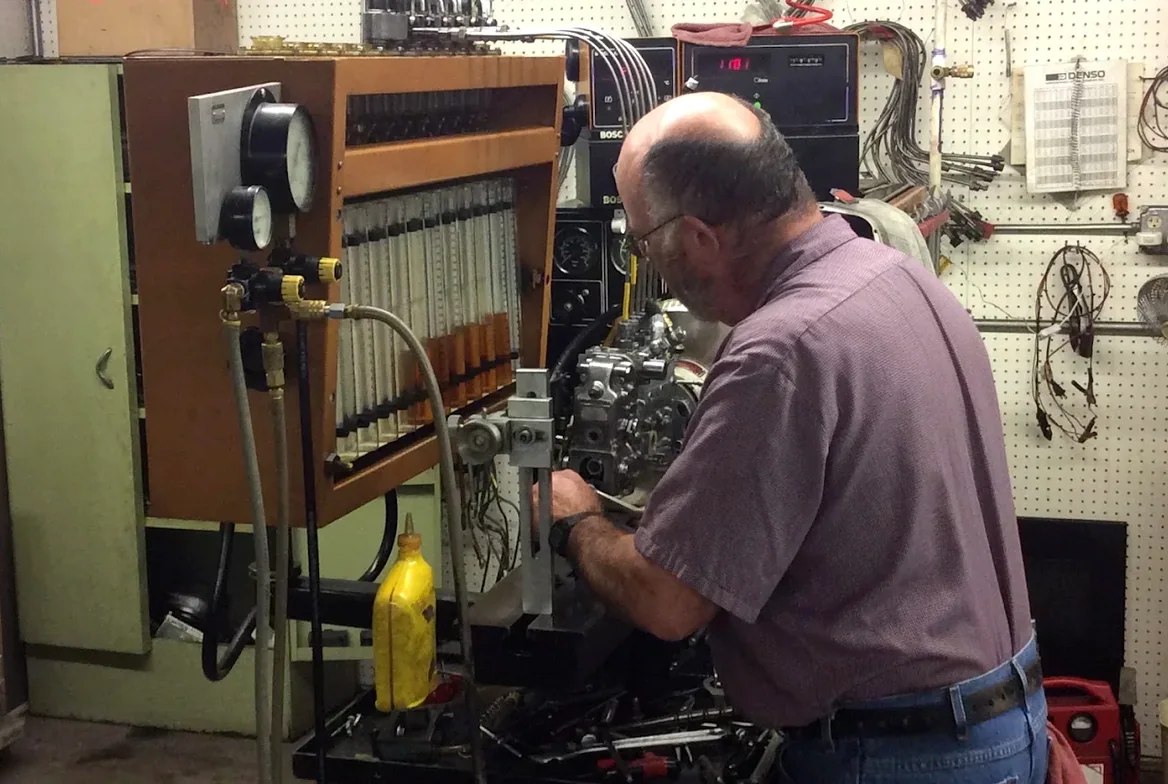
Rebuild the pump you have when it’s a serviceable design, the housing and major parts are sound, parts are available and you can afford the bench time. Replace it with an exchange, remanufactured or new pump when downtime is critical, when the core is damaged beyond economical repair, or when the failure has contaminated the system so badly that the manufacturer calls for replacement.
Before either, answer three questions. They change the decision more than anything else.
Question 1: Is the pump really the problem?
A surprising number of injection pumps are replaced for problems they didn’t cause. Low supply pressure, air leaks on the suction side, a plugged filter, a bad shutoff solenoid, wiring faults and worn injectors can all imitate a failing pump. If the pump hasn’t been tested, on the engine or on a bench, you may be about to replace a good one.
Ask what evidence points to the pump: supply pressure readings, rail pressure data, timing checks, a fuel sample. If the answer is “it’s old and the engine runs badly,” get it tested first. Our guide to injection pump failure symptoms helps separate pump problems from their imitators.
Question 2: Why did it fail?
The cause of failure decides how big the repair is.
- Normal wear after long service: a rebuild or exchange pump is usually the whole answer.
- Water in the fuel: the pump may be rebuildable if corrosion isn’t severe, but the injectors and fuel system need attention too, and the water source must be found.
- Dirt or abrasive contamination: the pump and injectors have both been exposed.
- Metal debris from the pump itself, common with failed common-rail pumps: debris travels to the rail, lines and injectors. Many engine manufacturers specify replacing the high-pressure components downstream, not just the pump. See Bosch CP4 pump failure for the best-known example.
- Wrong fuel (gasoline, DEF): treat it as a full-system event, not a pump repair.
Question 3: What kind of pump is it?
Many mechanical inline and rotary pumps, including common P7100, DB2, VE and DPA applications, have established rebuild practices. The exact number, parts support and condition still determine eligibility.
Electronic distributor pumps such as the VP44 can be rebuilt, but the electronics are part of the repair, and the cause of failure, often low supply pressure, has to be corrected.
Common-rail high-pressure pumps vary. Some are serviceable, some are usually handled through exchange or replacement, and a pump that has shed metal is a different situation from one with a failed metering valve or seal.
The other factors
| Factor | Favors rebuilding your pump | Favors exchange or new |
|---|---|---|
| Downtime | You can wait for bench time and shipping | The machine must run now |
| Core condition | Housing and major parts are sound | Cracked housing, seizure, severe corrosion |
| Parts availability | Parts are available | Parts are obsolete or scarce |
| Originality | Matching numbers matter (collectors, restorations) | Function is all that matters |
| Calibration | You need your exact calibration | A same-number exchange is available |
| Failure type | Wear or a localized fault | Debris that contaminated the system |
What about a used pump?
A used pump from a salvage yard or online listing has an unknown history, unknown calibration and unknown remaining life. It can work, but it’s a gamble on exactly the thing you were trying to fix. If you buy one, have it tested before it goes on the engine.
A note on emissions-certified engines
On engines built to emissions standards, the injection pump’s calibration is part of what makes the engine compliant. Whichever route you choose, make sure the pump is the correct part number and calibration for the engine, not just a pump that bolts on.
Manufacturer reference: Bosch: Diesel Repair Network and supported component service For procedures and specifications, use the current manufacturer information for your engine and model year.
Get a recommendation based on the pump in hand
Diesel Control Technicians tests, repairs, rebuilds, remanufactures and exchanges injection pumps, so we don’t need to push you toward one answer. Send a photo of the pump’s identification tag and a description of the symptoms and failure history. If the pump is already off, ship it to DCT only after written receiving approval for testing, and we’ll tell you whether rebuilding it, exchanging it or replacing it makes the most sense.
Where Rebuild or Replace a Diesel Injection Pump leads next: Confirm the actual pump or component family before replacing parts. Record the engine application, existing tests and symptoms, then review the testing process or request a component review. DCT confirms service eligibility and receiving instructions individually.
QUESTIONS ABOUT YOUR DIESEL COMPONENT?
Need guidance on Rebuild or Replace a Diesel Injection Pump? How to Decide?
Rebuilding and replacing a pump involve different cost, support and testing considerations. Learn which identification and damage details help determine whether either option is practical. Include the complete pump nameplate, engine application, operating complaint and relevant supply or control findings.