
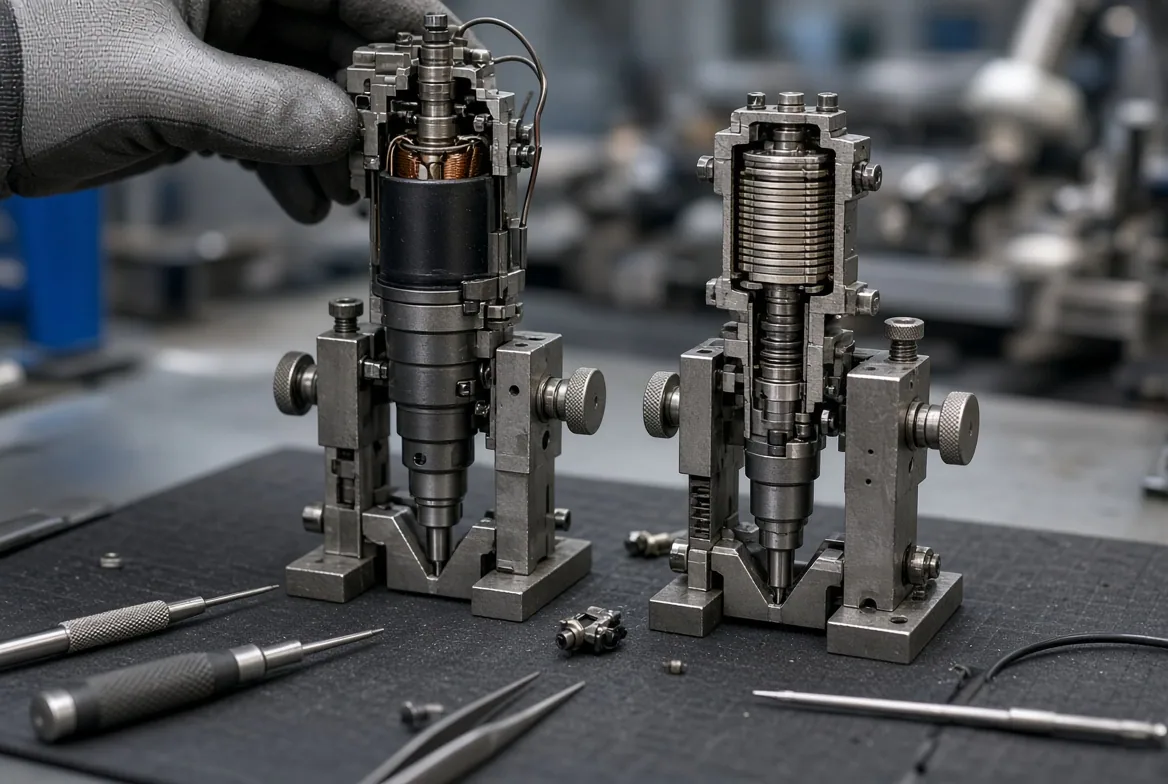
Both types do the same job: open a small control valve inside a common-rail injector so the needle can lift and fuel can spray. The difference is the actuator. A solenoid injector uses an electromagnet that pulls an armature when current flows through its coil. A piezo injector uses a stack of piezoelectric ceramic layers that physically expands when voltage is applied.
Solenoid versus piezo: the safe comparison
The actuator technology changes how an injector is commanded, but the actual electrical test and component compatibility remain engine-specific.
- Solenoid-controlled injector: An electromagnetic actuator controls the injector event under its designed strategy.
- Piezo-controlled injector: Piezoelectric actuation uses a different control behavior and driver requirement.
- Testing and replacement: Never interchange parts or apply a generic electrical test without the matching OEM specification.
Related guidance: Common-rail injector systems Identify injector numbers
Piezo actuators react faster, which lets the engine computer fit more precise injection events into each combustion cycle. Solenoid designs are widespread, well understood and often simpler to service. Each has its own failure patterns and testing requirements.
How each actuator works
Solenoid. A coil wound around a core becomes magnetic when energized. It pulls an armature attached to the control valve, which opens a passage and lets the needle lift. When current stops, a spring closes the valve. Solenoid injectors are durable and have been refined through several generations.
Piezo. Piezoelectric materials change shape slightly when voltage is applied. Stack enough layers and the combined movement is enough to operate a valve, either directly or through a hydraulic coupler. Because the stack responds almost instantly, piezo injectors can switch faster and more repeatably, which helps with very small pilot injections and multiple injections per cycle.
Where you’ll find each
| Engine | Injector actuator |
|---|---|
| Duramax LB7, LLY, LBZ, LMM (2001–2010) | Solenoid |
| Duramax LML (2011–2016) | Piezo |
| Ford 6.4 Power Stroke (2008–2010) | Piezo (Siemens) |
| Ford 6.7 Power Stroke (2011 onward) | Piezo (Bosch) |
| 5.9 and 6.7 Cummins common rail | Solenoid |
| Many heavy-duty and off-road engines | Varies by maker and generation |
Within any engine family, designs change over time. Confirm with the injector’s part number rather than assuming. For the first piezo Power Stroke, see 6.4 Power Stroke injector problems.
How they fail
Solenoid injectors commonly fail from:
- Control-valve wear that raises return flow and lowers rail pressure
- Nozzle wear or erosion
- Coil failure (open or shorted) or connector damage
- Sticking from deposits or water damage
Piezo injectors share the hydraulic wear issues, plus:
- Electrical failure or degradation of the piezo stack
- Sensitivity to wiring and connection problems because of the drive voltages involved
- Damage from contamination, like any common-rail injector
Neither type tolerates water or abrasive debris well. A contamination event affects both.
How testing differs
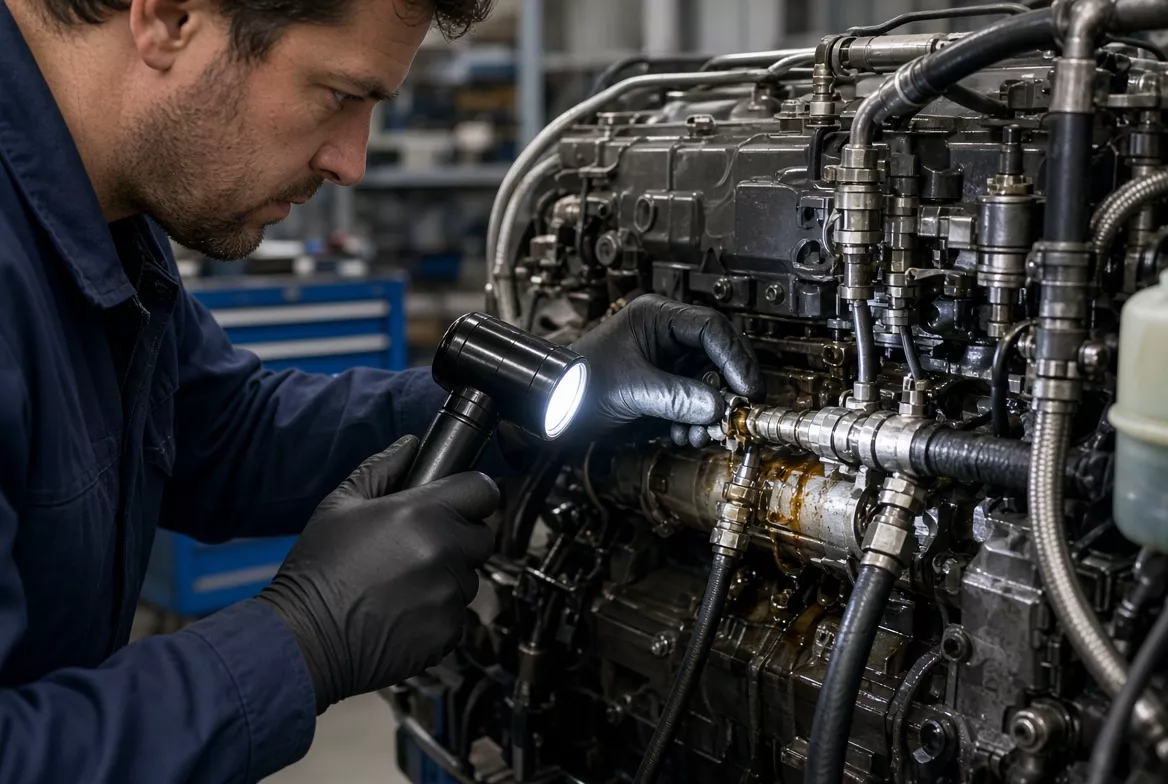
Bench testing either type requires equipment that can drive the injector the way the engine does. Piezo injectors need a driver designed for piezo actuation, with appropriate voltage and charge control. A bench set up only for solenoid injectors can’t test them properly. On the vehicle, scan-tool balance data and return-flow testing work for both, though procedures vary by engine. For what a full test covers, see diesel injector bench testing.
A safety difference worth knowing
Injector driver circuits run well above battery voltage on both types, and piezo circuits run highest of all. Follow the engine maker’s warnings and isolation steps before working near the injectors, and never probe injector circuits with the engine running unless the procedure specifically calls for it.
Repair and replacement
Both types can often be tested and, depending on design and parts availability, remanufactured. Repair options for some piezo designs are more limited, so exchange or remanufactured units are common. Many late-model engines with either type also require injector coding after replacement; see diesel injector coding.
Which is better?
For the owner, the question isn’t really which technology is better. It’s which one your engine has and what that means for diagnosis and parts. Piezo technology enabled quieter, cleaner, more precise combustion. Solenoid technology remains common, durable and widely serviceable.
Manufacturer reference: Bosch: Diesel Repair Network and supported component service For procedures and specifications, use the current manufacturer information for your engine and model year.
Get the right test for your injectors
Diesel Control Technicians offers testing, repair, remanufacturing and exchange across a wide variety of injection systems. Send us the part number from your injector to confirm the options for it, then mail in the approved set using written receiving instructions, and we’ll report what testing finds.
QUESTIONS ABOUT YOUR DIESEL COMPONENT?
Need guidance on Solenoid vs Piezo Diesel Injectors: Key Differences?
Solenoid and piezo injectors use different actuation principles. Learn what those differences mean for identification, electrical diagnosis and supported testing rather than assuming universal interchange. Include the injector or nozzle number, engine identification, relevant cylinder observations and any completed injector testing.