
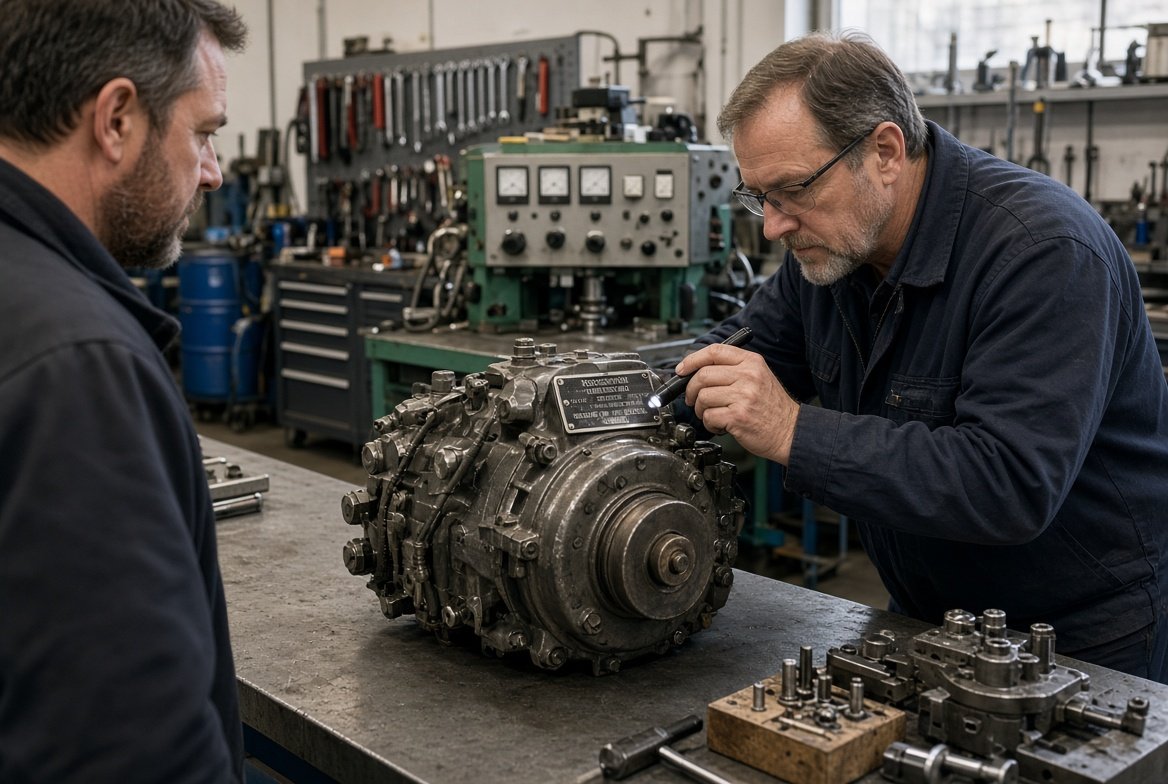
The shop that can reseal a mechanical rotary pump may not have the test plan for your electronic distributor pump. A specialist that handles modern common-rail units may not calibrate an older tractor pump. The right question isn’t “Who rebuilds diesel pumps?” It’s “Who supports my exact pump number and can show what was tested?”
A few good questions before removal can spare a lot of freight, labor and wrong parts.
1. Check the actual pump family and number
Record the complete tag and engine application. If the tag is unreadable, send clear photos of the pump body, connections and identifying marks rather than guessing. Our pump tag identification guide covers what matters.
Ask the shop whether it has the correct service information, test plan, parts and equipment for the model. Accepting “Bosch” or “John Deere” as a brand does not establish support for every Bosch or John Deere pump.
2. Ask about the bench and the final report
A shop doesn’t need every machine on the market, but it needs the right one for your pump. An inline pump may need delivery, governor and balance checks; a distributor pump may need timing or advance checks; electronically controlled units bring different actuation and control requirements.
Ask which functions can actually be reproduced, which limits apply to the part number, and whether the finished unit gets a documented final check. A leak-free housing without a calibration result is not the same as a completed supported rebuild.
3. Separate testing from rebuilding
You may send a perfectly good pump that was starved by a blocked filter or a failing lift pump. A provider should be able to explain how it handles a unit that passes initial testing. If repair is required, it should explain which confirmed defect is being corrected and seek authorization for work outside the original agreement.
A trustworthy shop can say “This part is unsupported or not repairable” rather than promise every pump can be restored. Severe corrosion, critical housing damage or unavailable precision parts change the decision.
4. Compare full costs and timing
Compare equivalent written service scopes. The lowest posted price may be for testing or a reseal, while another estimate includes measured repair and calibration. Ask about intake fees, teardown findings, approval calls, freight, exchange/core options, the actual warranty language and who pays if the pump returns for inspection.
The machine also needs local removal, timing, installation and a final running check. On a combine during harvest or a truck with a scheduled route, that total downtime can cost more than the difference in shop prices. Use our pump rebuild quote checklist to compare proposals.
5. Look for real service proof
Ask for evidence appropriate to the work: current manufacturer relationships, technician training, a sample anonymized final report, or photographs of the actual test equipment in use. Those are more meaningful than a generic “factory quality” claim. You can also ask how the shop identifies and documents returned components to prevent mix-ups.
Diesel Control Technicians provides information about Bosch, Delphi, DENSO, Stanadyne and AMBAC fuel-injection systems. Ask DCT to confirm the exact pump family, current manufacturer relationship and available service before arranging shipment. Learn about DCT and its service approach.
6. Don’t skip the engine-side diagnosis
A bench cannot repair a restricted fuel pickup, control wiring, low-pressure supply or metal still circulating in the machine. Ask the installing technician what evidence made the pump suspect. A repair that ignores the cause of the first failure risks another expensive job.
When high-pressure pump damage has created debris, the engine maker’s contamination procedure takes precedence over a pump-only estimate.
Technical reference: Bosch Diesel Repair Network: professional component testing and repair. Follow model-specific service and calibration procedures.
Choose a shop by the answer it can document
Request a mail-in component review with the complete pump tag, engine application and observed problem. Ask whether that pump number is supported, what initial and final checks can be provided and how approvals, nonrepairable units, freight and current turnaround are handled. For central Kansas appointments, see Hutchinson or Great Bend.