
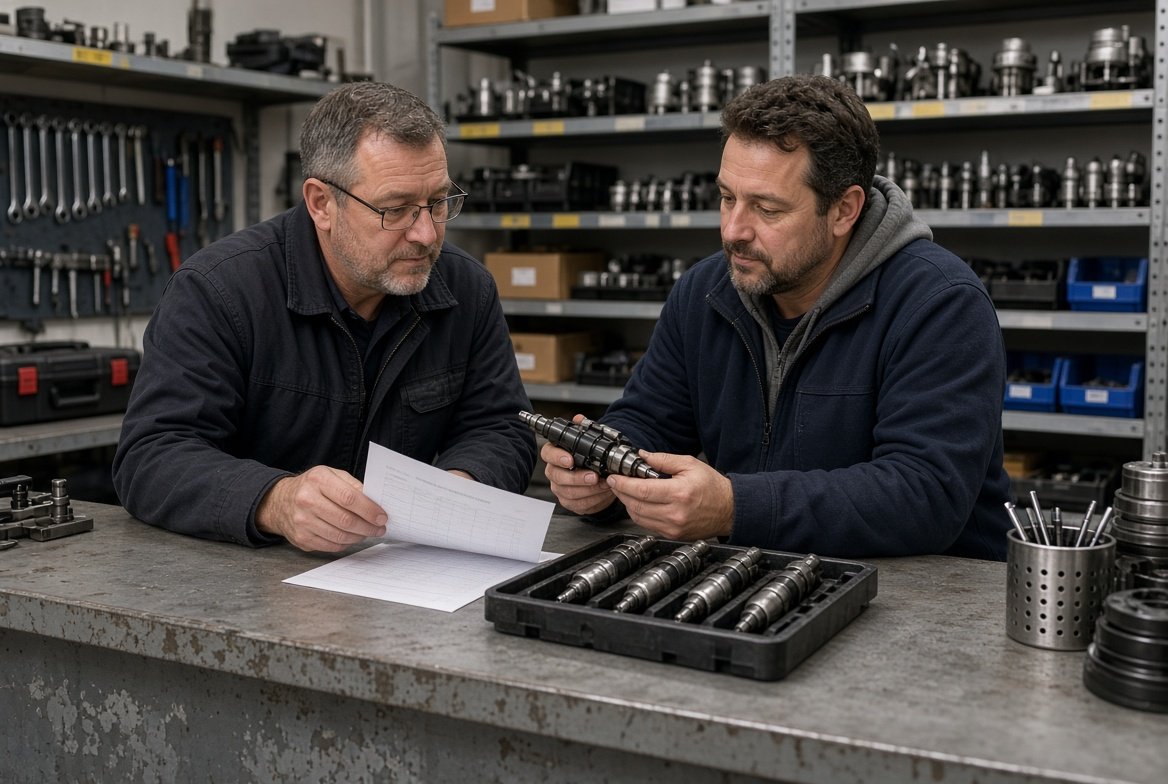
Most independent diesel shops don’t bench test injectors or calibrate injection pumps in-house, and for good reason. Doing it properly takes specialized test equipment for each family of injectors and pumps, current test data, trained technicians and steady volume to justify it. Partnering with a fuel injection specialist lets a shop handle the diagnosis, removal and installation it already does well, and send the components to someone equipped to measure and repair them. The partnership works best when the specialist covers the systems you see, answers quickly, and gets the right information from you with every job.
What a good fuel injection partner offers
Breadth that matches your work
A shop that sees pickups, school buses, tractors and loaders should ask which specific part numbers and families a partner can support. Mechanical pumps, HEUI, electronic unit injectors and modern common rail do not all use the same equipment. Sending work to several specialists adds complexity and delay.
Manufacturer relationships
A specialist that deals directly with the fuel injection manufacturers can source the correct parts, exchange units and service information, and stays current as designs change.
On-vehicle and bench capability
Some jobs need the component measured on the bench. Others benefit from a second look at the vehicle. A partner that does both can help when your diagnosis isn’t conclusive.
Clear results
Ask for test results you can show your customer, with the injector or pump identified, what was tested and what failed. Results make the repair conversation easier and support warranty decisions.
Turnaround and communication
Your customer is waiting. Look for predictable turnaround, fast answers to questions and a call before work goes beyond what was approved.
Exchange options
When your customer can’t wait, an exchange unit for common parts can return the vehicle or machine to service while the core goes back.
How to send work that comes back right
The specialist only knows what you tell them. Send this with every job:
- Part numbers read from the components
- Engine make, model and serial number, and the vehicle or equipment model
- Cylinder positions, marked on each injector
- The customer’s complaint in plain words
- Codes and freeze-frame data
- Your test results: balance rates or contribution data, rail pressure logs, return-flow measurements, supply pressure, ICP readings on HEUI engines
- History: previous injector or pump work, contamination events, modifications
- What you’re asking for: test only, test and repair, rebuild or exchange
That evidence package helps the specialist connect what the bench shows with what the engine was doing. It also protects you when a component tests good, because it helps both of you find what’s really wrong. For what bench testing covers, see diesel injector bench testing.
Pack it like it matters
Cap every port, bag injectors individually and protect pumps’ drive ends and controls. Damaged or contaminated parts complicate testing and core returns. See how to ship diesel injectors and pumps.
Handling comebacks together
When a repaired vehicle comes back with the same complaint, the fastest path is shared evidence: what the component tested at, what the vehicle is doing now and what changed. Most comebacks trace to a cause outside the component, such as supply pressure, air, wiring or contamination. A partner who works through it with you, rather than just testing the part again, saves both shops time. See why diesel injectors keep failing.
Three questions that reveal a useful quote
Before sending work, ask: Which specific part number and tests are supported? What written results and authorization stages will the shop provide? Who handles freight, coding, installation and warranty evaluation? A low starting fee can cover inspection only, while a higher figure may include repair and final verification. Compare equal scopes instead of just advertised prices. For a one-off pump repair rather than an ongoing shop partnership, see how to choose a diesel pump rebuild shop.
Further technical reference: DCT company and service information · Bosch: Diesel Repair Network and component service information. Confirm current manufacturer relationships and the specific pump or injector family directly with DCT. Use the correct technical data for actual service procedures.
Working with DCT
Diesel Control Technicians handles fuel-injection component inquiries involving multiple injection-system families for commercial and specialty applications. Ask about the exact pump or injector and the service that can be performed. Confirm current manufacturer authorization separately; a technical brand reference does not establish dealer or authorized-service status.
Plan the next service step: Request a mail-in component review with the engine and component IDs, known test results and downtime needs. Confirm supported scope, approvals and the current schedule. Local appointments: Hutchinson or Great Bend.