
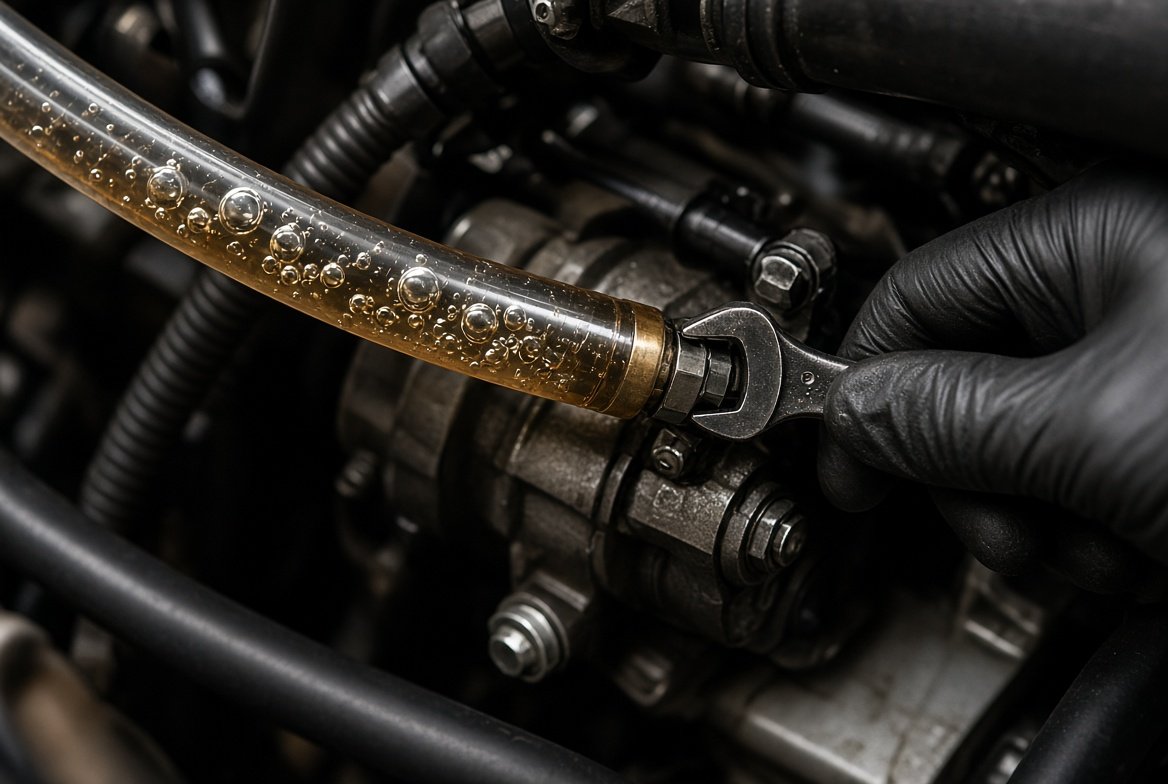
Air gets into a diesel fuel system through any leak on the suction side: the part of the system between the tank and the pump that pulls fuel, where pressure is below atmospheric. A leak there may never drip fuel, because air is being drawn in rather than fuel pushed out. The symptoms are hard starting after the engine sits, rough running, surging, power loss and stalling. To fix it, you have to find the leak, and the best tool is often a short piece of clear fuel line.
One exception: on systems with an electric lift pump in the tank, most of the supply line runs under pressure, so a leak there usually drips fuel instead of drawing air. On those systems, look for air entry close to the tank pickup and anywhere a pump pulls fuel, and after filter changes.
Why air causes so much trouble
Fuel is nearly incompressible. Air isn’t. When bubbles reach an injection pump, the pump compresses the air instead of delivering fuel, and delivery becomes inconsistent. Mechanical pumps lose prime. Common-rail pumps can’t build pressure steadily. Electronic controls chase erratic readings. Air in the fuel also reduces lubrication and cooling inside pumps that rely on fuel.
Where air gets in
- Filter housings and seals, especially after a filter change with a pinched or missing O-ring
- Hose clamps and fittings on the suction side
- Cracked or porous fuel lines, including old rubber hoses that look fine outside
- Hand primers and water separator drain valves that don’t seal
- Tank pickup tubes with cracks or loose connections inside the tank
- Running out of fuel, which fills the system with air
- After any fuel system work, if the system wasn’t bled correctly
How air shows up
- Hard starting after sitting overnight, as fuel drains back to the tank through a leak and air takes its place
- Starts, then stalls, until the air is purged
- Rough idle and surging
- Power loss, especially under load when suction is highest
- Erratic balance rates or rail pressure on electronic engines
- Bubbles visible in clear fuel lines or filter bowls
Finding the leak
The clear-line test
Install a short section of clear fuel line at the injection pump inlet, using fittings suited to fuel. Run the engine and watch. A steady stream of bubbles means air is getting in upstream. Move the clear section progressively closer to the tank to narrow down where the air enters.
Overnight drain-back
If hard starting after sitting is the complaint, note whether the fuel filter or clear line loses fuel overnight. A system that drains back has a leak or a failed check valve.
Inspection
Look closely at filter housing seals, hose ends, clamps and primer pumps. Replace aged rubber lines rather than trying to seal them.
Follow the engine maker’s procedure
Some engines have specific procedures for checking suction-side integrity. Don’t pressurize a fuel tank or fuel system with compressed air unless the procedure calls for it and specifies how.
Bleeding the system
Every engine has its own procedure. Common approaches include:
- Hand primer pumps on the filter housing
- Bleed screws on filters and mechanical injection pumps
- Key-on cycles on engines with electric lift pumps
- Cranking in short bursts after priming, to avoid overheating the starter
Never loosen a live high-pressure fitting to bleed a diesel engine. Use the exact engine manufacturer’s priming and pressure-isolation procedure, including for older mechanical injection systems; do not improvise live injector-line bleeding. Fuel can penetrate skin and cause a medical emergency. See high-pressure diesel fuel injection injury.
Air or something else?
| Symptom | Air is likely if… | Look elsewhere if… |
|---|---|---|
| Hard start after sitting | The engine starts easily after priming | Priming makes no difference |
| Rough idle | Bubbles show in a clear line | The line is clear and steady |
| Surging | It began after filter work or running dry | It’s tied to load or temperature |
| Power loss under load | Bubbles increase under load | Supply pressure falls but no bubbles appear |
Further technical reference: Bosch Mobility: common-rail system overview. Use the exact engine/injector/pump service information for applicable procedures and limits.
When the air has done damage
Air in the fuel system can imitate pump or injector failures. Have the supply-side leak or restriction checked before removing expensive components. If pump or injector evaluation remains necessary, ask DCT about the exact part number and pre-shipping approval. Confirm local vehicle-diagnostic availability directly with the Hutchinson location rather than assuming both DCT locations offer drive-in diagnosis.
After the safety or contamination issue is assessed: Ask DCT about supported component service with the exact part number and findings; a bench result cannot replace the engine maker’s complete repair requirements.