
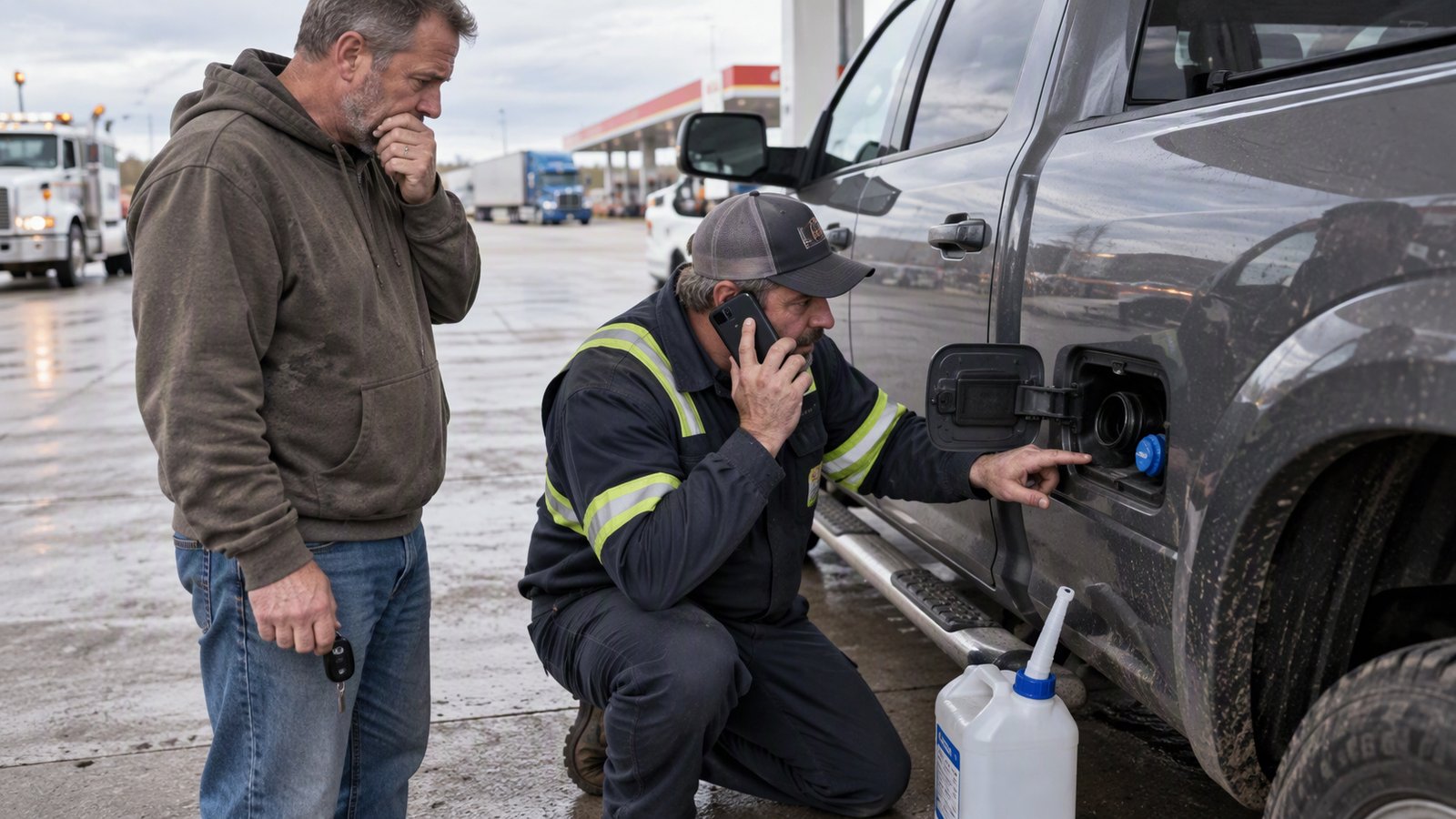
If you’ve just put diesel exhaust fluid in the fuel tank, don’t start the engine. If you can avoid it, don’t turn the key to the on position either, because many vehicles run their lift pump at key-on, which begins moving fuel, and DEF with it, toward the engine. Have the vehicle towed or moved without starting it, and have the tank drained.
If the engine hasn’t run, the repair may be limited to draining and cleaning the tank and replacing filters. If it has run, DEF may have reached the high-pressure pump, rail and injectors, and the repair gets much bigger.
Why DEF is so damaging
Diesel exhaust fluid is a solution of urea in purified water, intended only for the SCR system in the exhaust. In a fuel system, it causes several kinds of harm:
- It’s mostly water, so it provides no lubrication for pumps and injectors.
- It forms crystals as it dries or reacts, which plug filters, valves and passages.
- It’s corrosive to some metals used in fuel systems.
- It’s heavier than diesel, so it sinks to the bottom of the tank, right where the pickup draws fuel.
Detroit’s service bulletin on DEF contamination notes that because DEF is heavier than fuel, it’s pulled into the engine when the engine is running, and that major fuel system damage can occur. The bulletin’s list of components to replace when DEF has entered the fuel system includes the fuel filter module, fuel injectors, fuel rail, high-pressure injector lines, high-pressure fuel pump and high-pressure feed lines. (Detroit service bulletin on DEF in the fuel system)
Signs DEF has reached the fuel system
The same bulletin describes:
- Crystals on fuel filters and the fuel module, which may be white, light brown or dark brown
- A strong ammonia smell from the filters
- Rust deposits
- A no-start condition and other abnormal running
What the repair involves
If the engine was never started or keyed on: leave the vehicle off and arrange a manufacturer-directed contamination assessment. Do not assume draining the tank and changing filters alone will clear the system; some electric pumps can run when the ignition is switched on.
If the engine ran: expect the high-pressure system to be involved. Engine makers publish specific procedures and parts lists for DEF contamination, and many call for replacing high-pressure components rather than cleaning them. Detroit’s bulletin also states that DEF in the fuel system is not a warrantable failure. Check your own engine maker’s guidance and your insurance coverage.
Cleaning and reusing components that DEF has reached is risky. Crystals and corrosion inside an injector or pump aren’t visible, and a contaminated part can damage new ones installed alongside it.
How it happens, and how to prevent it
DEF fill necks are smaller and usually marked with a blue cap. The smaller neck keeps a diesel nozzle out of the DEF tank, but a DEF nozzle or jug spout fits a diesel filler easily, so mix-ups still happen at the pump and with containers, especially when someone unfamiliar with the vehicle adds fluid.
- Keep DEF only in its own clearly labeled containers
- Never pour DEF from a container that also holds anything else
- Train everyone who fuels a vehicle or machine on the difference between the two fill points
- On fleets, use color-coded and labeled fill equipment
Gasoline in a diesel tank is a different emergency with different damage; see gasoline in a diesel tank.
DEF questions, answered quickly
Can I just drain the tank if the engine never ran?
Not until the manufacturer’s procedure accounts for whether the key was switched on, an electric pump ran, or the engine cranked. An apparently unstarted engine may still have circulated contaminated fuel.
Will an additive neutralize the DEF?
No. DEF has to be removed from the system. No additive turns DEF back into fuel.
How much DEF does it take to cause damage?
Engine makers treat any DEF in the fuel system as a contamination event. Don’t gamble on a small amount being harmless.
Further technical reference: American Petroleum Institute: diesel exhaust fluid. Use the exact engine/injector/pump service information for applicable procedures and limits.
Get help before ordering parts
Diesel Control Technicians can review a fuel-system component inquiry after a DEF-in-diesel mistake. Contact DCT with the engine details and whether the engine was started or run; service options depend on what components were exposed and what the OEM procedure requires. Do not start the engine or ship parts without appropriate instructions.
After the safety or contamination issue is assessed: Ask DCT about supported component service with the exact part number and findings; a bench result cannot replace the engine maker’s complete repair requirements.