
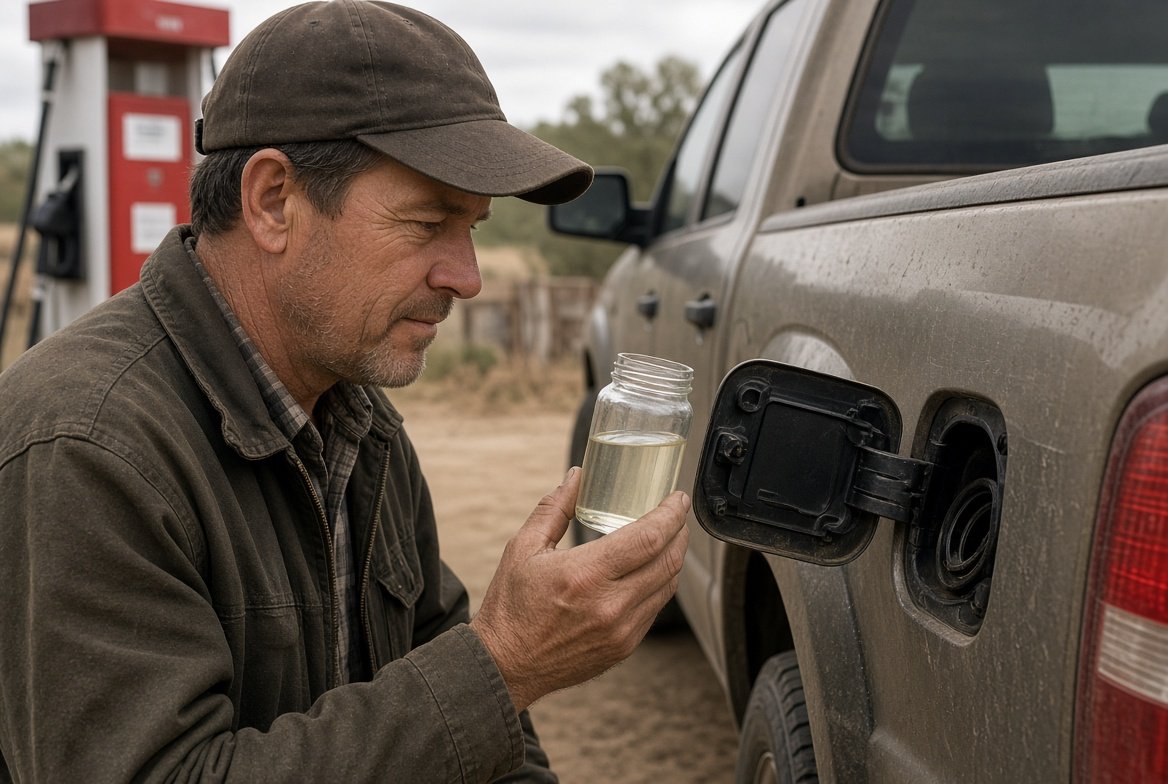
If you’ve put gasoline in a diesel tank and haven’t started the engine, don’t start it. Have the tank drained and the fuel system cleaned before the engine runs. If you’re already driving and realize what happened, or the engine starts knocking, losing power or stalling after a fill-up, pull over safely and shut it off. Don’t restart it until the fuel has been dealt with.
Gasoline doesn’t just burn wrong in a diesel. It removes the lubrication that injection pumps and injectors depend on, and on modern high-pressure systems that can cause serious damage quickly.
Why gasoline hurts a diesel fuel system
It strips lubrication. Diesel fuel lubricates the moving parts of injection pumps and injectors. Gasoline is a solvent with very poor lubricity. Mixed into diesel, it thins and washes away the protective film on precision surfaces.
It changes combustion. Diesel engines rely on fuel that ignites readily from compression heat. Gasoline resists compression ignition, so combustion becomes erratic. The engine may knock, run rough, smoke and lose power.
It’s more volatile. Gasoline vaporizes easily and has a much lower flash point than diesel, which creates vapor in the fuel system and a greater fire risk.
High-pressure pumps are vulnerable. Common-rail pumps that depend on fuel lubrication between cam and rollers, such as the Bosch CP4, are especially at risk. A pump that loses lubrication can wear rapidly and shed metal into the rest of the system. See Bosch CP4 pump failure.
Right now: two scenarios
If the engine hasn’t been started
- Don’t start it, and avoid turning the key on if your vehicle runs a lift pump at key-on.
- Have the vehicle towed or moved to a shop.
- Drain the tank completely. Treat the drained fuel as gasoline: drain it outdoors or in a well-ventilated bay, away from ignition sources, into grounded, approved containers. This is a job for a shop equipped to handle it.
- Flush the fuel lines, replace the fuel filters and drain the water separator.
- Refill with fresh diesel and bleed the system following the engine maker’s procedure.
If the engine has run
- Shut it off as soon as safely possible and don’t restart it.
- Drain the tank and fuel system.
- Inspect the fuel filters for metal particles. Metal means the pump has been damaged and debris may have reached the rest of the system.
- Follow the engine maker’s procedure for fuel contamination, which may call for replacing high-pressure components.
- Have the injection pump and injectors evaluated before deciding what to reuse.
If you can, keep a sample of the contaminated fuel and the receipt. Insurance or a fuel supplier may need it.
Does a small amount matter?
You’ll hear that a little gasoline is harmless. That old advice dates from mechanical injection systems that were more tolerant, and from a time when gasoline was sometimes added to diesel in winter. Neither applies to modern engines. Engine makers generally treat gasoline contamination as a fuel-system event that requires draining, not a dilution problem to drive through. And don’t add gasoline to diesel to keep it from gelling; use a winter blend or an appropriate additive instead. See diesel won’t start in cold weather.
Older mechanical engines
Older engines with mechanical pumps may survive a small dose of gasoline better than common-rail engines, but they’re still lubricated by fuel and can be damaged. A mechanical pump run on a gasoline mixture should be checked if it starts running rough, leaking or starting poorly afterward.
Keeping it from happening again
- Pay attention at the pump: diesel nozzles at many stations are larger, and diesel handles are often a different color, but neither is universal.
- Label cans and containers clearly.
- On fleets and farms, keep gasoline and diesel storage separate and clearly marked.
DEF in the fuel tank is a different kind of contamination with its own damage pattern; see DEF in the diesel tank.
Further technical reference: Bosch Aftermarket: diesel test benches and tools. Use the exact engine/injector/pump service information for applicable procedures and limits.
Find out what the gasoline did
If the engine ran on gasoline-contaminated fuel, Diesel Control Technicians can test the injection pump and injectors to show whether they were damaged. Contact DCT with what happened and how long the engine ran. Ship the components to us, or bring them to our Hutchinson shop or Great Bend satellite office, before replacing parts you might not need to replace, or reusing parts that will damage new ones.
Discuss injector testing: Request a mail-in component review with the complete injector number, original cylinder, symptoms and any existing measurements. Confirm the supported test and repair path before removal or shipment.