
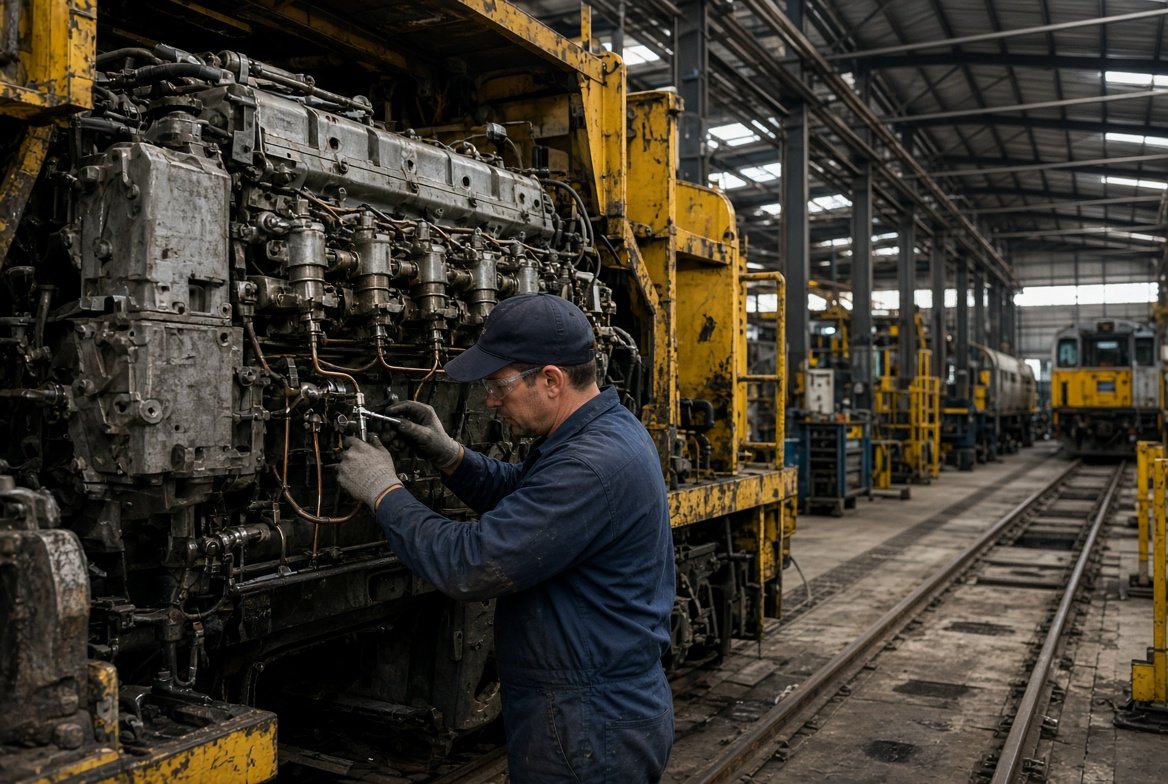
Rail fuel injection covers a wider range than most people expect. At one end are locomotive engines with large unit injectors, such as EMD 710 engines, which moved from mechanically controlled unit injectors to electronic unit injectors in the mid-1990s. At the other are the truck and equipment diesels in hi-rail trucks, tampers, ballast regulators, railcar movers and other maintenance-of-way machines, which use the same pumps and common-rail systems found on highway and construction equipment. Short-line railroads, industrial plants with their own switchers and rail contractors often have all of it.
What they share is a duty cycle that’s hard on fuel injection and a downtime problem that makes planning essential.
How rail duty affects injection
Long idle periods. Locomotives and rail equipment often idle for long stretches while waiting, switching or holding a train. Extended light-load running builds carbon on injector tips and can lead to smoky, uneven operation when load returns.
Large load swings. Moving from idle to high power, or working in low speed for long periods, exposes weak injectors and fuel supply problems.
Depot fuel storage. Fuel tanks at yards and plants can collect water and sediment, and rail equipment often fuels from the same few sources. Contamination there affects every unit.
Age. Many short-line and industrial locomotives are decades old, running on mechanical systems whose parts and knowledge are increasingly specialized.
Signs a rail engine needs injection work
- Smoke at idle or under load
- Loss of power in higher throttle positions
- A cylinder running hotter or colder than the others
- Hard starting
- Fuel filters plugging quickly or showing water
On unit-injector engines, each injector is a self-contained pump and nozzle, so a weak cylinder often points to one injector, its adjustment or its fuel supply. On engines with a separate pump for each cylinder, the pump and its injector are both suspects.
Maintenance-of-way and hi-rail equipment
Hi-rail trucks and on-track equipment typically use engines from the same families as highway trucks and construction machines. Their fuel injection problems, from low rail pressure on common-rail engines to worn mechanical pumps on older machines, are covered throughout this site. Useful starting points include types of diesel fuel injection systems and Tier 4 Final fuel system problems.
What to have ready before contacting a shop
- The engine model and serial number, and the locomotive or equipment unit number
- Injector or pump part numbers, read from the components themselves
- Hours or miles since the injectors were last serviced
- The symptoms, which cylinders are affected and any test results
- Whether downtime requires an exchange, if one exists for the part
Keeping locomotives available
For railroads with a small fleet, a single locomotive out of service can affect the whole operation. Testing injectors during scheduled maintenance, keeping records of injector service by unit, and knowing in advance where components will go for service all reduce surprise downtime. See fleet fuel injection downtime.
Rail-specific questions
Can large locomotive unit injectors be bench tested?
Unit injectors of that size require test equipment built for them, and capabilities vary from shop to shop. Contact the shop with the injector part number before shipping to confirm what testing is available.
How often should locomotive injectors be serviced?
Railroads and engine makers set service intervals based on hours, fuel use and condition. Many operators also pull injectors for testing when a cylinder shows abnormal temperature, smoke or power.
What about the equipment on our hi-rail trucks and machines?
Those engines use the same pumps and injectors as their highway and construction counterparts, and they’re serviced the same way.
Further technical reference: Bosch: Diesel Repair Network and supported component service. Use the exact engine/injector/pump service information for applicable procedures and limits.
Contact DCT about your rail components
Diesel Control Technicians works on fuel injection systems for rail applications as well as automotive, agricultural, industrial and military equipment. Rail injection components vary widely, so contact us first with the engine model and the part numbers from your injectors or pumps. We’ll tell you what we can do for those specific components and how to ship them.
Ask about pump or fuel-system service: Request a mail-in component review with the pump tag, engine application and diagnostic findings. Confirm supported testing or repair, intake terms and current timing.