
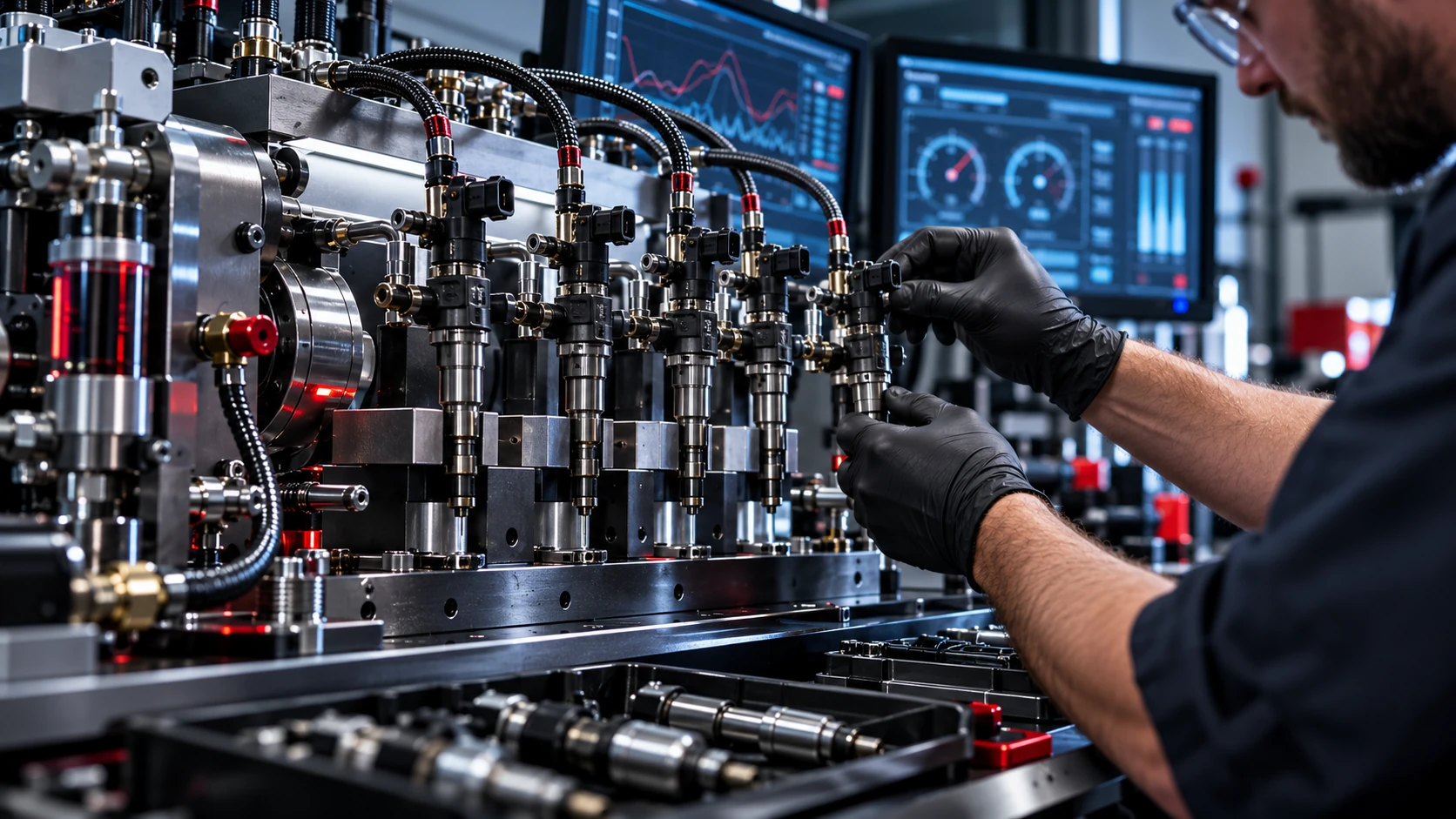
Precision equipment. Experienced hands. Better answers. Our team brings together 190 years of combined diesel fuel-injection experience with testing methods appropriate to supported components.
FROM THE DCT PHOTO ARCHIVE
Real Equipment in the Workshop
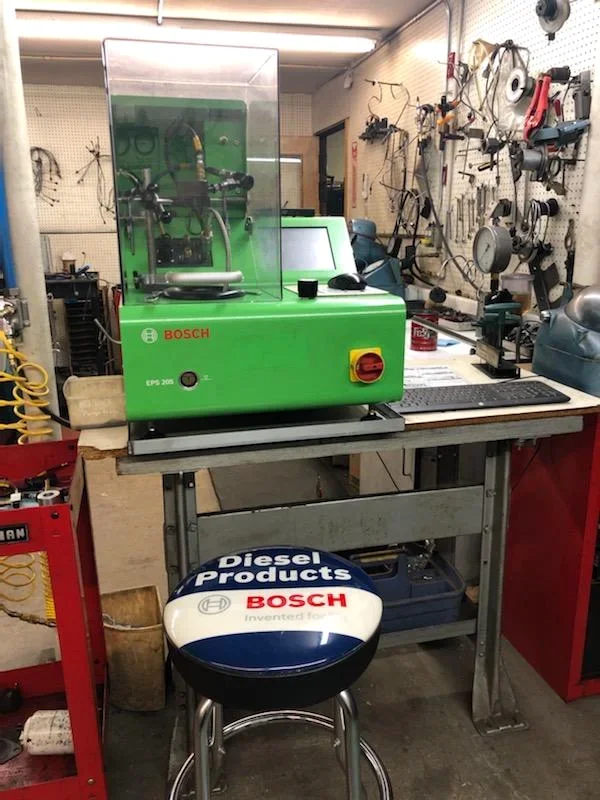
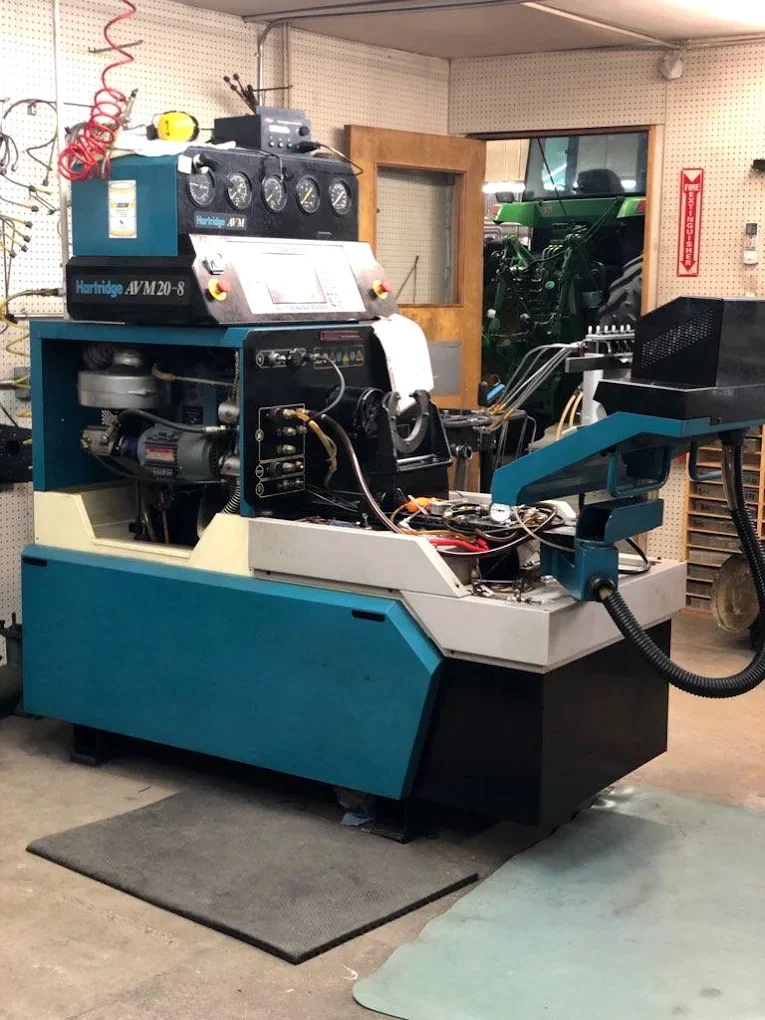
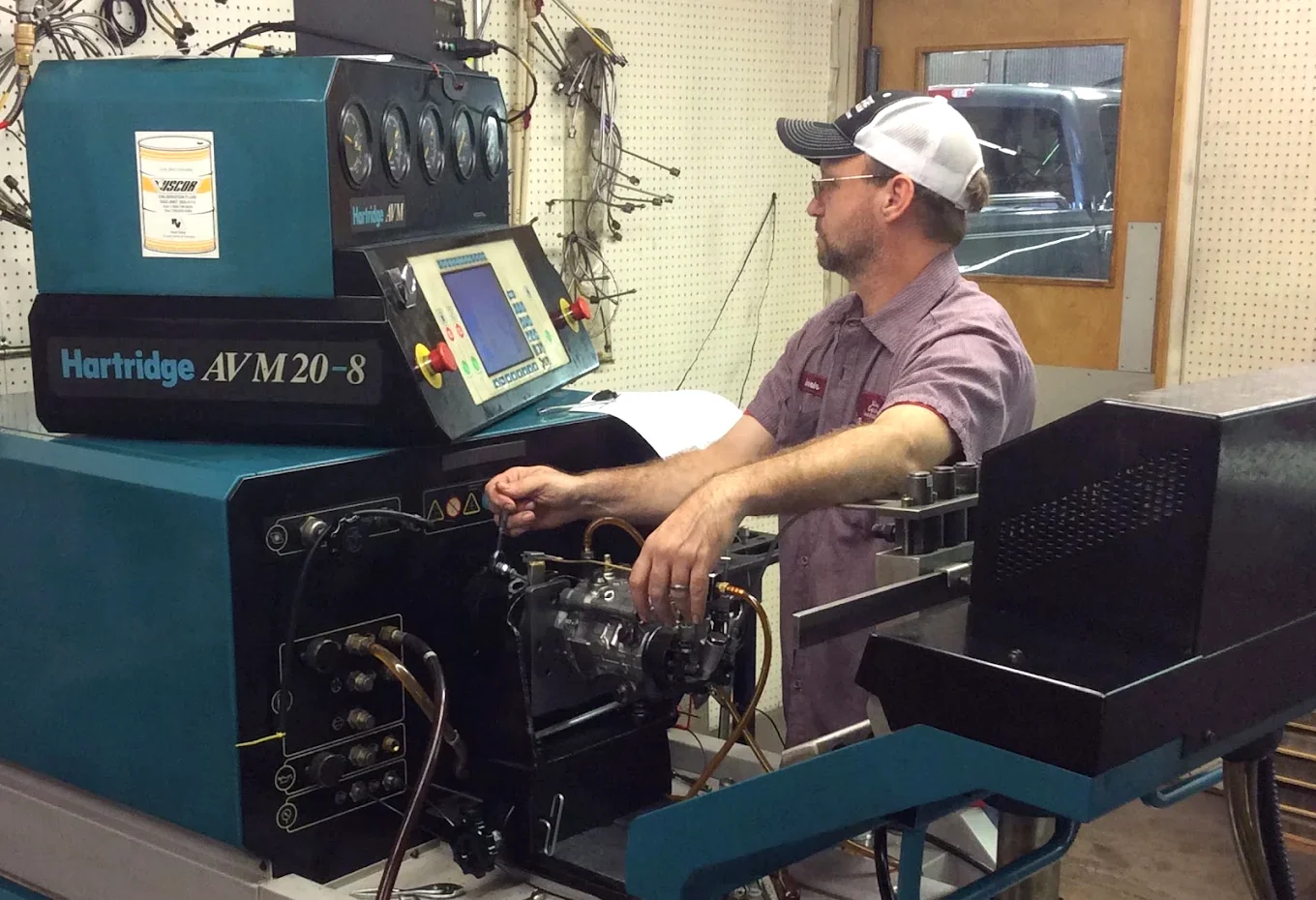
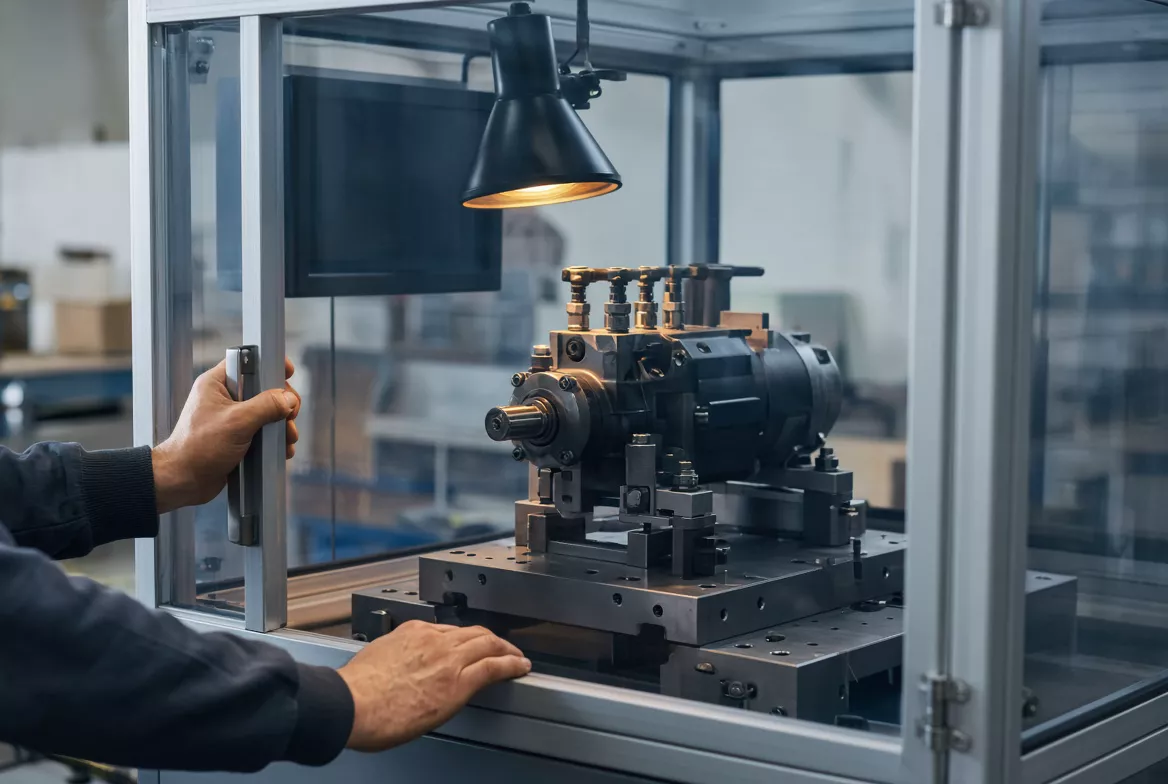
DCT-owned photographs of Bosch equipment, a Hartridge AVM20-8 stand and a technician conducting a pump test.
Why the Right Test Matters
Two injection pumps may look similar but require different fixtures, measurements, setup conditions and service criteria. The same applies to mechanical injectors, electronically controlled units and modern high-pressure common-rail components. We begin with the exact component identification before discussing what testing can establish.
What a Component Evaluation Can Tell You
Depending on the supported model and agreed scope, an evaluation may involve inspection of condition, relevant measurements, control behavior, evidence of wear or contamination, and comparison with appropriate technical information. Results should be explained in terms the customer can use: what was observed, what it suggests and what remains uncertain.
Testing Helps You Make a More Informed Decision
Professional evaluation can help inform the choice between an appropriate repair, rebuilding, replacement or further system-level diagnosis. A bench result is not always a complete diagnosis of a vehicle’s fuel, electrical or engine-control systems; a component may pass a bench test while another system problem remains.
Clear Scope, Clear Communication
Before additional service begins, we’ll explain the applicable evaluation terms and discuss any recommended work and price that requires authorization. A specific bench make, instrument model or certification is not claimed unless verified for the relevant location and component.
Not sure what testing your component needs?
Send us the part number, engine information and symptoms. We’ll explain available next steps.