
A Duramax can idle smoothly, start normally, and feel strong around town—until you ask it to work. Then, halfway up a hill or while accelerating with a trailer, the engine falls flat and the scanner reports P1093. On applicable Duramax systems, this code is associated with rail pressure being too low during a high fuel-demand or power-enrichment condition. The important clue is the operating condition: the system may meet modest demand but fail when fuel delivery must increase.
P1093 — Duramax fuel rail pressure too low during power enrichment. Manufacturer-specific Duramax use; verify engine generation and loaded demand data.
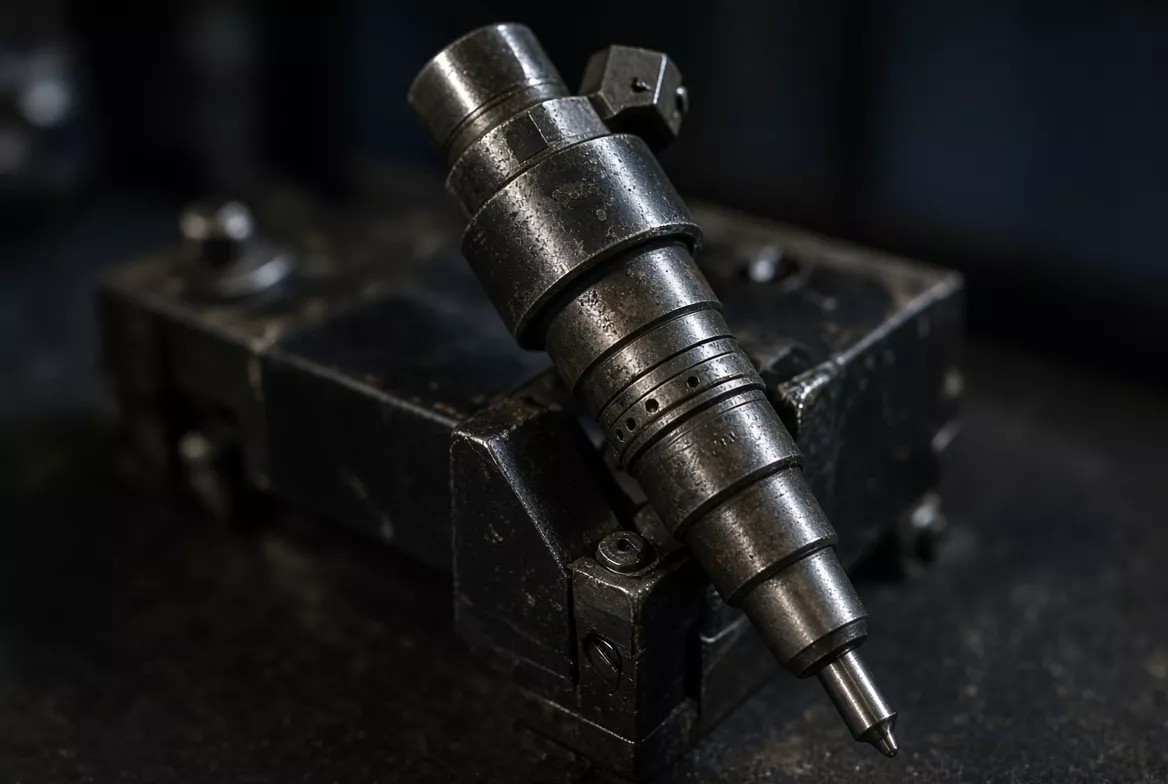
P1093 Duramax: first determine when pressure could not keep up
P1093 on supported Duramax generations is a fuel-pressure performance clue, not a definitive test of any particular injector or pump.
- Operating load: Record whether the fault appears during acceleration, towing or other demand.
- Supply before rail parts: Document filter, supply-side restriction and commanded versus actual pressure when the vehicle supports these checks.
- Record generation: Engine generation changes the applicable injection hardware and diagnostic specifications.
Related guidance: P0087 rail-pressure comparison Duramax engine-code hub
What P1093 is really telling you
The engine controller has a requested fuel rail pressure and uses pressure feedback to determine how closely the high-pressure system is following the request. When pressure is insufficient under the monitor’s defined conditions, a P1093 fault can be stored. The monitor details, component design, and diagnostic steps differ between Duramax generations, so the exact engine RPO, year, and modifications matter. The code does not independently identify a failing CP3, CP4, injector set, or pressure relief component.
A failure that shows up only when you ask for power
At idle, a marginal fuel supply can look adequate. Under acceleration, towing, or prolonged load, a restricted filter, weakened supply stage, aeration, or fuel metering problem may finally show itself. Excessive injector return or relief leakage can also rob the rail of pressure when demand rises. A pump may be mechanically unable to maintain commanded output, but determining that requires confirming the conditions under which it is being supplied and controlled.
A tuned or modified truck adds another layer. Changes to calibration, injectors, or rail relief hardware can alter fuel demand and control behavior. GM has discussed P1093 and P0087 in technical guidance concerning non-OEM fuel-system modifications on certain Duramax engines. The correct lesson is not that every modified truck has a defective pump; it is that an honest diagnostic history includes modifications, especially when the complaint began after the change.
What the technician compares
The investigation begins with all stored and pending codes, freeze-frame conditions, the engine’s exact generation, and a safe way to reproduce the concern if necessary. Commanded and measured rail pressure are compared alongside metering response and low-pressure supply conditions. On the engine in question, the technician follows OEM checks for filtration, air intrusion, fuel quality, relief behavior, injection return, and high-pressure pump output. A pressure reading without the load, speed, and corresponding demand value is only part of the story.
If a P0087 is also present, it can strengthen the case that rail pressure is not following demand, but it still does not say which component has failed. If P0191 or another sensor-related fault is present, feedback credibility may need attention before any pump judgment. Even the absence of other codes does not eliminate supply or leakage problems.
Repairing the cause instead of masking the symptom
A correct repair might involve filters, supply faults, control components, leakage, or a high-pressure pump proven unable to deliver appropriately. Installing pressure-relief block-off hardware or altering calibration to silence a pressure problem is not a substitute for diagnosis, and it may introduce additional concerns. If testing identifies an injection pump or injectors as suspect, contact our diesel injection facility with the exact engine RPO and recorded results to discuss component evaluation.
Read P0087, the broader Duramax DTC guide, and our low-power symptom guide for connected explanations.
P1093 frequently asked questions
Can a Duramax set P1093 and still start normally?
Yes. A fuel system may meet starting and idle requirements but fail to sustain higher demanded delivery under load.
Does P1093 prove my injection pump is worn out?
No. Low supply, control problems, leaks, sensors, modifications and pump capability all require application-specific consideration.
Is P1093 the same as P0087?
They can both describe insufficient pressure, but P1093 is an application-specific code tied to defined operating conditions on certain Duramax systems. Use the exact model-year diagnostic strategy for both.
Technical reference
GM’s Duramax P1093 service bulletin material demonstrates why the power-enrichment operating condition and vehicle modifications can matter to the interpretation of this code. Confirm the applicable model and bulletin status before using any of its information in a repair.
Keep exploring the right evidence
Learn why Duramax P1093 appears during high fuel demand, how supply and pressure regulation relate, and what to test before replacing components. Include the exact component number, equipment application, symptoms and checks already completed.