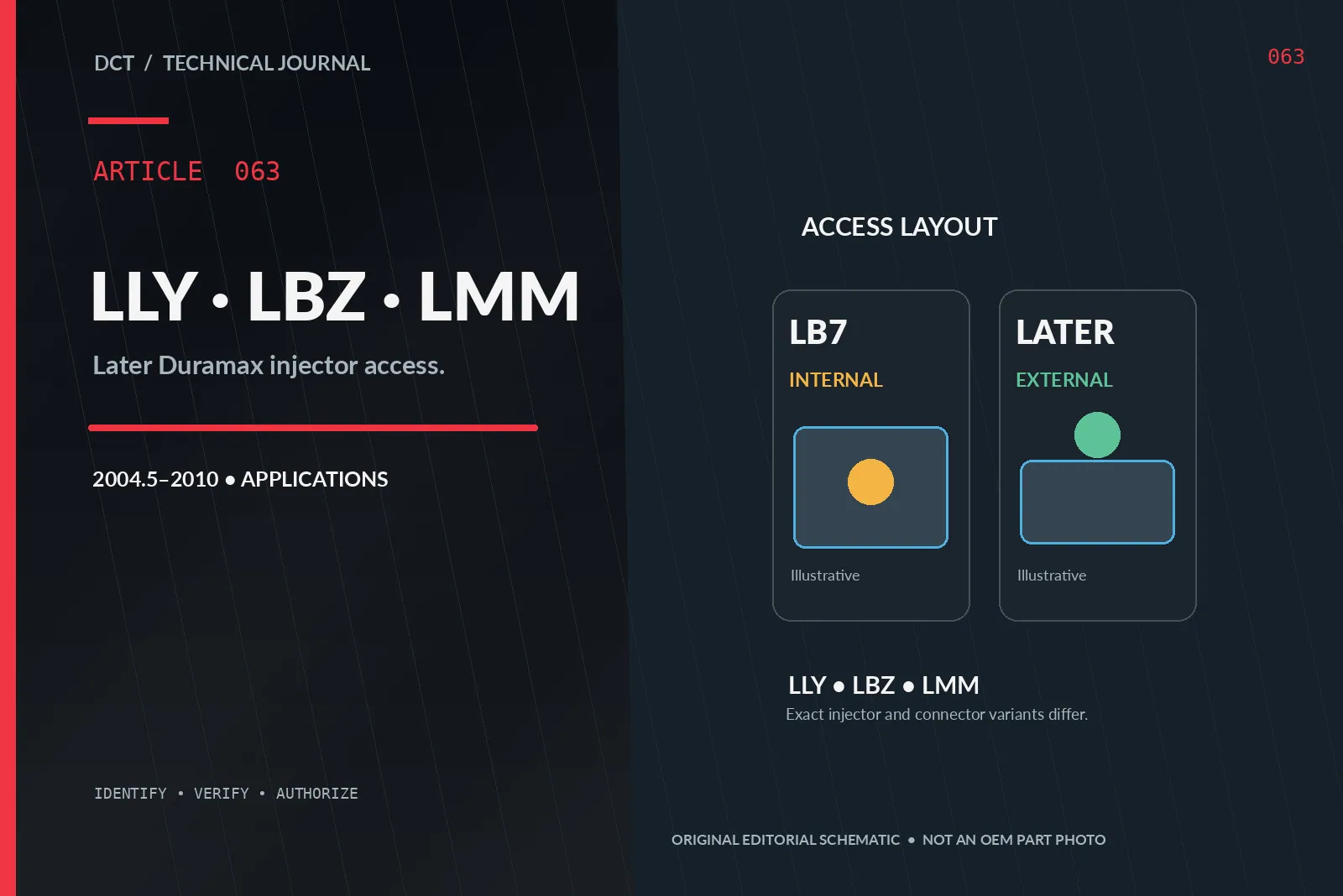
The three Duramax generations that followed the LB7 — the LLY (2004.5–2005), LBZ (2006–2007) and LMM (2007.5–2010) — all use a Bosch CP3 pump and Bosch solenoid injectors, with the injectors relocated outside the valve covers. They don’t share the LB7’s reputation for injectors leaking into the oil. Their injector problems are mainly wear and return leakage over high mileage, balance-rate drift, air intrusion on the supply side, and fuel contamination. On the LMM, exhaust-filter regeneration adds a fuel-dilution question.
LLY, LBZ and LMM Duramax: keep engine generations separate
These Duramax generations share broad common-rail principles but differ in hardware, controls and approved diagnostics.
- Confirm the RPO/engine code: Use the actual engine year and calibration rather than a generic Duramax part number.
- Compare symptoms and codes: Separate fuel supply, return leakage and injector electrical problems.
- Verify component fit: Match the original injector identifier and required coding before considering replacement.
Related guidance: Diesel injector lookup Duramax DTC resources
What changed between generations
- LLY: injectors moved outside the valve covers, and the engine gained a variable-geometry turbo and EGR.
- LBZ: injector and fuel system updates, including seven-hole injectors, and higher rail pressure, reported at about 26,000 psi.
- LMM: a diesel particulate filter and regeneration strategy to meet tighter emissions rules.
Injectors are generation-specific. Read the part number from your injectors before ordering.
Typical injector trouble on these engines
Wear and high return
Over high mileage, injector wear increases internal leakage. Expect longer cranking when hot, power loss under load, low rail pressure codes such as P0087 and leak-detected codes such as P0093.
Balance-rate drift
Balance rates show how hard the engine computer is working to even out each cylinder. A cylinder drifting steadily away from zero over months is a warning sign, often before drivability suffers. See injector balance rates.
Air in the fuel
Air drawn into the supply side, from a leaking filter housing, primer or fitting, causes rough running, erratic balance rates and hard starts, and is easily mistaken for injector trouble. Check for air with a clear line at the pump inlet before condemning injectors. See air in the diesel fuel system.
Heat on the LLY
The LLY’s EGR system and higher underhood temperatures are associated with heat stress on fuel components and other parts of the engine. Overheating under heavy towing is a known LLY concern, and heat does injectors no favors.
Regeneration dilution on the LMM
The LMM regenerates its particulate filter by adding fuel late in the combustion cycle. On some duty cycles, that can contribute to fuel in the oil. A rising oil level on an LMM doesn’t automatically mean leaking injectors. See diesel fuel in engine oil.
Contamination
Water and abrasive particles shorten injector and CP3 life. Draining the water separator and changing filters on schedule are basic protection.
Steps before buying injectors
- Read codes, including P0087 and P0093.
- Record balance rates at a warm, steady idle and compare with past readings.
- Log rail pressure during the complaint, including hot restarts.
- Check for air in the supply and inspect the filter housing.
- Check the oil level and condition.
- If a high-pressure leak is suspected, stop operation and use the approved GM isolation and inspection process; never move cardboard or hands near a pressurized line. Check the limiter only through the specified test.
Replacing injectors
On these engines, injectors are more accessible than on the LB7, so replacing individual injectors can be a reasonable choice when the rest of the set tests well. A set is the better choice when several are drifting or the mileage is high. Testing the set tells you which applies.
Symptoms by generation
| Engine | Symptoms that deserve attention |
|---|---|
| LLY (2004.5–2005) | Heat-related stress under towing, rough running, balance-rate drift |
| LBZ (2006–2007) | High-mileage return leakage, hard hot starts, P0087 or P0093 |
| LMM (2007.5–2010) | Rising oil level from regeneration or leaks, balance-rate drift |
| All three | Air intrusion on the supply side, water in the fuel |
Track your balance rates over time if you have a scan tool. A record of readings from when the truck ran well makes a later problem much easier to spot.
Manufacturer reference: GM ACDelco: Technical Delivery System For procedures and specifications, use the current manufacturer information for your engine and model year.
Have your Duramax injectors tested
Send Diesel Control Technicians your injector part numbers to confirm the options for your Duramax. Then ship the accepted set to DCT using the provided receiving instructions marked by cylinder, along with your balance rates and codes, or schedule an on-vehicle service in Hutchinson only, subject to advance confirmation.
QUESTIONS ABOUT YOUR DIESEL COMPONENT?
Dealing with Duramax LLY, LBZ and LMM Injector Problems (2004.5–2010)?
Duramax LLY, LBZ and LMM injectors should not be treated as one interchangeable application. Compare engine-era distinctions, symptoms and identification needs before selecting a service path. Include the injector or nozzle number, engine identification, relevant cylinder observations and any completed injector testing.
Interpreting P0087 or P0093 by Duramax generation
A low-rail-pressure code does not identify which injector or high-pressure pump is faulty. On the supported LLY/LBZ/LMM calibration, keep supply pressure, commanded versus measured rail pressure, control behavior and leakage evidence separate. Explore the relevant DCT diagnostic resource.