
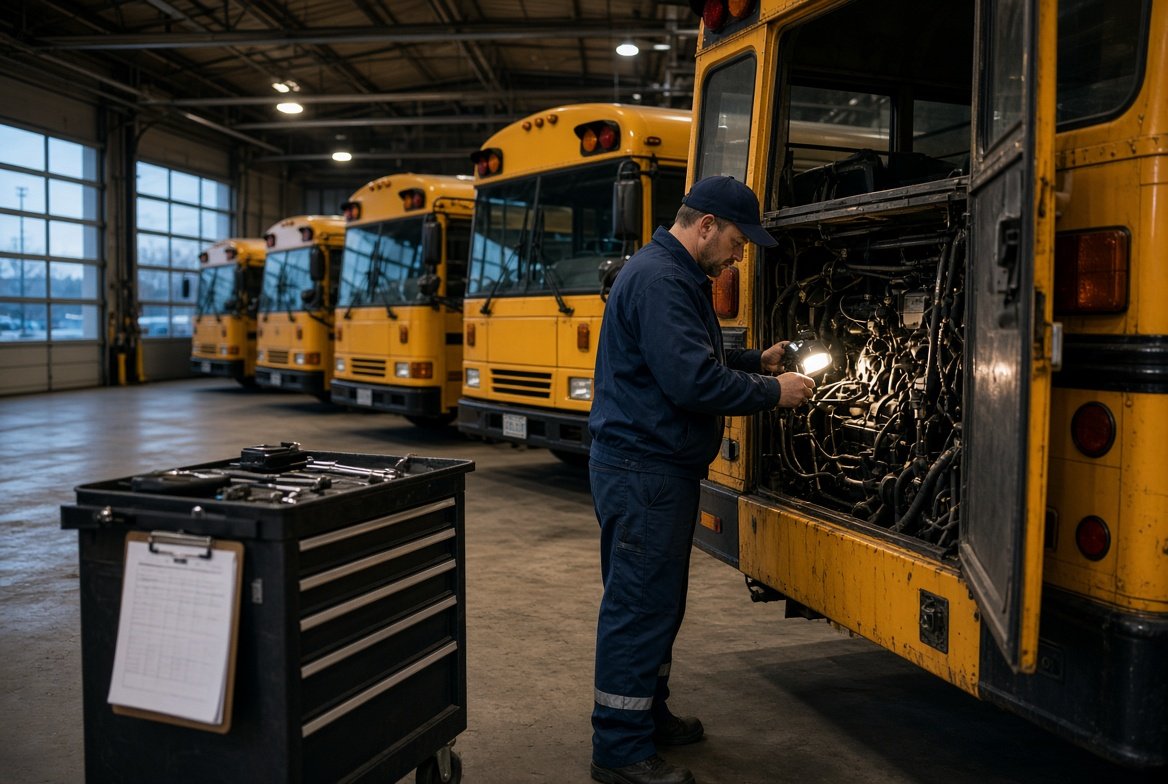
A school bus fleet has a schedule most fleets don’t: every bus is needed at the same hours every school day, then sits through breaks and the summer. That makes fuel injection work a planning problem as much as a repair problem. The districts that handle it best use breaks for testing and planned replacement, track injection work by bus number, keep exchange options lined up for their most common engines, and watch fuel quality at the district tank.
What’s under the floor
District fleets often include a mix of engines and injection systems, which is part of what makes planning hard:
- HEUI engines such as the International DT466E and MaxxForce DT, common in older buses. See International DT466E injector problems.
- Common-rail engines such as Cummins B-series engines in many conventional and transit-style buses
- Older buses with mechanical injection, still running in some districts
Each engine family has its own typical failures and replacement parts, so the first step is a simple inventory: bus number, chassis, engine model and serial number, and the injector and pump part numbers.
Bus duty is hard on injectors
- Idle time. Warm-up periods, loading and waiting at schools add up to many hours of idling, which builds carbon on injector tips and, on HEUI engines, exposes injectors to oil that hasn’t reached full temperature.
- Short routes and cold starts. Many starts per day, often cold, stress injectors and starting systems.
- Seasonal sitting. Buses parked through the summer can start the year with stale fuel and moisture in their tanks.
- District fueling. A single tank fuels the whole fleet, so contamination there affects every bus.
A practical plan
Use breaks for testing
Summer and winter breaks are the time to test injectors on buses that showed hard starting, rough cold starts, smoke or fuel economy loss during the year. Bench testing during a break turns surprise failures in October into planned work in July.
Track injection history by bus
Record when injectors and pumps were replaced, with part numbers and supplier, on each bus’s file. Patterns show up quickly: one engine family failing early, injectors from one source not lasting, or a cluster of failures after a fuel delivery.
Plan for the critical units
For the engines that make up most of your fleet, know in advance whether exchange injector sets or pumps are available and how long they take to arrive. When a bus fails during the school year, an exchange can return it to its route faster than waiting for its own injectors. See diesel injector exchange programs.
Watch the district fuel tank
- Check for water regularly and drain it
- Filter fuel at the dispenser
- Review fuel quality with your supplier, especially for winter blends and biodiesel blends
- Investigate if several buses develop fuel problems at once
Standardize oil practices on HEUI buses
HEUI injectors depend on engine oil quality. Consistent oil specification and change intervals across the fleet protect them.
Beyond buses
District shops often maintain more than buses: maintenance trucks, grounds and snow equipment, standby generators at schools and shelters, and the tractors and engines used in agricultural and technical education programs. The same planning logic applies, and the same shop can often handle their injection work. For generators specifically, see standby generator fuel injection.
A summer checklist for district shops
- Pull scan data and balance information on buses that had fuel complaints during the year
- Send suspect injectors and pumps for testing early in the break, while there’s time to act on the results
- Drain water separators and replace fuel filters before buses return to service
- Check the district fuel tank for water and sediment
- Confirm winter fuel plans with your supplier before the first cold snap
- Update each bus’s file with part numbers and any work done
Further technical reference: Cummins: engine-specific technical information. Use the exact engine/injector/pump service information for applicable procedures and limits.
Route fitness must be cleared separately
A bus that stalls unexpectedly, leaks fuel dangerously or develops a severe knock needs an operational safety decision before it carries passengers again. Track bus out-of-service status separately from whether an injector is awaiting a bench report. Only the local fleet’s qualified post-repair checks can clear the bus for route service.
A partner that keeps buses on routes
Diesel Control Technicians handles school buses and education-related equipment, testing, repairing and exchanging injectors and pumps. Districts in central Kansas can schedule an appointment in Hutchinson or Great Bend, and we’ll confirm which location suits the bus; districts farther away can ship components to DCT, after confirming current timing, intake requirements and repair authorization. Talk to us before the summer break about testing the buses that gave you trouble this year.
Plan the next service step: Request a mail-in component review with the engine and component IDs, known test results and downtime needs. Confirm supported scope, approvals and the current schedule. Local appointments: Hutchinson or Great Bend.