
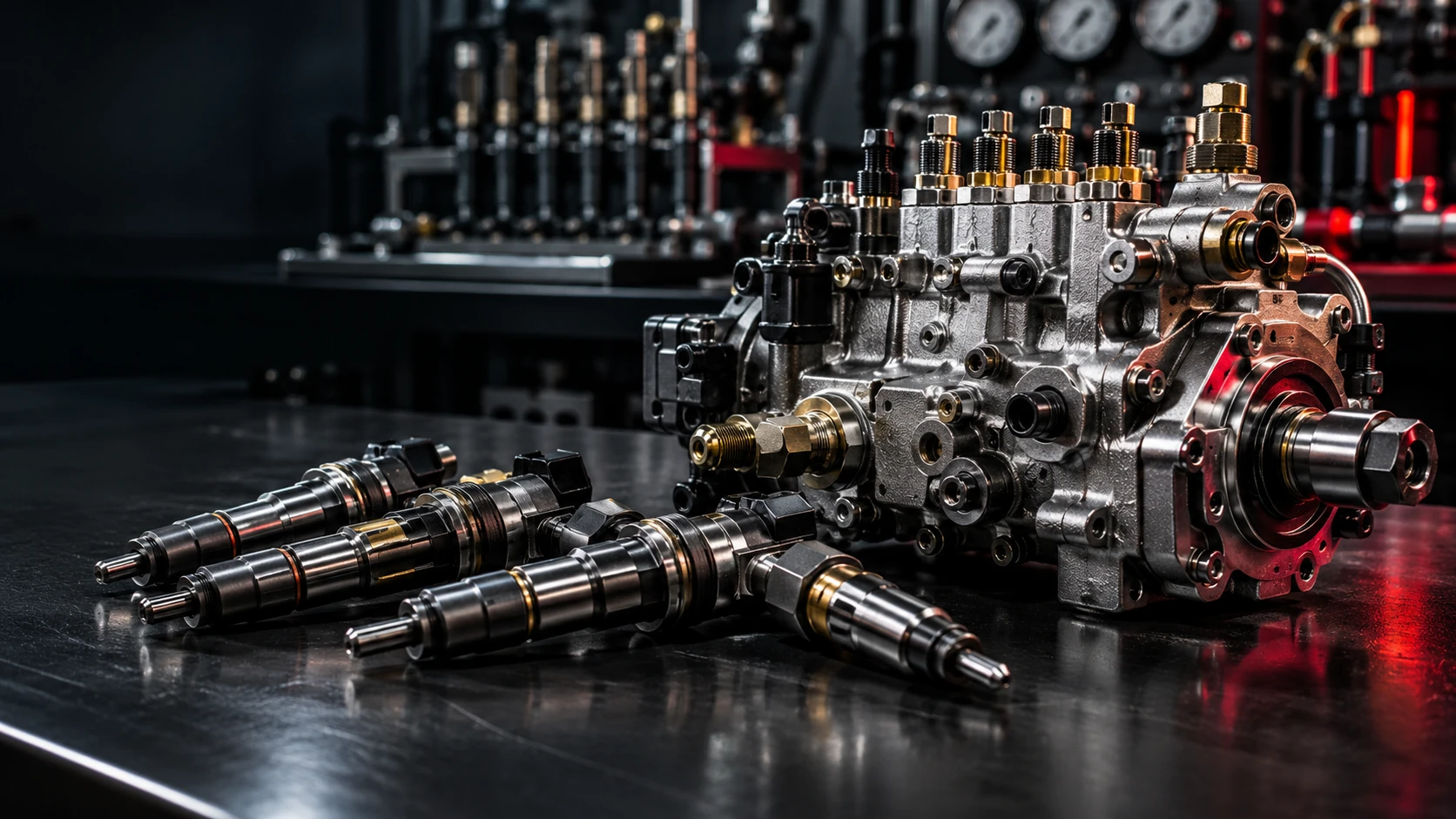
Some service requests begin with the component family; others begin with a part number or an equipment model. Use identification details to narrow the conversation before deciding whether testing, repair or a replacement is appropriate.
WHY MODEL FAMILIES MATTER
Different configurations can share a broad technology name but require separate repair data, handling procedures and replacement parts. Do not assume physical similarity proves interchangeability.
TELL US WHAT YOU NEED.
Our team will help confirm what service is available, explain the next steps and review details before any work begins.
Choose the correct component family before requesting service
An engine model often has multiple fuel-system configurations. A number on a casting, the complete tag on a pump, the connector design or the injector part number can help narrow the possibilities, but none should be used as a substitute for manufacturer application data. Similar-looking components can require different calibration settings or internal parts.
Details to check before the next step
- Photograph the full assembly and readable part-number plates without dismantling sensitive precision components.
- Match the engine family, equipment model, build or serial range and any prior replacements to the available records.
- Keep related injectors identified by cylinder if a group is removed, and document possible contamination before cleaning or disassembly.
Making an informed service decision
The right next step may be additional vehicle-side diagnosis, a supported bench evaluation or part sourcing. DCT checks eligibility for the particular component before authorizing mail-in receiving or recommending a replacement.
Related information: Identify a Diesel Pump or Injector Correctly, Diesel Injection Pump Family Library – A to Z, Start a Mail-In Repair Inquiry.