
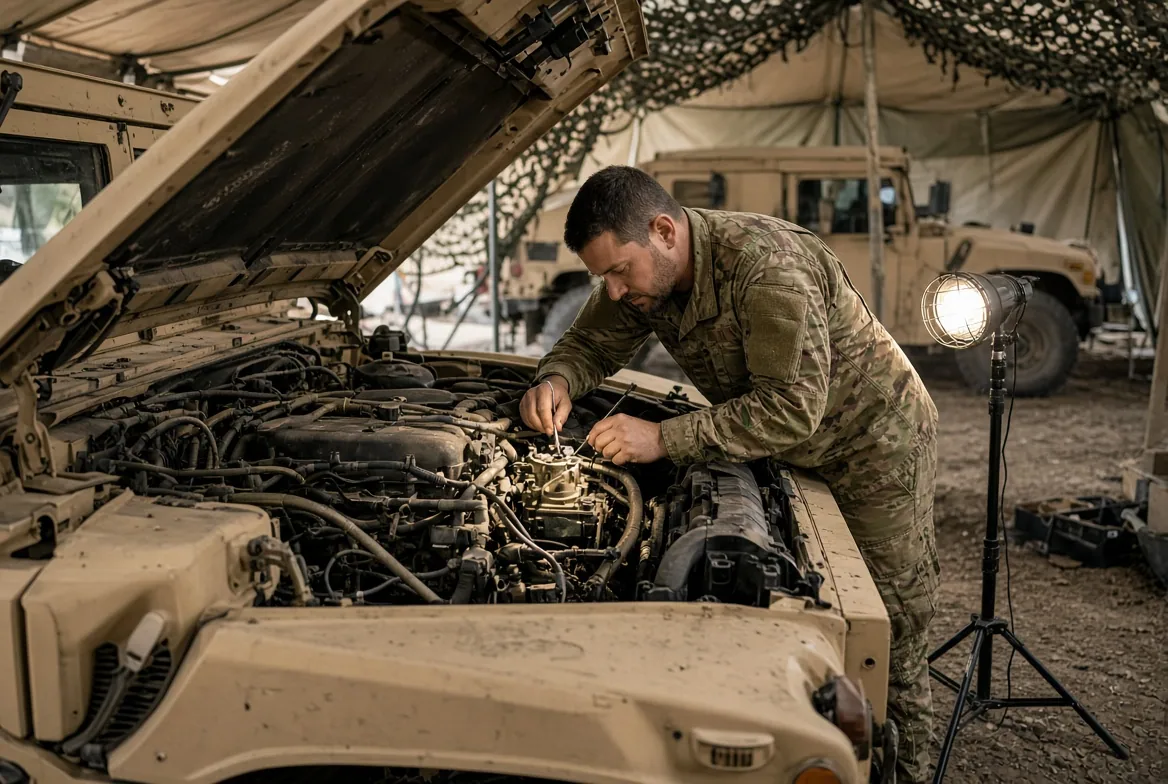
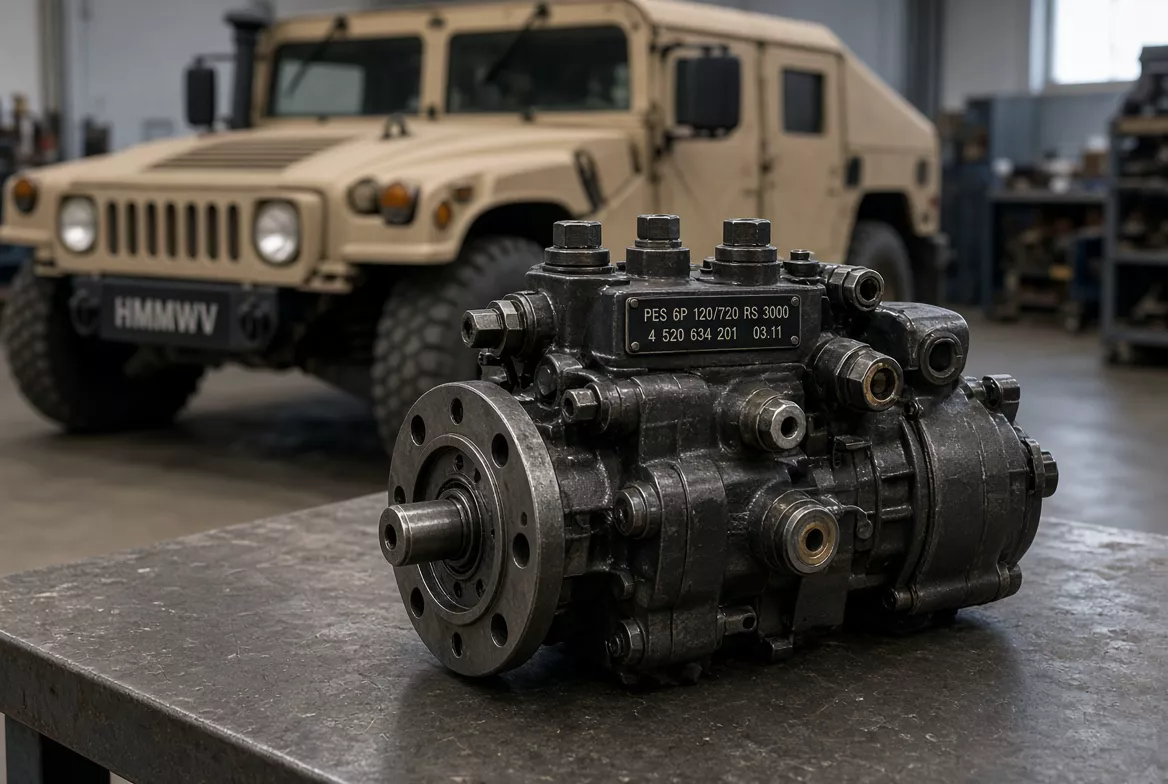
Military diesel vehicles and equipment share technology with civilian engines, but their fuel injection systems were often chosen for simplicity, ruggedness and tolerance of multiple fuels. The GM-designed 6.2 and 6.5 diesels in military HMMWVs used fully mechanical Stanadyne DB2 pumps, unlike the electronic DS4 used on civilian 6.5 trucks from 1994. The LDT-465 multifuel engine in later M35A2 cargo trucks was designed to run on a range of fuels and carries a fuel density compensator that adjusts fueling automatically. Surplus owners, collectors and fleets operating these vehicles face aging pumps, long storage and parts that require specialized knowledge.
HMMWV: 6.2 and 6.5 with the DB2
The DB2 on military HMMWVs is a mechanical rotary pump with a governor and automatic advance, lubricated by the fuel passing through it. Its typical problems mirror those on civilian DB2 pumps:
- Hard starting when hot from internal wear
- Leaks at the throttle shaft seals and covers
- Timing advance problems causing white smoke and poor running
- Shutoff solenoid failure causing a no-start
- Governor wear causing poor idle and speed control
See Stanadyne DB2 injection pump for the full picture. Because military pumps may differ from civilian versions in calibration and details, record the pump’s tag information exactly.
Multifuel engines
The LDT-465 multifuel engine in later M35A2 trucks was built to run on diesel as its primary fuel, with kerosene, jet fuel, gasoline and other fuels as alternates, and a fuel density compensator that adjusts fueling for the fuel in use. Owners are commonly advised not to adjust a factory-configured multifuel engine for fuel type, because the compensator handles it. Trucks whose compensators have been bypassed are marked for diesel fuel only.
For service, that means the injection pump and its compensator are a system. A pump rebuilt or adjusted without regard to the compensator won’t behave as intended.
Fuel considerations
Jet fuel and lubricity. Military logistics have long favored a single fuel for many vehicles, and jet fuels used that way generally have lower lubricity than diesel. Older fuel-lubricated pumps are sensitive to lubricity, so owners of ex-military equipment pay close attention to what they burn. See ULSD lubricity and older injection pumps.
Long storage. Surplus vehicles often arrive after long storage, with degraded fuel, water in the tanks and dried-out seals. Before trying to start one:
- Drain and inspect the fuel tank
- Replace filters and inspect lines
- Check for water and rust in the system
- Bleed the system completely
- Don’t force a stuck pump
Generators and other equipment
Military-pattern generators and support equipment use a range of small and medium diesels with mechanical or electronic injection. The same storage problems apply: stale fuel, water and corrosion. See standby generator fuel injection.
Documentation matters
Military vehicles were supported by detailed technical manuals, and those manuals, along with the pump’s tag, are the best references for specifications and procedures. Record the pump and injector part numbers, and keep the original data plates with the components.
Bringing a surplus vehicle back
- Record the pump and injector numbers and data plates before anything is removed.
- Don’t try to start it until you’ve looked at the fuel. Drain the tank and inspect what comes out.
- Replace all fuel filters and inspect lines for cracks and deterioration.
- Check the engine oil and coolant for contamination.
- Bleed the fuel system completely.
- If the pump is stuck or leaking, have it serviced rather than forcing it.
- Have the injectors tested if the engine runs rough or smokes once it starts.
Manufacturer reference: Bosch: Diesel Repair Network and supported component service For procedures and specifications, use the current manufacturer information for your engine and model year.
Military components and DCT
DCT reviews inquiries about individual military or historic diesel fuel-injection components. Send the complete pump number, equipment model and condition notes first. For an accepted shipment or component drop-off, the team provides the appropriate Hutchinson or Great Bend receiving instructions.
Where Military Diesel Fuel Injection leads next: Confirm the actual pump or component family before replacing parts. Record the engine application, existing tests and symptoms, then review the testing process or request a component review. DCT confirms service eligibility and receiving instructions individually.
QUESTIONS ABOUT YOUR DIESEL COMPONENT?
Need guidance on Military Diesel Fuel Injection: HMMWV and Multifuel Pumps?
Military and multifuel diesel systems can use specialized injection components. Identify the exact pump, engine and application before assuming civilian part numbers, service practices or interchange will apply. Include the exact component number, equipment application, symptoms and checks already completed.