
P0093 means Fuel System Leak Detected – Large Leak. The engine computer saw rail pressure behave in a way that suggests fuel is escaping from the high-pressure system: pressure falling faster than it should, or failing to rise even with the pump commanded to deliver more. Many engines respond by reducing power or shutting down to protect themselves.
P0093 and the no-visible-leak scenario
The P0093 label can describe an inferred fuel-loss condition. A clean driveway does not exclude an internal return or pressure-control problem.
- External safety first: If leaking diesel is visible near hot components, stop operation and seek appropriate help.
- Preserve sensor context: Record commanded and actual pressure alongside demand, as supported by the engine.
- Check the correct pathway: Use a vehicle-approved external leak and injector return/leakage assessment before specifying parts.
Related guidance: P0093 DTC definition P0087 low rail pressure
The leak can be outside the engine, where you can see it, or inside, where you can’t. Both matter. An external leak on a hot engine is a fire risk. An internal leak, such as an injector leaking into the crankcase, dilutes the oil.
First: look for fuel outside the engine
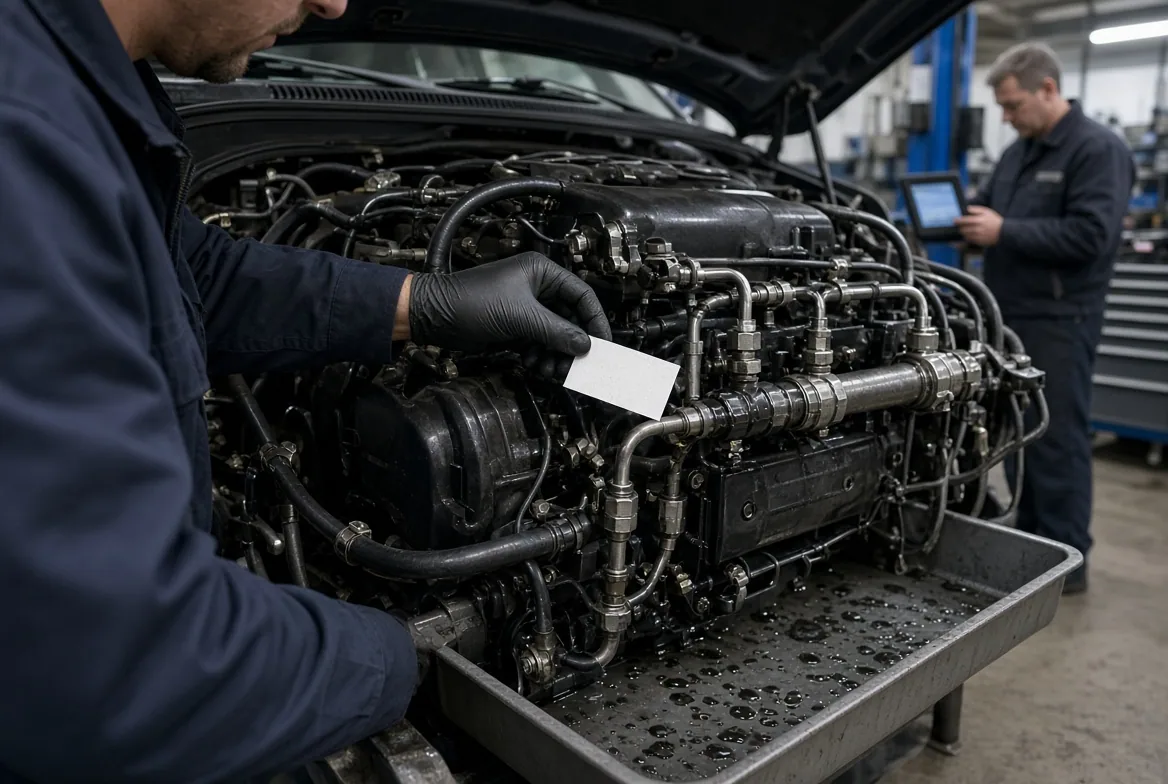
Start with the engine off and cool. Inspect high-pressure lines, fittings, the rail, pressure sensor and relief valve, the pump outlet and the area around each injector. Look for wetness, a fuel smell, washed-clean spots on a dirty engine, and fuel pooling in valleys.
Do not run the engine simply to locate an unknown high-pressure leak, and do not move hands, cardboard or other makeshift probes near pressurized lines. A pinhole spray can inject fuel through skin. Have a qualified technician follow the engine maker’s safe pressure-isolation and leak-detection procedure. See high-pressure fuel injection injuries.
A cracked line, loose fitting or leaking sensor seal is the simplest outcome. Fix it with the correct parts and recheck.
Second: check the oil
If there’s no external leak, check the engine oil level and smell. A rising oil level, thin oil or a strong diesel odor points to fuel getting into the crankcase. On engines where injectors or their return passages sit inside the valve cover, an injector leaking internally can cause both P0093 and fuel-diluted oil. Don’t keep running an engine with fuel-diluted oil. See diesel fuel in engine oil.
Third: measure the leak paths you can’t see
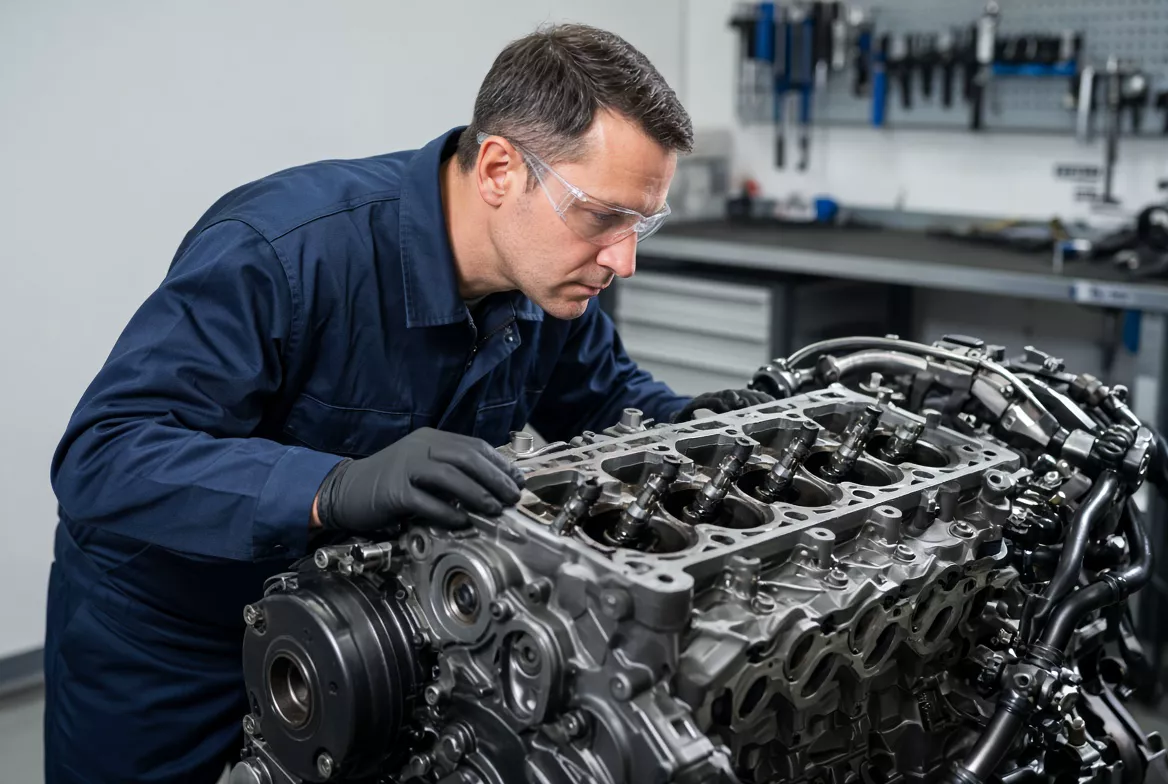
- Injector return flow. Excessive return from one or more injectors drains the rail. A return-flow test shows whether one injector is the culprit or the set is worn.
- The pressure limiter or relief valve. Many rails carry a mechanical valve that should stay closed in normal operation. If it leaks or opens early, fuel goes straight to the return. On some engines its return can be isolated to check for flow.
- The high-pressure pump. Internal leakage or a failing metering valve can produce a pressure pattern the computer reads as a leak.
Don’t forget the supply side
A restricted filter, a weak lift pump or air in the fuel can make it impossible for the pump to keep up, and some computers interpret the result as leakage. Verify supply pressure and check for air before replacing high-pressure parts.
P0093 on the Duramax
P0093 is a familiar code on the CP3-equipped Duramax engines from the LLY onward; the earlier LB7 typically reports rail pressure problems with GM-specific codes such as P1093. Typical sources include external high-pressure leaks, injector leakage, the rail-mounted pressure limiter and supply restrictions. On the LB7, whose injectors sit under the valve covers, injector leakage can also show up as fuel in the oil. Our guides to LB7 injector problems and LLY, LBZ and LMM injector problems cover those engines in more detail.
A quick decision guide
| What you find | Likely next step |
|---|---|
| Visible external leak | Repair the line, fitting or seal; recheck |
| Rising oil level, fuel smell in oil | Stop operation if significant dilution is suspected; investigate the applicable fuel-entry paths |
| High return on one injector | Remove and bench test that injector, and consider the set |
| High return on several | Compare engine-specific limits and investigate shared fuel quality before deciding on testing or replacing multiple units |
| Normal return, no external leak | Check the relief valve, then pump and supply |
Manufacturer reference: Bosch Mobility: common-rail system overview For procedures and specifications, use the current manufacturer information for your engine and model year.
Get the leak found and fixed
Diesel Control Technicians may evaluate eligible automotive drive-in fuel-system complaints at Hutchinson by confirmed appointment and bench tests injectors and pumps shipped from anywhere in the country. If you’ve found the leak path, provide the findings and component number so DCT can confirm eligibility and receiving instructions. If you haven’t, schedule an on-vehicle diagnosis before parts start coming off.
Where P0093 Diesel Code leads next: Confirm the actual pump or component family before replacing parts. Record the engine application, existing tests and symptoms, then review the testing process or request a component review. DCT confirms service eligibility and receiving instructions individually.
QUESTIONS ABOUT YOUR DIESEL COMPONENT?
Dealing with P0093 Diesel Code: Finding a Large Fuel System Leak?
P0093 indicates a fuel-system leak calculation or related pressure problem, depending on the vehicle. Learn what evidence helps distinguish actual leakage from control and supply faults. Include the exact component number, equipment application, symptoms and checks already completed.