
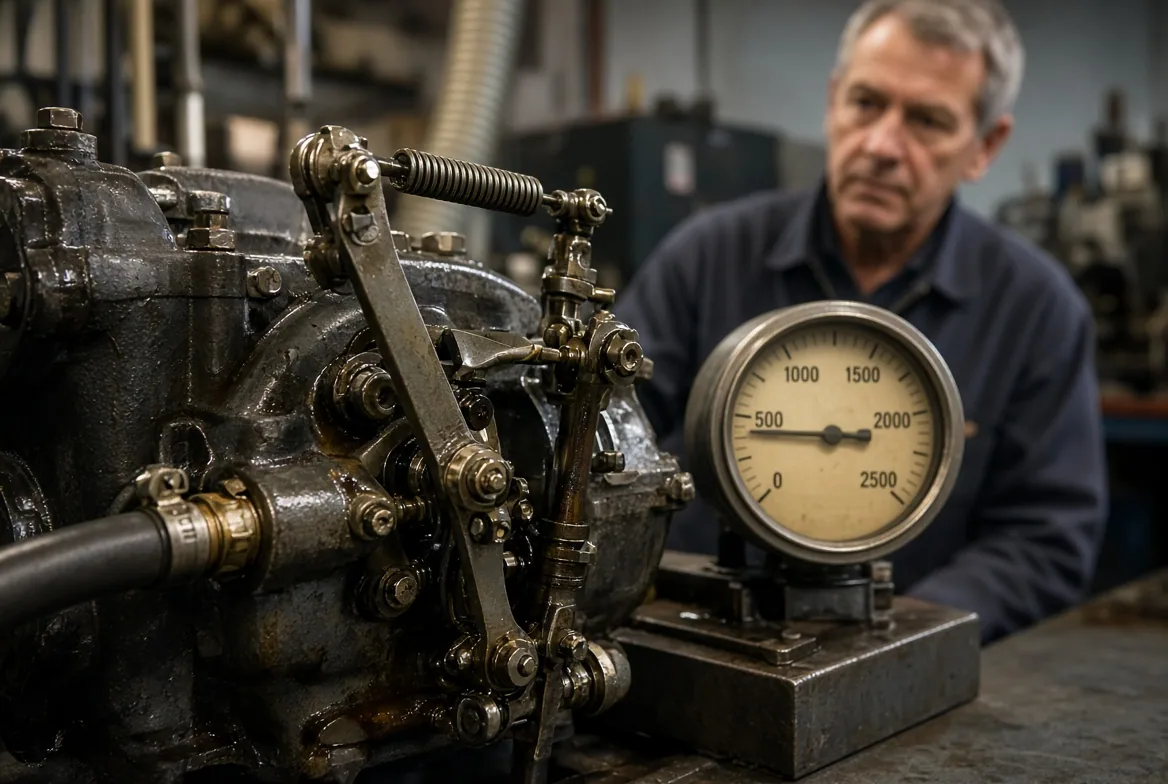
Surging, also called hunting, is a rhythmic rise and fall in engine speed: the idle climbs, drops, climbs again. It’s different from a rough idle, where the engine shakes unevenly. A surge means the system that controls engine speed is overcorrecting. On older engines, that’s the mechanical governor in the injection pump. On electronic engines, it’s often rail pressure or fuel control chasing its target. On either, air in the fuel can trigger it.
Surging at idle: the pressure trace may help sort the cause
Idle hunting can involve air in fuel, supply restriction, governor action or electronic fuel control. One symptom does not identify a pump defect.
- Record whether it is warm or cold: Note if surging appears after start, after warm-up, or only at one engine speed.
- Compare inputs: Use engine-specific fuel-pressure, metering and sensor observations when available.
- Check basic conditions: Fuel quality, air entry and filter restriction can mimic an unstable regulator.
Related guidance: Air in fuel symptoms Fuel pressure regulator overview
Why engines surge
Any speed control works by measuring speed and adjusting fuel. If the adjustment is late, too large or based on a bad measurement, the engine overshoots, the control pulls fuel back, it undershoots, and the cycle repeats. Surging is that loop visible on the tachometer.
On mechanical injection pumps
Rotary and inline pumps use a mechanical governor: flyweights spun by the pump, balanced against springs, move the fuel control as speed changes. Over time:
- Worn flyweights, pivots and linkages introduce slop, so the governor responds late
- Sticking controls, from varnish or debris, make the fuel control move in jumps
- Weak or incorrect springs change how strongly the governor responds
- Incorrect idle or governor adjustments can leave it unstable
- Internal pump wear changes how fuel delivery responds to control movement
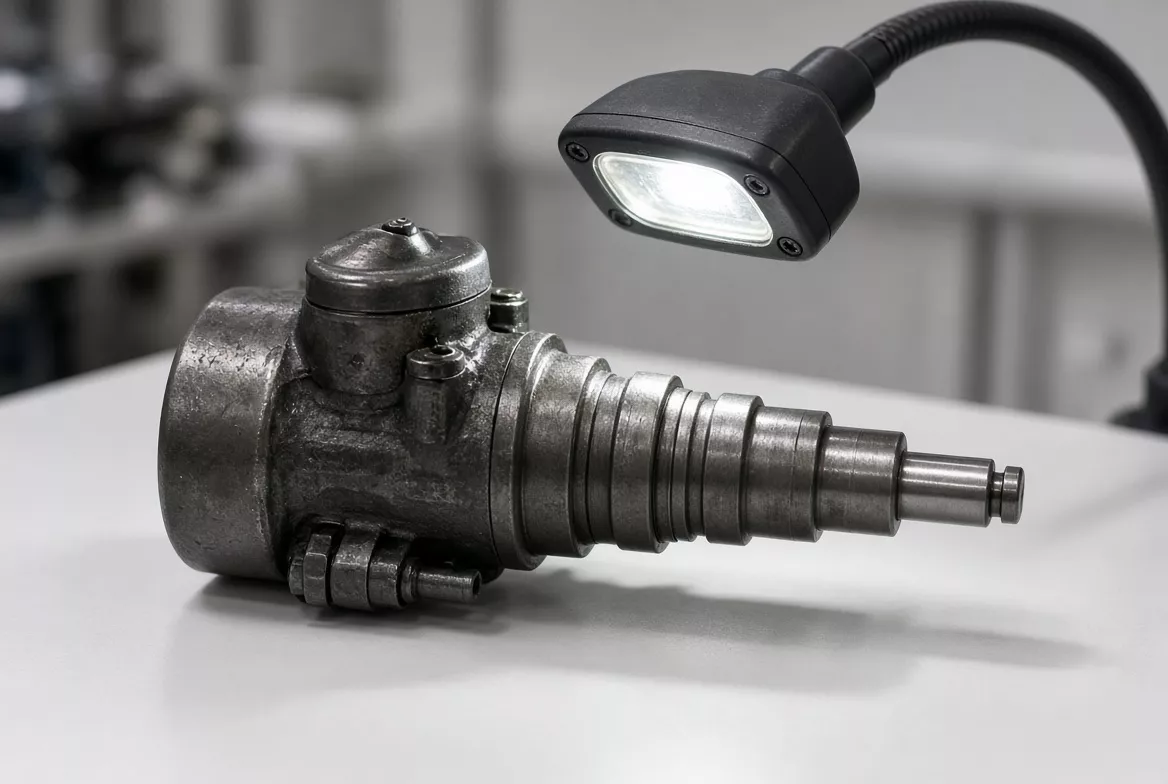
Some surging on mechanical engines is cured with a simple idle adjustment. If it isn’t, or if the surge appears at other speeds too, the governor needs to be inspected and the pump recalibrated on a test stand. See injection pump calibration.
A safety note on governors: the governor is also what stops a diesel from over-speeding. A pump with a sticking fuel control or a damaged governor can fail to cut fuel. An engine that won’t return to idle or won’t shut off normally is an emergency. Know your engine’s shutdown options in advance. If shutting off fuel doesn’t stop it, blocking the air intake with a flat, rigid plate or discharging a CO2 extinguisher into the intake are the usual last resorts; never use a hand or a rag. Don’t run the engine again until it’s repaired.
On common-rail engines
Electronic engines don’t have mechanical governors, but they can still surge:
- Rail pressure control oscillation. A sticking inlet metering valve or pressure-control valve makes rail pressure swing, and idle follows it. Log desired and actual rail pressure. If actual pressure is oscillating around desired, the control is struggling. See fuel pressure regulator vs metering valve.
- Supply problems. Low or unsteady supply pressure upsets rail pressure control.
- Injector problems. An injector that sticks intermittently can upset idle balance.
- Sensor signals. An erratic accelerator pedal, crankshaft or rail pressure sensor signal confuses the control.
- Air management. On some engines, EGR or variable-geometry turbo control at idle contributes.
On HEUI engines
On engines such as the 7.3 and 6.0 Power Stroke, injection control pressure is regulated by an oil pressure regulator. If ICP oscillates, from a sticking regulator, oil aeration or leaks, idle can follow.
Air in the fuel: a cause on every system
Air bubbles compress, fuel doesn’t. Air in the fuel makes delivery inconsistent, and a speed control reacting to inconsistent delivery surges. Suction-side leaks at filter housings, fittings and hoses are common sources. A clear section of line at the pump inlet will show bubbles. See air in the diesel fuel system.
A practical order of checks
- Read codes and note whether the surge happens cold, hot or both.
- Check the fuel filter and look for air in the supply.
- On electronic engines, log rail pressure (or ICP) along with rpm during the surge.
- On mechanical engines, check idle adjustment and throttle linkage for binding.
- If those are fine, test the pump: governor, metering and calibration.
Surging on generators and pumps
Engines running at a fixed speed, such as generators, irrigation engines and compressors, show governor and fuel control problems as hunting under changing load. See standby generator fuel injection.
Manufacturer reference: Bosch Mobility: common-rail system overview For procedures and specifications, use the current manufacturer information for your engine and model year.
Get the governor or control sorted out
Diesel Control Technicians repairs and recalibrates mechanical injection pumps and their governors and diagnoses electronic fuel control problems on the vehicle by appointment in Kansas. If you’ve ruled out air and the surge persists, send DCT the pump tag photo and a description of when the surge happens.
Where Diesel Engine Surging at Idle leads next: Confirm the actual pump or component family before replacing parts. Record the engine application, existing tests and symptoms, then review the testing process or request a component review. DCT confirms service eligibility and receiving instructions individually.
QUESTIONS ABOUT YOUR DIESEL COMPONENT?
Diesel Engine Surging at Idle: Governor or Fuel Control?
An unstable diesel idle can involve governor response, fuel supply or electronic control. Learn how the symptom pattern helps narrow the investigation before component replacement. Include the exact component number, equipment application, symptoms and checks already completed.